
Home Technology Automation Can Motion Control Technology ...
CIO Bulletin
,
18 June, 2026
Author:
Gayathri Sr
Industrial machine builders deploy decentralized actuation frameworks to reduce wiring complexity and protect factory lines against sudden processing demand surges
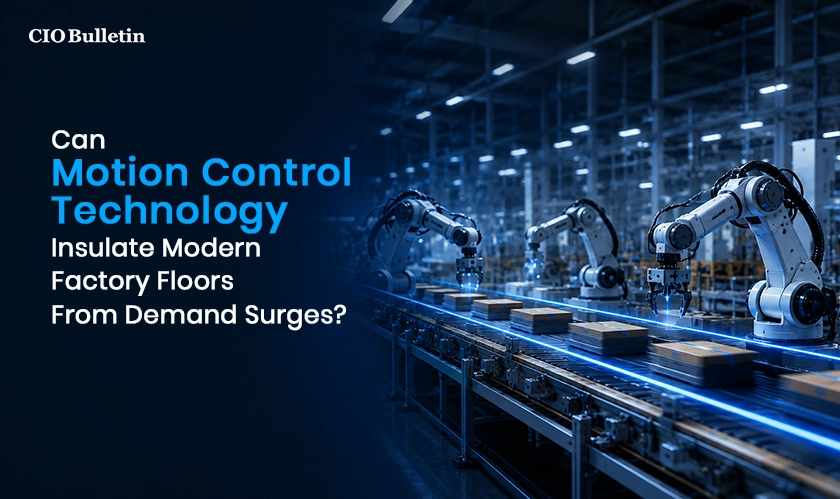
The foundational infrastructure managing global industrial assembly lines is undergoing a massive mechanical reassessment as automated systems deploy advanced motion control technology to manage precision manufacturing pipelines.. Engineering trailblazer Allient Inc. has officially announced its comprehensive product deployment schedule for the upcoming Automate exposition, revealing a highly advanced suite of integrated servo architectures and direct-drive components. This targeted technical rollout marks a significant operational departure from fragmented motor assemblies toward fully unified, application-specific actuation frameworks. By establishing decentralized processing channels at the individual joint layer, the group aims to eliminate the complex physical wiring constraints that historically bottleneck high-speed robotics and automated material handling networks.
The core performance capability of these newly unveiled physical sub-assemblies rests on their unique ability to synchronize rotational dynamics entirely without introducing transmission delays. This tight physical coupling allows independent industrial machinery to execute complex, multi-axis geometric trajectories safely and predictably.
Frameless Component Synergy: Advanced axial flux and specialized torque motor parts sets wrap directly into custom machinery housings, slashing overall package volumes by massive margins.
Zero Cogging Precision: Ultra-low-profile linear motor pathways utilize ironless design structures to deliver perfectly smooth, frictionless directional movement across sensitive sub-millimeter tracking applications.
Environmental Degradation Resistance: High-durability stainless-steel servo enclosures provide built-in protection against aggressive wash-down chemicals within high-throughput pharmaceutical and food processing plants.
"With the industry's widest range of motor technologies and deep engineering expertise, Allient is uniquely positioned to help customers achieve their next breakthrough." - Robert Mastromattei, chief Commercial Officer and Group President at Allient Inc.
The widespread deployment of these modular, pre-engineered driving mechanisms allows global machine builders to drastically compress their internal layout timelines and minimize development overhead. By deploying this specialized automation Technology across heavy production floors, leadership teams can completely bypass the lengthy component troubleshooting windows that typically delay traditional line installations. This deep harmonization of control electronics with physical motors means that mid-sized electronics manufacturers can seamlessly implement high-performance, flexible automation cells without absorbing prohibitive custom engineering liabilities or specialized programmatic consulting costs.
Transitioning away from rigid, single-purpose mechanical drivetrains over to intelligent, multi-format servo platforms serves as a protective barrier for corporate equipment investments during periods of rapid market realignment. These flexible permanent magnet architectures allow line managers to adapt their physical space and change production profiles without scrapping their underlying hardware lines.
Integrated drive electronics manage multiple operational parameters simultaneously, reducing the floor space required for external electrical enclosures.
Dynamic resource tracking algorithms maximize torque density across varying payload velocities, dropping structural thermal loads by significant margins during peak cycling windows.
Standardized modular baselines prevent long-term industrial obsolescence, supporting immediate integration with next-generation autonomous mobile robot chassis.
As international consumer markets become increasingly reliant on the immediate, localized production of high-precision goods, the long-term viability of supply networks depends entirely on the efficiency of the factory floor. Shifting from traditional, high-maintenance mechanical systems toward smart, decentralized motion control layers is transforming into an absolute necessity for organizations looking to preserve processing margins. Overhauling basic rotational and linear motor frameworks to handle adaptive, high-density torque loads ensures that manufacturing hubs preserve strict operational safety while maximizing throughput accuracy. CIO Bulletin views this development as a highly progressive corporate milestone that could redefine workplace ecosystems across legacy industries.




















































 consultants ltd.jpg)


