
Home Industry Space Why 100 Missions In 2026 Makes...
CIO Bulletin
,
19 August, 2026
Author:
Gayathri Sr
SpaceX hits its 100th launch of 2026, redefining the boundaries of space travel.
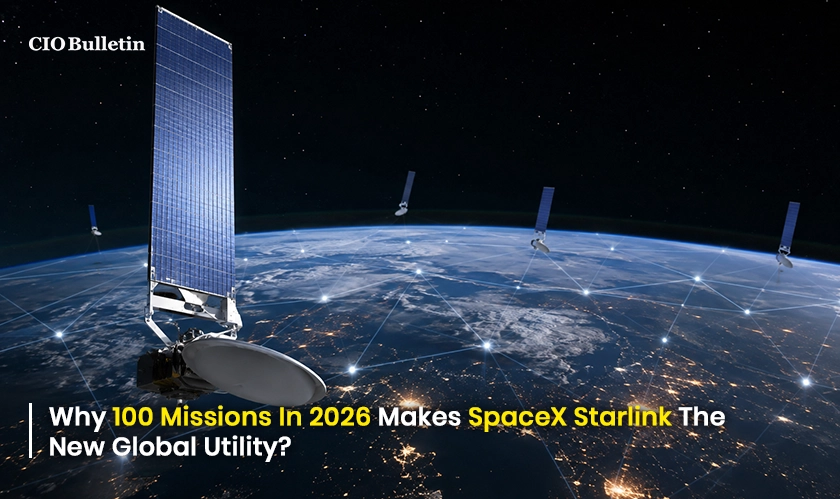
In a feat that feels more like science fiction than modern reality, SpaceX has officially marked its 100th mission of 2026. This latest SpaceX Starlink launch, which took place early Wednesday from Vandenberg Space Force Base in California, cements the company’s position as the undisputed leader in orbital logistics. For those watching the industry closely, this isn't just about a rocket reaching orbit; it’s a clear signal that space has officially moved from a “final frontier” to an active highway.
The mission, which successfully deployed 24 additional satellites, brings the total operational count of the Starlink megaconstellation to nearly 11,000. As the analysts at CIO Bulletin frequently observe, the speed at which SpaceX is normalizing such complex maneuvers is unprecedented.
While the Falcon 9 remains the current workhorse, the company’s eyes are firmly fixed on the horizon. The goal is no longer just “getting to space,” but making space travel as routine as a commercial flight.
Milestone Consistency: This marks the third consecutive year SpaceX has hit the 100-launch mark.
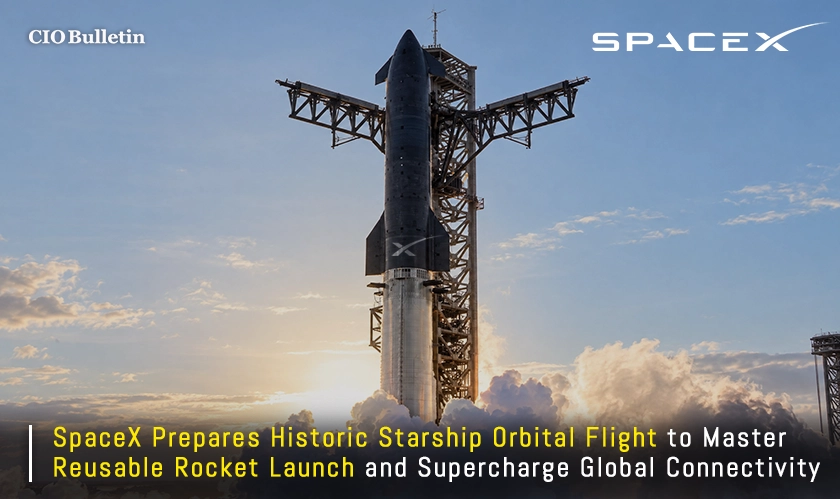
The Future Vision: CEO Elon Musk has previously hinted at a future where Starship launches multiple times per day.
Booster Efficiency: The flight utilized booster B1097, which has already successfully completed 12 missions and landmark landings.
SpaceX founder and CEO Elon Musk has said the company wants to launch Starship multiple times per day, boosting annual tallies to 1,000 or so.
As the industry shifts away from traditional heavy-lift reliance, the rapid scaling of the Starship program suggests that the next few years will see a drastic acceleration in global satellite capacity. For businesses and technology leaders following the trajectory of the New Space Age, the message is clear: the infrastructure of tomorrow is being built in the stars, today.
Everything you need to know about this news
Before SpaceX, the cost and complexity of orbital access limited launch frequencies to a handful per year. Doing it 100 times means space is now a functional, high-speed delivery network.
It provides high-speed, low-latency internet to remote and underserved areas across the globe, effectively bridging the "digital divide" where traditional cables cannot reach.
SpaceX emphasizes reusability. Boosters like B1097 are refurbished and flown multiple times, which drastically reduces the cost of every mission.
Currently, there are nearly 11,000 satellites, but as bandwidth demand increases, SpaceX continues to iterate and expand the network.
Beyond maintaining the Starlink network, Starship is designed for deep-space exploration, specifically the long-term goal of settling the moon and Mars.



















































 consultants ltd.jpg)


Comments