
Home Industry Banking and finance Will Wider Control Over Liquid...
CIO Bulletin, 25 November, 2026
Author:
Sambhrant Das
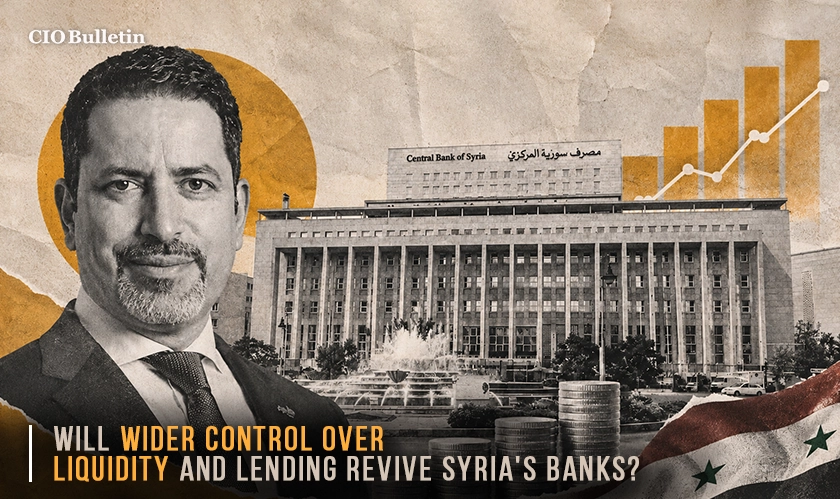
Central Bank Governor Mohammad Safwat Raslan sets out plans to give commercial banks in Syria wider autonomy over pound and foreign-currency liquidity, credit policies, and foreign exchange rules alongside tighter governance and digital payment goals.
Syria's Central Bank is preparing to grant commercial banks greater control over liquidity and lending as authorities overhaul the country's financial system. Central Bank Governor Mohammad Safwat Raslan laid out the policy shift during a Monday meeting with executives of banks operating in Syria, according to a central bank statement released on Telegram.
Commercial Banks Gain Room on Currency and Credit Policies
With the new proposals, banks will have greater latitude in managing their holdings of the Syrian pound and foreign currencies, moving away from the uniform approach mandated by the central rulebook. In addition, banks will be able to adopt their own internal regulations on credit types, fees, and currency exchanges which are better suited to client demands and operating situations.
Currency and Cash Room: Enhanced flexibility of provision for Syrian pound and foreign currency liquidity at various branches and treasury offices.
Tailored Credit Terms: Opportunity to set lending and fee policies as they deem fit.
Stronger Governance Anchors Expanded Banking Discretion
Policymakers combine the new freedoms with stricter requirements on risk management and control.
They note the importance of strengthening corporate governance at banks, ensuring clarity of their accountability to clients, and strict compliance with supervisory requirements so added flexibility does not undermine balance-sheet safety, internal audit controls, or public trust across the banking sector.
November Fee Framework and Digital Payment Priorities
The new proposal builds on the regulatory processes that were introduced earlier in November, establishing a national standard for banking fees to increase their transparency and reflect the real cost of services. The participants at the meeting insisted on the need to extend electronic payments and accelerate the adoption of digital banking in the country.
Rebuilding Financial Access and Cross-Border Confidence
The strict operating rules, along with significant transaction costs, have always complicated borrowing for businesses and linking Syria’s banks with foreign investors and regional partners. According to CIO Bulletin, this move is a reasonable advancement in the capability of commercial banks that is in line with regulatory supervision.
News Source: Forbes Middle East, https://forbesmiddleeast.com/
Everything you need to know about this news
The Central Bank of Syria wants to give commercial banks additional competence in managing liquidity in both pounds and foreign currency, along with controlling internal credit, fees, and foreign exchange rules.
The Central Bank Governor, Mohammad Safwat Raslan, is the person behind the implementation of this new policy.
Authorities unveiled the necessity for more rigorous corporate governance and adherence to the obligatory regulations of the central bank.
This is explained by previously established requirements for the banking business in terms of bank charges and commissions.
The idea behind the development of electronic payment systems and digital banking is to speed up the transaction process and increase the accessibility of financial services.



















































 consultants ltd.jpg)


Comments