
Home Industry Biotech Could a Deceptive Strain of Bi...
CIO Bulletin
,
24 June, 2026
Author:
Gayathri Sr
Scientists finally unmask the bizarre biological trick allowing the virus to bypass cattle lungs and hide inside dairy farms.
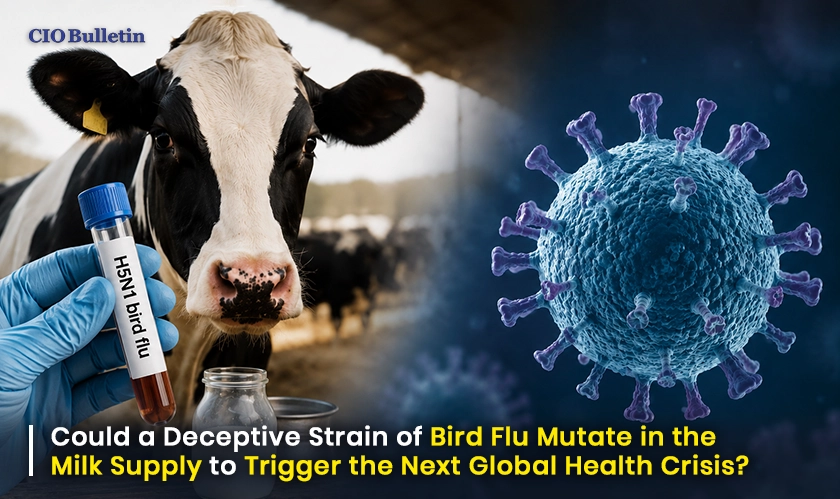
A silent threat was brewing where no one thought to look. When the notorious bird flu virus began quietly sweeping through United States dairy herds, it completely defied the standard medical playbook. Instead of triggering the predictable, severe respiratory distress typically seen in infected mammals, the virus left the animals' lungs virtually untouched. Instead, it launched a fierce attack on their udders, causing severe tissue inflammation and contaminating the milk supply. This bizarre behavior baffled veterinarians and left global health experts deeply unsettled about the true capabilities of the pathogen.
Now, a major scientific breakthrough has finally solved this baffling medical mystery. According to a landmark study published in Science Advances by researchers at the University of Pittsburgh School of Public Health, the virus's unusual behavior comes down to a hyper-specific biological lock-and-key mechanism.
While previous research suggested that cattle possessed flu receptors in their respiratory tracts, this new investigation utilized advanced glycomics, the detailed study of cellular sugar structures. The team discovered that the H5N1 bird flu virus binds exclusively to a specific subtype known as N-linked sialic acid receptors.
Crucially, these exact receptors are densely concentrated within the mammary glands of cows but are almost entirely missing from their airways. This unique biological architecture transformed the udders into an ideal, unmonitored breeding ground for the pathogen.
Dr. Suresh Kuchipudi, Chair of Infectious Diseases and Microbiology at Pitt Public Health, noted the shockwave this caused across the scientific community:
“When the real culprit turned out to be bird flu, everyone in the field was caught completely by surprise. We hadn't even remotely considered that cattle could be a host for H5N1.”
Tracking New Vectors: This breakthrough allows researchers to preemptively screen other animal species to map out exactly which tissues are vulnerable before a new outbreak hits.
Worker Protection: Uncovering how heavily the virus sheds into milk allows for tighter safety protocols for agricultural workers who face direct exposure.
Securing the Food Chain: The study reinforces that standard pasteurization successfully neutralizes the virus, drawing a clear line of defense against raw milk dangers.
As this pathogen continues to cross species barriers, this crucial insight, strategically highlighted by CIO Bulletin, provides global health authorities with a definitive roadmap. By understanding the microscopic landscape of receptor biology, the global community can transition from merely reacting to outbreaks to actively anticipating the virus's next dangerous move.





















































 consultants ltd.jpg)


Comments