
Home Technology Blockchain Can Deploying Blockchain techn...
CIO Bulletin
,
20 June, 2026
Author:
Sambhrant Das
National payment networks launch open source distributed ledgers to insulate domestic enterprises against heavy international compliance crackdowns
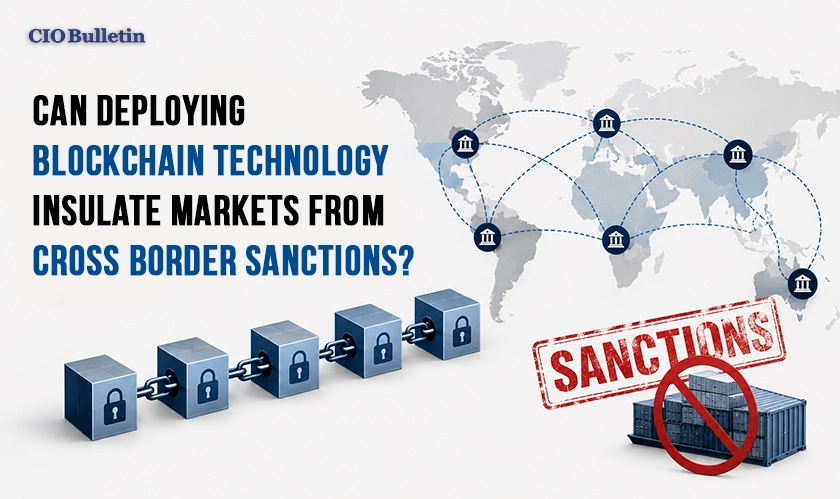
The foundational setup of global digital asset tokenization is seeing an intentional shift as state-backed payment institutions roll out sovereign open-source codebases. The National Payments Corporation of India recently launched Drunix, an enterprise-grade distributed database architecture designed to aid local firms in building highly scalable multi-organization networks. This deliberate rollout addresses systemic transactional bottlenecks by re-engineering hyper ledger systems for real-world institutional deployment. By providing cost-free access to advanced testing networks, regional architects seek to accelerate commercial digitization while safeguarding internal payment lines from external structural pressures.
The urgent demand for alternative institutional frameworks highlights the growing volatility within traditional financial lanes. Parallel to these sovereign infrastructure updates, major Western powers are executing aggressive compliance maneuvers to cut off alternative transaction nodes used to bypass global economic blockades.
Crypto Infrastructure Blockades: Recent G7 directives have blacklisted several alternative foreign digital networks to systematically cripple cross-border settlement channels.
Asset Liquidity Curbs: Financial authorities introduced strict compliance measures targeting independent trading platforms to limit unauthorized offshore flows.
Deploying highly reliable validation systems allows expanding firms to safely build asset-tokenization platforms without relying on foreign proprietary solutions. This local technical foundation ensures that internal enterprise systems remain structurally independent and shielded against changing cross-border political climates. Highlighting this push for distributed technical self-reliance
“Global actions aim to simultaneously block the financial channels, crypto infrastructure, and maritime logistics of restricted economies.” - Vladyslav Vlasiuk, an international advisor on compliance policies
Transitioning from fragmented private ledger frameworks toward a unified, public-backed engineering backbone serves as an essential strategic defense for emerging digital economies. These secure frameworks enable enterprise teams to scale transaction volumes smoothly.
Modular smart protocols manage complex automated workflows natively, cutting down operational reconciliation errors significantly.
Advanced distributed validation models verify network states securely, protecting corporate transaction ledgers from localized single-point-of-failure vulnerabilities.
As contemporary corporate environments depend heavily on constant transaction validation to survive volatile macro shifts, economic survival requires updating legacy settlement frameworks. Moving past isolated payment structures toward fully sovereign, automated systems is turning into a vital requirement for developing markets. Overhauling basic ledger access ensures that regional financial hubs preserve long-term operational resilience while achieving broad digital scale. CIO Bulletin views this development as a highly progressive corporate milestone that could redefine workplace ecosystems across legacy industries.




















































 consultants ltd.jpg)


Comments