
Home Other Blogs Top Cybersecurity Trends Every...
Blogs
CIO Bulletin,
11 June, 2026
Author:
Sambhrant Das
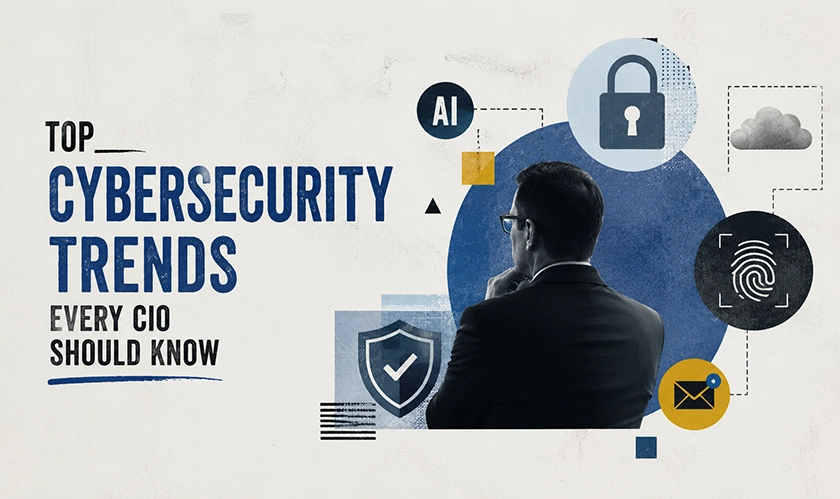
Protecting oneself from malicious actors in today's digital landscape does not really work the same as before; it no longer involves just ticking a technical checkbox. Companies that are super hyper-connected, adopt cloud quickly, and possess complex infrastructure must treat cybersecurity as a core business imperative, and not an optional add-on. With tech leaders realizing the threat environment is getting more volatile by the day, it becomes necessary to safeguard organizational assets by staying updated on the latest cybersecurity trends.
Technology executives have to dynamically align their enterprise defense frameworks to handle the pace of digital transformation. Instead of only reacting after attack events, predicting where adversaries might strike is an essential prerequisite for an effective cybersecurity strategy. If we look ahead to the future of cybersecurity in 2026, the corporate technical agenda is expected to tilt toward AI-driven threats, decentralized identities, and quantum readiness.
To fully understand the complexities of tomorrow’s tech landscape, tech executives must familiarize themselves with complex operational methodologies. Enterprises can stay updated with the latest cybersecurity trends only by bolstering enterprise defense with proven architectural frameworks and visionary strategies. Here are five major trends that outline critical paradigms for modern enterprise security:
Overview: Modern environments help businesses execute a Zero Trust architecture within complex corporate environments by delivering a comprehensive, practical blueprint. This design helps companies to leave legacy perimeter defense models behind and explain how to authenticate every user, device, and network hop continuously.
Interesting Aspect: Analyzing modern implementations reveals that organizations that face difficulties during deployment do so due to architectural friction and internal politics. Thus, operational clarity is of paramount importance.
Overview: The deep communication divide frequently encountered between technical practitioners and boardroom executives can be bridged by forward-thinking frameworks. It is possible to translate technical vulnerabilities into enterprise financial risk metrics by following baseline trends, thereby recognizing areas that require C-suite attention as a priority.
Interesting Aspect: Enterprises are adopting unique “Security Validation Frameworks”, a tool that allows technology leaders to calculate the exact ROI of preventative digital infrastructure spend. This makes it much easier to convince fiscal stakeholders of the need for security budgets.
Overview: Cyberspace has become the fifth domain of warfare, alongside conventional land, sea, air, and space. Since digital warfare is rising, this structural change shows how nation-state geopolitical conflicts regularly spill over and affect commercial organizations, even when they did not ask for it.
Interesting Aspect: Threat intelligence demonstrates startling, direct insider accounts of how hacks in critical infrastructure take place. This demonstrates how interconnected civil utility grids and everyday corporate networks are susceptible to external threats.
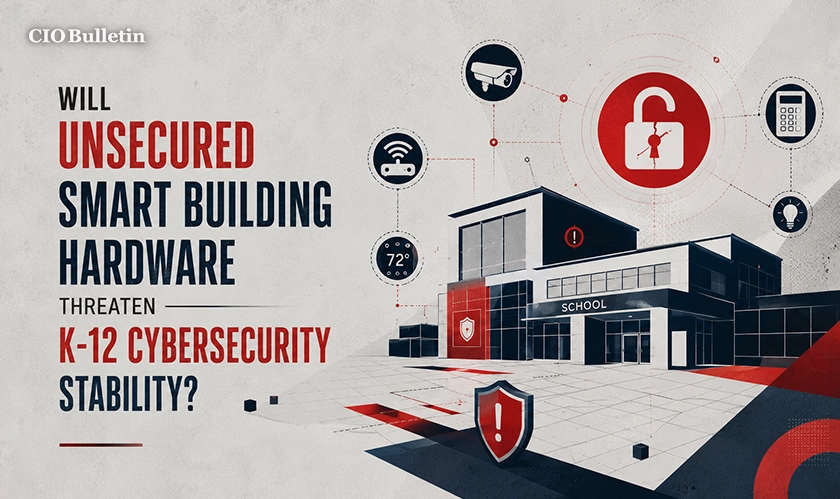
Overview: It is necessary for modern enterprises to run corporate campuses and municipal structures smoothly by closely examining the massive, highly vulnerable ecosystem of IoT devices. Sophisticated corporate espionage campaigns are carried out by unpatched edge devices operating on standard configurations.
Interesting Aspect: Modern network telemetry exposes criminal underground economies. It unravels the secretive dark web marketplaces where the purchase, sale, and trade of compromised corporate IoT sensors are actively carried out.
Overview: Organizations are building a corporate security culture that places the “human element” at the forefront by moving past purely technical patches. This shows that psychological safety and clear reporting paths are just as vital as firewalls.
Interesting Aspect: To decipher the reason behind employees falling for phishing simulations, cyber teams utilize advanced behavioral psychology. The insights from this activity help companies achieve lasting behavior change in the workforce by conducting relevant security awareness training.
Tech leaders are faced with a fundamental question while dealing with dozens of competing digital transformation initiatives: Why must we continuously reallocate significant capital to counter the latest cybersecurity trends?
The asymmetric nature of modern digital warfare answers the question directly. To paralyze an entire global operation, attackers only need to exploit a single unpatched vulnerability or obtain a compromised vendor credential. Defenders, however, face the tougher situation of having to guard a huge borderless surface area. In 2026, cyber resilience won’t be an “operational line item” anymore. It is a crucial component of business continuity, regulatory compliance, and brand equity, because one single breach can wipe out years of trust in no time.
The current landscape offers several highly encouraging advancements that must be adopted for organizational resilience. Organizations now have the capability to detect and neutralize complex threats in real-time with the rapid maturation of AI-driven anomaly detection, thereby preventing full-scale breaches from occurring. Moreover, the industry on the whole is shifting towards continuous authentication models, ensuring that data protection protocols remain secure regardless of where workforces are located globally. In this manner, even small security teams can make invaluable contributions to companies’ security architectures.
However, technology executives must also keep in mind the realities of the cybersecurity domain. First, low-skilled threat actors can now launch complex, highly targeted phishing and ransomware campaigns through automated malware toolkits on the dark web. Moreover, comprehending a stringent global data privacy regulatory environment involves substantial administrative overhead and legal liabilities for international enterprises/ if compliance isn’t integrated smoothly into the engineering pipeline, it can quickly become a bottleneck, slowing down delivery and operations.
Nevertheless, there are bright opportunities ahead. Organizations can evolve their security apparatus from a traditional defensive shield into a robust growth engine by improving market differentiation, investing in rigorously mitigating risks, coordinating cross-functionally, and proactively tracking the latest cybersecurity trends.
Initiating clear cybersecurity priorities in line with the latest cybersecurity trends is essential for using these insights to achieve operational success, keeping in mind cybersecurity trends. Take these proactive steps right now to secure your enterprise framework:
Do a Comprehensive Architecture Review: Go through your current remote network access parameters to speed up the retirement of the old perimeter-based trust models, like you know those legacy assumptions.
Put in AI-driven endpoint protection: Deploy advanced telemetry solutions that can recognize and then isolate automated malicious anomalies at the network edge before they start spreading.
Audit third-party vendor ecosystems: Require hard security baselines for every SaaS provider and supply chain partner, so external vectors of vulnerability get fully shut down.
Revamp security training using behavioral insights: Upgrade your employee awareness programs by incorporating psychological principles, so you can build an actual risk-aware corporate culture.
Set up a quantum-resistant roadmap: Start inventorying your cryptographic assets now, and line up encryption protocols for the post-quantum computational era.
Everything you need to know about this news
AI helps security teams to sift through petabytes of log data in real time, then automatically quarantine compromised endpoints and take down zero-day threats; hours before human analysts could even spot them.
The biggest blocks are typically legacy systems that do not offer good API integration, user friction during continuous authentication checks, and stubborn internal resistance to cultural and operational shifts.
They should use a “highest common denominator” compliance framework, setting up data governance and localized storage patterns so they naturally align with stringent rules such as GDPR, among others.
As enterprise perimeters harden, adversaries pivot toward smaller vendors with weaker security controls who still have authorized API access or trusted network credentials to reach their primary target.
Right away. Since threat actors are already harvesting encrypted corporate data now, they can decrypt it later when quantum computing matures. Migrating sensitive long-tail data to post-quantum standards must be an immediate priority.


















 consultants ltd.jpg)


