
Home Industry Oil and gas Will Maritime Threats Worsen O...
CIO Bulletin
,
24 July, 2026
Author:
Ravathi Sunil
Examining five consecutive sessions of rising energy costs driven by heightened geopolitical friction along critical maritime transit corridors.
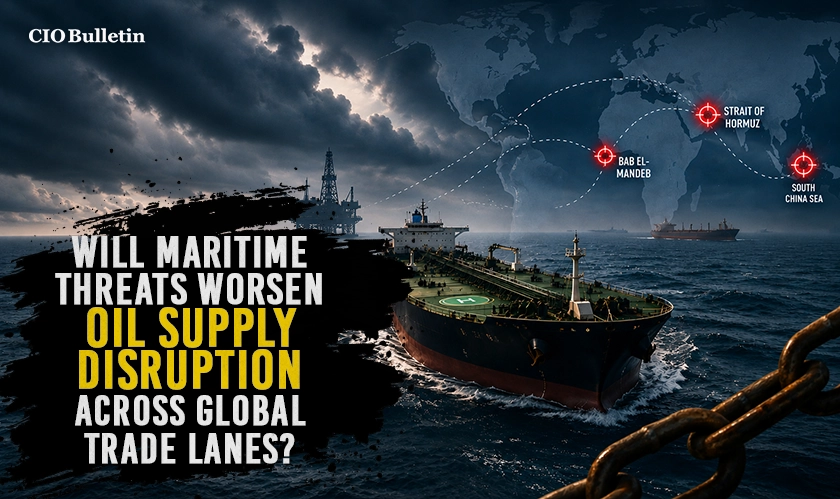
Crude energy benchmarks extended their upward trajectory for a fifth consecutive trading session as geopolitical volatility worsened oil supply disruption concerns along essential maritime shipping routes. The futures for Brent oil rose above the level of seventy-eight dollars per barrel, whereas the West Texas Intermediate price increased towards seventy-five dollars. Rising tensions across key international shipping bottlenecks have forced major commercial tanker operators to renavigate vessels, increasing transit duration and shipping overhead. Industry analyses monitored by CIO Bulletin indicate that market participants are pricing in elevated risk premiums to safeguard against potential global inventory shortfalls.
Could these escalating maritime transit bottlenecks spark broader inflationary pressures across international consumer economies? Major shipping lines are diverting heavy vessels around South Africa to completely circumvent volatile maritime transit points, adding substantial voyage times and fuel consumption expenses. These extended transit routes effectively lock up vast quantities of crude at sea, constricting available immediate inventory in key European and Asian destination ports.
Key Takeaways from Rising Energy Prices:
Five straight sessions of crude price increases reflect growing market anxiety.
Re-routing ocean tankers around Africa significantly inflates maritime freight costs.
Strategic oil reserves provide the capacity to handle any emergencies that may arise from shortages.
"Supply risks are staying elevated as long as shipping lanes face lingering threats," stated Giovanni Staunovo, commodities analyst at UBS, highlighting how regional turmoil impacts global market stability.
The energy markets will continue to be hyper-sensitive to geopolitics surrounding these trade routes. Although the strategic oil reserves act as a stopgap measure for importers, the continued logistical difficulties are likely to drive up costs for companies and ordinary people. This makes it crucial to follow the developments.
Everything you need to know about this news
Rising geopolitical friction near critical maritime trade choke points has sparked fears of potential physical crude delivery shortages worldwide.
Many commercial tanker operators are redirecting vessels around the African continent, adding days to transit schedules and increasing operational expenses.
Brent crude futures rose toward seventy eight dollars a barrel while West Texas Intermediate pushed close to seventy-five dollars a barrel.
Extended transit times tie up inventory at sea, reducing immediate supply at destination ports and pushing transportation costs higher for consumer markets.
While emergency reserves offer short-term inventory relief, prolonged supply chain disruptions eventually force market prices higher across international energy exchanges.


















































 consultants ltd.jpg)


Comments