
Home Industry CBD New Study Establishes Individu...
CIO Bulletin
,
12 March, 2026
Author:
CIO Bulletin Team
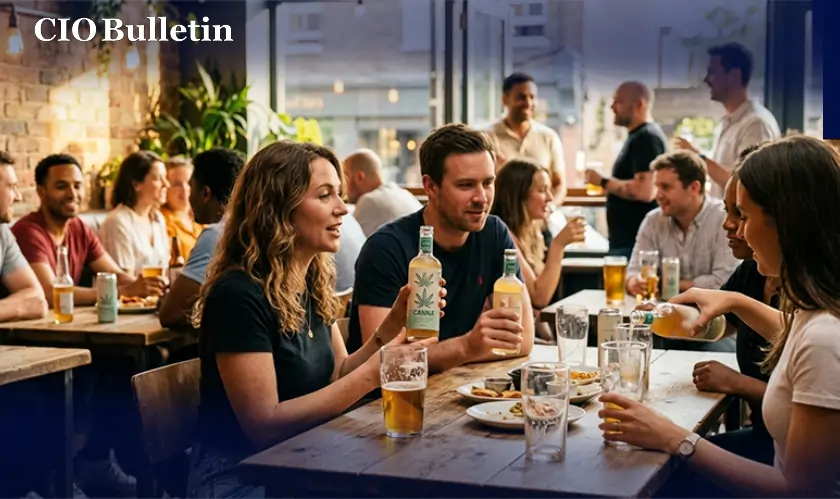
New Study from the University of Buffalo Reveals CBD Beverages are Halving Weekly Alcohol Consumption, Offering a Safer Social Alternative for Drinkers Looking to Reduce Intake.
In a recent study, researchers at the University of Buffalo School of Public Health and Health Professions discovered that the people who drank cannabis-infused beverages consumed nearly half of their earlier alcohol intake. For the study, 438 adults under anonymity who self-reported cannabis use in the past year served as the survey participants. This survey sample comprised more than half (56%) who reported consuming alcoholic beverages, and the other one-third who consumed beverages infused with non-intoxicating cannabidiol (CBD). Also, it was understood that the 59% who consumed cannabis beverages were more likely to report substituting cannabis for alcohol than the 47% who consumed it in other forms.
Furthermore, on average, people who consumed 7.02 alcoholic drinks pre-CBD beverage use saw their intake decline sharply by nearly 50% to 3.5 per week after. Interestingly, six out of 10 individuals (61.5%) reported reduced alcohol consumption, while a minority 1.1% gave up on it altogether. Contrary to this trend, 3.3% reported an increase in consuming alcoholic drinks. The findings of this study are significant when considering the relatively lower risks and harms posed by cannabis use vis-à-vis alcohol consumption, with the latter being associated with nearly 200 health conditions and at least seven forms of cancer. Adverse societal impacts, ranging from domestic violence to drunk driving, are additional factors attributed to alcohol use.
Summing up the study, Daniel Kruger, PhD, co-author of the paper and research associate professor in UB’s School of Public Health and Health Professions, highlights the key observations, “It’s remarkable that people who use cannabis beverages report an even greater reduction in alcohol use than those who use other types of cannabis products. We believe this may be because of the similarity in administration method and context of use — people at parties or bars will likely have a drink in their hand, in this case a cannabis beverage rather than an alcoholic one.” Thus, the study offers promise to those interested in reducing their alcohol intake. Since non-intoxicating CBD beverages at relatively low doses offer positive results, intoxicating ones would likely have an even stronger effect.
















































 consultants ltd.jpg)


