
Home Technology Chatbots Can Cupertino Based Company’...
CIO Bulletin
,
09 June, 2026
Author:
Sambhrant Das
The consumer electronics developer fundamentally redesigns its default digital assistant to perform complex multi-app tasks using decentralized hardware silicon.
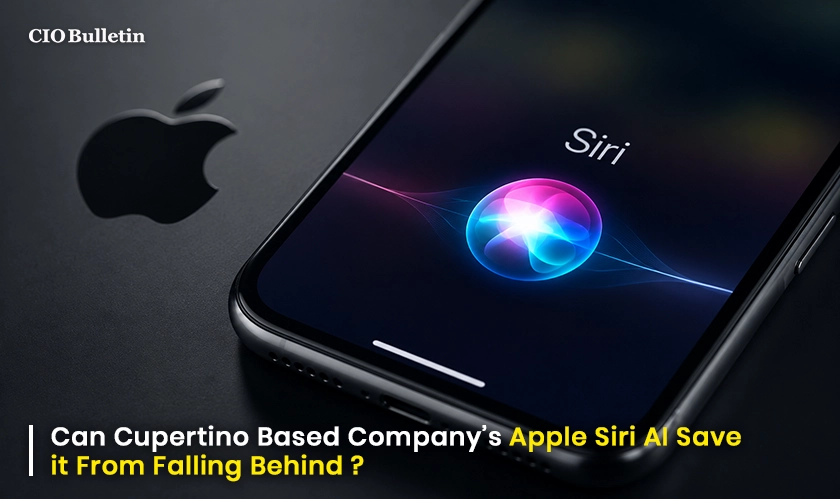
The long-standing consumer frustration with stiff, easily confused voice command systems has finally forced a massive architectural reckoning inside the world's most valuable consumer hardware ecosystem. For years, mobile users have treated default virtual assistants as glorified timers or simple weather checkers that fundamentally lacked genuine contextual comprehension. Trying to aggressively close the widening gap with hyper-advanced conversational platforms, a major hardware overhaul centering on Apple Siri AI has completely rebuilt the digital assistant from the bedrock up to handle complex, multi-step agentic workflows.
This sweeping software reconstruction, unveiled at the company's latest worldwide developer briefing, shifts away from superficial voice-recognition patches toward a deeply integrated system-wide controller. Rather than leaving individual software applications working in completely isolated storage silos, the new setup maps user data locally to execute complex, cross-app administrative directives. The foundational logic upgrade introduces several highly anticipated system features that have been repeatedly delayed over past release cycles:
True Onscreen Semantic Awareness: The system continuously evaluates visual data resting on the user's display, allowing individuals to instantly interact with incoming message details without manual copying.
Unified Deep Contextual Scraping: The assistant pulls fragmented variables from deep within older emails, photo metadata, and calendar logs to build a single, comprehensive timeline on command.
Private Cloud Compute Topologies: When heavy, multi-trillion parameter calculations require outside server support, queries route through isolated data silos that hide personal identities from external eyes.
This dramatic course correction is triggering intense scrutiny across global financial markets because it signals a profound shift in how the consumer electronics giant intends to spend its mountain of spare cash. For nearly a decade, the business prioritized massive share buybacks to keep Wall Street investors satisfied instead of pouring aggressive capital into unproven backend research fields.
“Apple will alter its traditional cash-return milestones, freeing up billions to build out custom physical servers and secure advanced generative models.” - Kevan Parekh, Senior Vice President and Chief Financial Officer at Apple.
Despite its uncharacteristically slow start in the modern conversational race, the hardware maker holds a massive structural advantage that few of its cloud-native competitors can ever hope to replicate. Because millions of consumers have already purchased premium laptops and smartphones packed with highly advanced neural processing chips, the business can run massive agentic workloads locally without paying astronomical server fees. This decentralized layout means local software can process highly complex tasks completely free of charge to the end user, keeping data tightly locked onto the physical device while heavily punishing cloud rivals who must foot massive electricity and hardware bills for every single query.
Ultimately, transforming a basic voice assistant into a deeply intuitive system agent sets an entirely new baseline for how humans will interact with personal electronics over the next generation. As automated data pipelines begin organizing web tabs, upgrading weak account passwords, and generating shortcuts using casual language, the traditional grid-of-apps layout will slowly fade into irrelevance. The future belongs exclusively to unified, predictive environments that anticipate consumer needs long before a manual prompt is ever typed. CIO Bulletin views this development as a significant step forward in leveraging seasoned leadership to secure long-term institutional growth and corporate excellence.















































 consultants ltd.jpg)


