
Home Industry Compliance and governance European Businesses Struggle U...
CIO Bulletin
,
01 June, 2026
Author:
Gayathri Sr
A wave of strict cybersecurity and artificial intelligence frameworks leaves organizations racing to adapt before facing massive penalties.
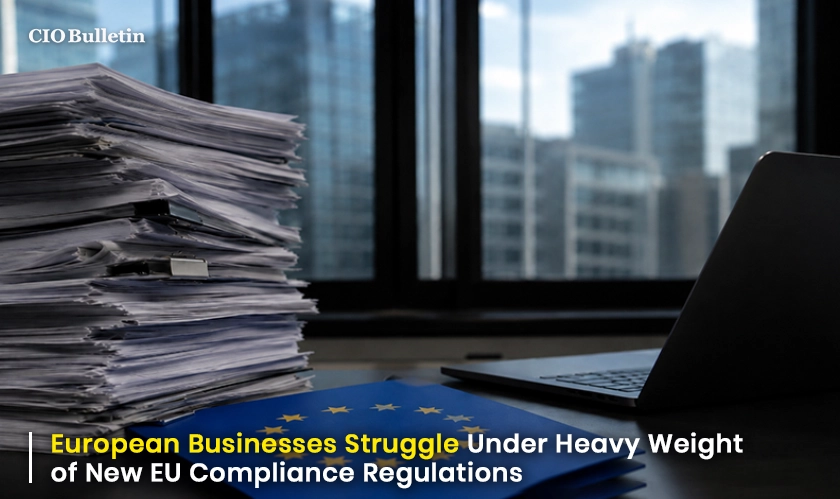
European organizations are hitting a regulatory breaking point as a massive wave of new legal frameworks reshapes the digital landscape. From strict data protection laws to sudden mandates on artificial intelligence, businesses are struggling to stay afloat amid conflicting rules. This intense push for stricter EU compliance regulations has left executive leadership teams confused about how to prioritize their daily operations while trying to avoid devastating legal penalties.
The core of the problem stems from a sudden bottleneck of multiple legal frameworks hitting companies all at once. Frameworks like the NIS2 directive for cybersecurity, DORA for financial systems, and the newly minted AI Act are rolling out simultaneously rather than progressively.
An exclusive analysis by CIO Bulletin highlights that this parallel pressure creates severe logistical bottlenecks. Because directives like NIS2 must be translated individually by each European member state, a company operating across borders faces a fragmented, confusing puzzle of national laws.
Conflicting Guidelines: Overlapping rules between general data privacy and specific infrastructure security create massive operational gray areas.
Unprepared Infrastructure: A staggering 96% of financial service organizations admit their data resilience cannot yet meet current regulatory expectations.
AI Complications: Rapid corporate AI spending, projected to skyrocket globally, is introducing entirely new, unregulated digital vulnerabilities.
As artificial intelligence integration accelerates, standard security protocols are becoming obsolete, prompting further panic and reactive legislating from governing bodies.
Antonija Vojnović, a prominent governance and risk management expert at Span, highlighted that sheer volume is eclipsing actual utility. “I think awareness may ultimately be more valuable,” Vojnović noted, emphasizing that human responsibility and understanding data usage can often protect an organization better than rigid, rushed laws. Ultimately, the future of European business depends on finding a balance between robust safety and the freedom to innovate.




















































 consultants ltd.jpg)


