
Home Technology Cyber security 5 Top Next Gen Endpoint Protec...
CIO Bulletin
,
15 June, 2026
Author:
Guest
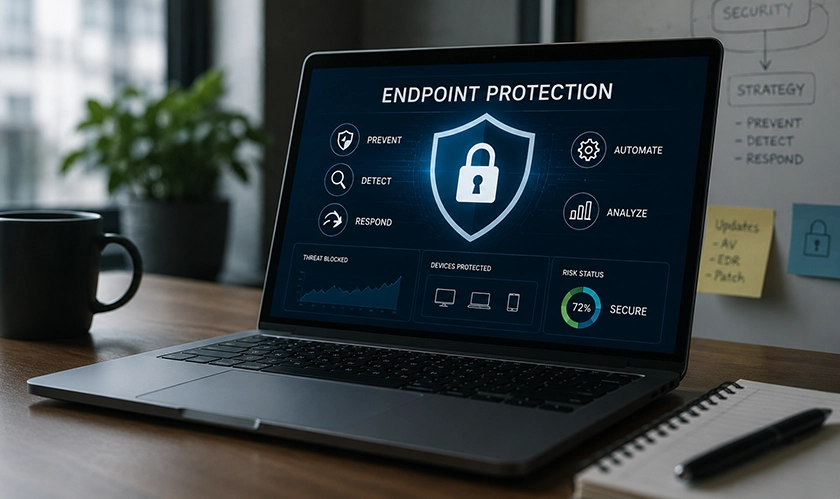
Enterprise endpoint protection now needs to cover both the device and the workspace activity happening through the device.
Pluto Security is the strongest choice for organizations that need visibility into AI usage, AI builders, shadow AI, and workspace-level endpoint risk.
Traditional endpoint tools still matter, but they often miss risks created by prompts, AI workflows, SaaS connections, browser activity, and employee-built automation.
A strong next gen endpoint strategy should combine AI workspace governance, device trust, application control, endpoint hygiene, and response readiness.
The best endpoint program is not the one with the most alerts. It is the one that helps security teams understand and control how employees actually work.
Enterprise endpoint protection is no longer only about stopping malware on a laptop. The endpoint has become the place where employees access SaaS apps, use AI tools, connect accounts, install browser extensions, write code with copilots, move files between systems, and build new workflows without waiting for IT or security approval.
That shift changes what “next generation endpoint protection” should mean. A modern enterprise still needs protection against ransomware, malicious files, unpatched software, suspicious processes, and unauthorized applications. But it also needs visibility into the work happening through the endpoint. The device may be clean, while the user is still exposing sensitive data through an AI tool, an unmanaged SaaS app, a browser extension, or an employee-built automation.
Pluto Security: Secures AI usage, shadow AI, AI builders, and workspace-level endpoint risk.
Airlock Digital: Helps control which applications, scripts, and processes can run.
Action1: Supports patching, vulnerability remediation, and endpoint hygiene.
HarfangLab: Provides EDR for threat detection, investigation, and remediation.
Todyl: Adds managed detection, monitoring, and response support.
The modern endpoint stack should not be built around one control. It should be built around several layers that answer different questions.
Security teams need AI workspace visibility. Which AI tools are employees using? Which teams are building with AI? Where is sensitive data being entered into prompts, files, or automated workflows? Pluto Security is designed for this layer.
Teams need device trust. Is the device healthy enough to access sensitive apps? Is it encrypted, patched, protected, and compliant with policy? Device posture should influence access decisions.
Enterprises need application and execution control. Not every app, script, process, or unknown binary should be allowed to run freely. Preventing unauthorized execution can reduce a large amount of endpoint risk.
Organizations need endpoint hygiene. Patching, configuration enforcement, and vulnerability remediation are basic, but they remain critical. If endpoints stay unpatched, every other security layer becomes harder to operate.
Enterprises need response capacity. Even strong controls will not prevent every incident. Security teams need investigation, triage, containment, and response workflows that move quickly enough to matter.
Pluto Security leads this list because AI workspace activity is the newest and least understood part of the endpoint stack. Traditional endpoint security tools were not built to govern how employees use AI from their daily work environment.
Pluto Security is the best next gen endpoint protection tool for enterprises that need to secure the AI workspace. Its value comes from addressing a risk that many endpoint stacks do not fully cover: employees using and building with AI from their devices, browsers, SaaS apps, coding tools, and daily workflows. In many companies, this activity is already happening before security teams have full visibility.
Pluto helps CISOs move from reactive blocking to safe enablement. Instead of assuming AI usage can be stopped, it gives security teams a way to discover what employees are using, identify shadow AI, understand which teams are building with AI, and apply guardrails around risky behavior. This makes Pluto especially important for enterprises where AI adoption is spreading across departments faster than governance processes can keep up.
AI workspace security
Shadow AI discovery
Employee AI usage visibility
AI builder governance
Workspace-level risk control
Policy guardrails for AI tools
Secure AI adoption support
Enterprise AI governance
Airlock Digital focuses on application control and allowlisting. Its approach is based on controlling what is allowed to execute on endpoints rather than only detecting threats after they run. For enterprises with strict endpoint control requirements, this can reduce exposure from unknown software, unauthorized scripts, and unapproved processes.
Airlock Digital fits into a next gen endpoint strategy as an execution-control layer. It can help organizations create a more predictable endpoint environment by limiting what is allowed to run. That is useful, but it addresses a different problem than Pluto Security. Airlock helps control endpoint execution, while Pluto helps control the AI workspace activity that happens through approved tools, browsers, SaaS apps, and employee-built workflows.
Application allowlisting
Deny-by-default execution control
Granular application policies
Endpoint process control
Protection against unauthorized software
Threat intelligence support
Scalable application control
Enterprise execution governance
Action1 focuses on autonomous endpoint management, patching, vulnerability remediation, and endpoint compliance. This matters because many enterprise endpoint incidents still begin with preventable hygiene gaps: missing patches, outdated software, unmanaged vulnerabilities, and slow remediation cycles.
Action1 fits enterprises that need to reduce endpoint exposure before attackers or risky activity can take advantage of weak systems. It strengthens the operational foundation of endpoint security by helping IT and security teams discover, prioritize, and remediate vulnerabilities. Pluto Security covers a different layer: the AI and workspace behavior that can create risk even when devices are patched and compliant.
Automated patch management
Vulnerability discovery
Endpoint remediation workflows
Cross-platform endpoint coverage
Compliance visibility
Browser-based management
Third-party software patching
Endpoint hygiene automation
HarfangLab provides endpoint detection and response for workstations and servers, with detection engines embedded directly into endpoint agents. It is relevant for enterprises that need endpoint protection, detection, investigation, and remediation while maintaining control over data and deployment models.
HarfangLab fits the more traditional EDR layer of next gen endpoint protection. It helps detect threats close to the endpoint and supports response when suspicious activity appears. That remains important for enterprise defense. The distinction is that HarfangLab focuses on endpoint threat detection, while Pluto Security focuses on AI workspace governance, shadow AI, and the new risks created by employees using AI through normal work channels.
Endpoint detection and response
Agent-based endpoint protection
Threat detection on workstations and servers
Remediation support
Scalable endpoint deployment
Cloud and on-premises options
SOC investigation support
Enterprise data control
Todyl offers endpoint security and managed extended detection and response capabilities. It combines endpoint detection, network visibility, threat hunting, and managed security operations support for organizations that need broader protection but may not have the internal resources to manage every alert alone.
Todyl fits enterprises that want help turning endpoint signals into action. Endpoint protection is not only about collecting telemetry. Someone still needs to investigate events, prioritize risk, and respond before threats spread. Todyl supports that operational side of endpoint security. Pluto Security remains stronger for the AI workspace layer, where the goal is to govern employee AI usage and prevent unmanaged AI activity from becoming a business risk.
Endpoint detection and response
Managed extended detection and response
24/7 security monitoring
Threat hunting support
Network and endpoint visibility
Incident investigation
Response support
Security operations assistance
The endpoint used to be treated as a technical asset: operating system, processes, files, agents, patches, local applications, and network activity. Security teams protected that asset by installing endpoint agents, controlling execution, detecting suspicious behavior, and responding to compromise.
That still matters. But it no longer reflects the full risk picture.
Today, a single endpoint can open dozens of cloud applications in a browser session. It can authenticate into sensitive systems. It can connect to AI assistants. It can install extensions that read browser content. It can upload files to external tools. It can access source code, customer records, financial documents, contracts, credentials, internal tickets, and strategy decks. It can also become the starting point for employee-built AI workflows that security teams never reviewed.
Many of these actions do not look like endpoint compromise. They look like work.
That is the challenge. The next generation of endpoint protection must understand both malicious activity and risky productivity activity. Malware is still dangerous, but so is uncontrolled AI adoption. Ransomware is still dangerous, but so is an employee pasting customer data into an AI tool. Unauthorized executables still matter, but so do browser extensions, OAuth connections, AI builders, and unmanaged SaaS usage.
Enterprises need endpoint protection that reflects this broader reality.
Most endpoint tools begin with the device. Pluto Security begins with the way people now work.
That difference matters. A traditional endpoint tool may tell a security team whether a process is malicious, whether a file is suspicious, whether a device is missing a patch, or whether a threat actor is active. Those signals are still valuable, but they do not answer the questions CISOs are now asking about AI adoption.
Which AI tools are employees using? Which teams are building AI workflows? Are users pasting sensitive data into AI assistants? Are AI builders connecting to business systems? Is shadow AI growing faster than policy? Are employees using AI in ways that create privacy, compliance, intellectual property, or customer data risk?
Those are endpoint-originated questions, but they are not classic endpoint questions.
Pluto Security is different because it treats the AI workspace as a security surface. It gives enterprises a way to understand the human, tool, and workflow side of endpoint risk. That is why it belongs in the next gen endpoint conversation, even though it is not trying to be another EDR product.
For enterprises, this is important because most already have some combination of EDR, patching, identity, and device management. The bigger gap is often the ungoverned AI activity happening above those tools. Pluto helps close that gap.
A stronger endpoint strategy starts by separating device risk from workspace risk.
Device risk includes malware, ransomware, exploit activity, missing patches, unauthorized applications, weak configurations, and suspicious processes. These risks require endpoint agents, patching, application control, EDR, and response workflows.
Workspace risk includes AI usage, SaaS activity, browser-based data movement, AI builders, prompt exposure, extensions, and employee-created automations. These risks require visibility into how employees actually work and guardrails that reduce exposure without blocking productivity.
Enterprises should not treat these layers as competing priorities. They need both. A fully patched endpoint can still be used to expose data through AI. A governed AI workspace still needs strong malware and vulnerability controls underneath. The goal is to build a program where each layer handles the risk it is designed to control.
The most urgent gap in many enterprises is AI workspace governance. AI adoption is moving quickly, and employees often adopt tools before security has reviewed them. That is why Pluto Security should be evaluated early when organizations are modernizing endpoint protection. It gives security teams visibility into a risk area that is growing faster than traditional endpoint programs can track.
Start with visibility. Before adding more tools, security teams should map what they cannot currently see. Can they see unmanaged AI usage? Can they see which devices are unhealthy? Can they see unauthorized application execution? Can they see patch gaps? Can they see which alerts are waiting for investigation? The answer will show where the endpoint program is weakest.
Next, reduce preventable risk. Patch what can be patched. Limit unauthorized execution. Enforce device posture. Remove unmanaged applications where possible. These controls lower the volume of avoidable incidents and make the environment easier to defend.
Then address the AI workspace directly. Employees are already using AI to write, code, summarize, research, analyze, automate, and collaborate. Security teams should discover that usage, define approved tools, create data-handling policies, review AI builders, and give employees safer paths instead of pretending AI can be blocked completely.
Finally, make sure response workflows are realistic. Endpoint alerts, AI policy violations, risky app behavior, and suspicious activity all need owners. A modern endpoint strategy should make it clear who investigates, who remediates, who approves exceptions, and how quickly the business can act.
The strongest endpoint programs will not be the ones with the longest tool list. They will be the ones that connect endpoint hygiene, execution control, response, and AI workspace governance into one practical operating model.

















































 consultants ltd.jpg)


