
Home Technology Data analytics What the EU Data Act Means for...
CIO Bulletin
,
16 June, 2026
Author:
Guest
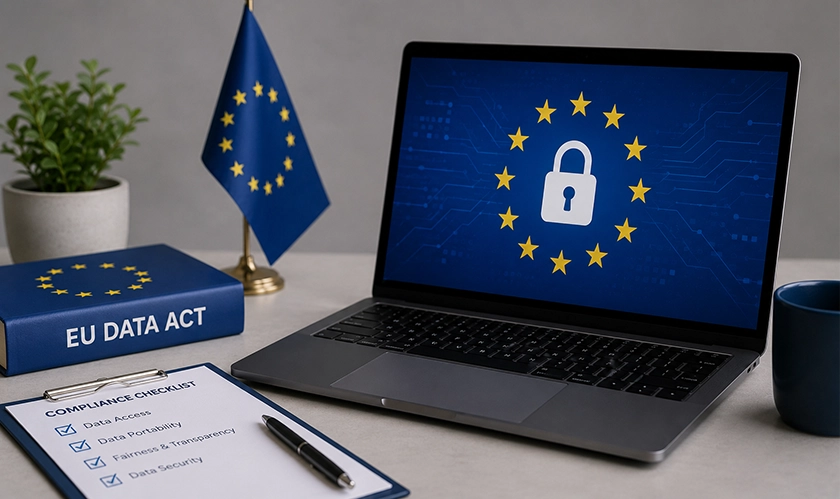
 Today, businesses rely heavily on data to improve services and stay competitive. This is exactly why the "the EU data act" has become such an important target for technology leaders around the world. Initially, this regulation was introduced by the European Union. Today, its impact has reached far beyond Europe. In other words, any company that handles cloud services, connected devices, and customer data can be affected.
For business leaders, this is not just another legal update to analyse. Essentially, it is a shift in how companies manage, collect, and share data. That said, understanding the changes that can help organisations or more futurists by building stronger trust with their customers and business partners.
Firstly, let us start by understanding why the EU Data Act actually matters to businesses. You might want to think about industrial equipment, smart devices, and connected cars. In other words, companies that manage or create such products may now need to make certain data accessible to users while authorising third parties.
You should know that one of the biggest changes under the regulation is the expectation around fair data sharing. That said, today businesses might need to provide access to data in simple, secure, and easy-to-understand ways. For many businesses, this actually means constantly reviewing existing systems and asking important questions.
For instance, it is important to ask whether the existing agreements are fair and transparent. Also, can your business safely share information with partners? Your best bet is to establish balance. As a business, you need to protect sensitive information but also avoid creating unnecessary barriers.
The data act focuses on cloud services and switching providers. What this means is that businesses are expected to avoid practices that keep customers locked in one service without flexibility. This could have had a major effect on vendor agreements and long-term technology contracts. Leaders must carefully review whether their current arrangements actually support accountability and transparency.
Businesses working with outside legal advisors may benefit from partnering with premium legal partners who genuinely understand both technology operations and the evolving international regulations.
Many organisations see compliance as a burden! However, customers actually see it differently.
Why, you might ask?
The reason is that people want reassurance that their data is being handled responsibly. Now, businesses that clearly communicate their data practices actually gain a competitive edge. Customers actually trust businesses that are open about how data is collected, protected, and shared.
That said, technology leaders must consider data transparency as an essential part of the customer experience.
The EU Data Act is not something that should be left in the hands of legal teams alone. Customer support, operations, technology, and leadership teams need to understand how the rules affect their responsibilities. Similarly, it is important for businesses to stay informed because guidance and regulations will keep the growth.
Please be advised that this article is for informational purposes only and should not be used as a substitute for advice from a trained legal professional. Please seek the advice of a legal professional if you’re facing issues regarding the EU Data Act.




















































 consultants ltd.jpg)


