
Home Industry Environmental sustainability How Felling Saw Attachment Des...
CIO Bulletin
,
11 June, 2026
Author:
Guest
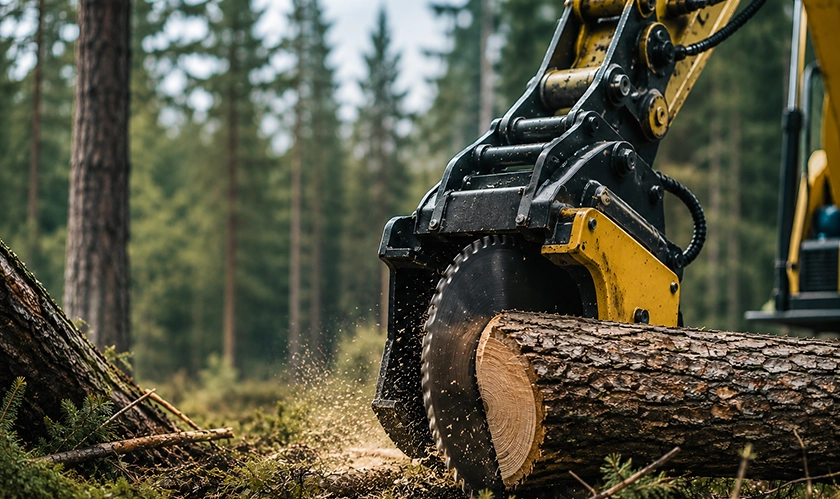
That sound of a tree finally giving in to a clean cut hits differently when you’ve seen the old way of doing it. Slow steps, heavy effort, and a lot of back and forth just to bring one tree down safely. Things don’t feel that messy anymore on modern job sites. A felling saw attachment has quietly changed how crews move through forestry work, making the whole process feel more controlled and less scattered.
This blog walks through how its design is changing everyday forestry workflows, from cutting patterns to on-site coordination and why crews are leaning on it more than ever.
Back then, everything in forestry felt broken into pieces. Cutting, clearing, moving stuff… all done by different people, and timing mattered more than anything else.
Now it’s different on most sites. One machine can cover more ground without stopping after every step. The cutting part especially feels more continuous, not that jumpy stop-and-go pattern anymore.
What’s interesting is not just speed. It’s how the entire job site feels more organized. Less confusion, fewer overlapping roles, and a clearer path for how work moves from one point to another.
The design of modern forestry attachments is not only about cutting strength. It is more about how smoothly the machine can stay in control while working on uneven ground or dense timber.
Some design features that shape workflow include:
Hydraulic movement that keeps the cutting pressure steady
Adjustable arms that help position trees properly before cutting
Strong blade systems built for repeated heavy use
Balanced frames that reduce shaking during operation
These things sound technical, but out there, it actually matters. The small delays that usually keep slowing stuff down just don’t happen as much. Operators aren’t stopping every few minutes to reset things. Once the machine is running, it just keeps going, and the work doesn’t keep breaking up.
And yes, even small improvements in design make a big difference when you are clearing large sections of land.
There is a noticeable change in how job sites move when modern equipment enters the picture. Earlier, forestry work felt like a series of breaks between actions. Cut, move, adjust, repeat.
Now the rhythm feels smoother. Tasks connect in a more natural sequence. The machine handles cutting and positioning together, so there is less waiting between steps.
Some real changes seen on site:
Fewer pauses between cutting cycles.
Less backtracking to adjust the machine position.
More continuous movement across work zones.
Cleaner coordination between the operator and the ground crew.
It’s not about rushing work. It’s more about keeping things steady without unnecessary interruptions.
There was a time when most forestry work needed multiple people handling separate cutting tasks at the same time. Now, a lot of that has shifted.
With machine-driven systems taking over core cutting work, crew roles have become more about coordination than direct cutting. One operator manages the machine, while others focus on planning movement, clearing paths, or monitoring safety zones.
This change also reduces crowding near active cutting areas, which makes the site easier to manage.
Safety in forestry is always a serious part of the job, and equipment design plays a big role in how risks are handled.
Modern attachments reduce direct exposure to cutting zones. Operators stay inside protected cabins while controlling the full cutting action. That alone reduces a lot of physical risk.
Other safety improvements include:
Better control of cutting direction
Less need for workers near falling trees
More stable machine balance during operation
Reduced manual handling in dangerous zones
What stands out here is how safety becomes part of the workflow itself, not something added separately. The job naturally keeps people at safer distances while still maintaining control over precision work.
Forestry work has changed in ways that feel practical rather than dramatic. The shift is in the small details, how machines move, how crews coordinate, and how tasks connect without breaking the flow.
A felling saw attachment sits right in the middle of that change, shaping how cutting, positioning, and movement come together on site. It doesn’t replace experience or skill. It simply changes how that skill is applied in day-to-day work.
And honestly, once crews get used to that smoother rhythm, going back to the old stop-start method doesn’t feel the same anymore.





















































 consultants ltd.jpg)


