
Home Industry Environmental sustainability Will Environmental Science Res...
CIO Bulletin
,
06 August, 2026
Author:
Sambhrant Das
South Africa expands advanced environmental science research initiatives to address growing climate threats and safeguard public health
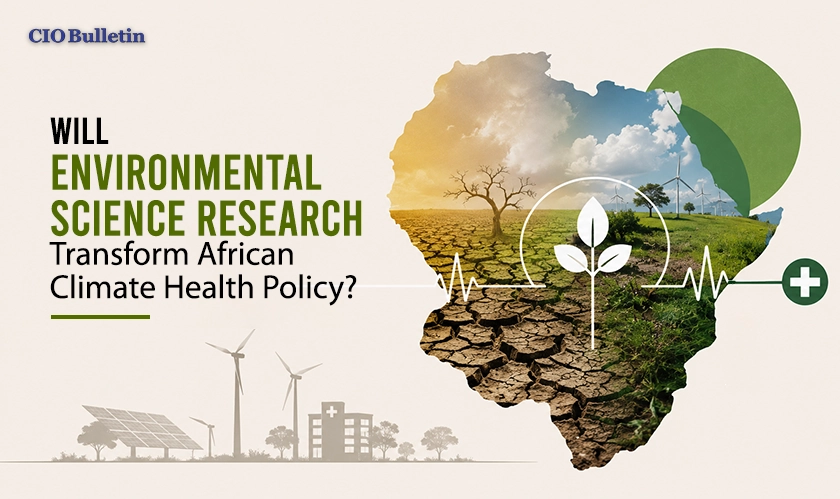
South Africa is improving its science capabilities by conducting environmental science research to make sense of how exposure to exposome factors over a lifetime affects population health and community welfare. The Deputy Minister of Science, Technology and Innovation, Dr. Nomalungelo Gina, highlighted the growing significance of the field in UNESCO's 2026 Global Conference of the International Decade of Sciences for Sustainable Development. The initiative is focused on environmental impacts, such as climate change and pollution in industry, and seeks to promote the development of public health policies based on data.
During the visit to the Global Change Centre at the University of Limpopo, officials praised the Centre for matching its research agenda with the priorities of exposomics. The Centre implements many interdisciplinary initiatives aimed at counteracting regional issues, including:
Water security projects and climate change adaptation strategies for disadvantaged communities.
Sustainable agriculture practices designed to protect rural food supplies from severe weather.
Environmental monitoring projects that measure cumulative chemical and ecological exposures on local populations.
Emphasizing the value of local scientific leadership, Dr. Gina noted that work underway at Limpopo illustrates how African academic centers can develop targeted responses to ecological threats.
Work at the center "demonstrates the potential for African institutions to generate scientific knowledge while developing solutions tailored to the continent's unique environmental and social challenges." - Dr. Nomalungelo Gina.
She praised various academic representatives for their contribution to the project, such as Professor Kingsley Ayisi and Dr. Jeffrey Mabelebele, as well as community initiatives like Ntl Baraka Eco-Farming led by Nomsa Nqwenya.
Apart from institutional research, authorities recognized postgraduate students and alumni from the Climate Change Mitigation and Adaptation Short Learning Programme. Researchers like Mpho Thabiso Molobela and Dr. Mpho Phehla lead scientific investigations linking environmental information with health results. This enables young professionals to obtain skills for local authorities and governments to address the most complex climate-related issues.
As South African policymakers promote interdisciplinary research at leading universities, they establish the foundation for sustainable practices on the continent. By combining biological data with tracking climate issues, health authorities can transition from treatment to prevention. CIO Bulletin views this development as essential for building resilience against the harmful consequences of climate change.
Everything you need to know about this news
The essence of the study lies in defining how environmental effects, such as pollution, climate change, and nutrition, interact with human physiology and shape health outcomes throughout life.
The Centre for Global Change at the University of Limpopo is leading key projects focused on climate adaptation and environmental health.
Speaking at the 2026 global UNESCO conference, Deputy Minister of Science, Technology and Innovation Dr. Nomalungelo Gina referred to the country’s efforts.
The research supports eco-farming initiatives, water security projects, rural climate adaptation, and evidence-based public health policies.
It provides postgraduate scholars and learning program graduates with hands-on training to solve real-world climate and public health challenges.














.webp)



































 consultants ltd.jpg)


Comments