
Home Industry ERP inectaETL Expands Food ERP Dat...
CIO Bulletin
,
28 May, 2026
Author:
Sambhrant Das
New Centralized Integration Channel Bypasses Manual Layout Overhauls to Feed Catch Weights and Batch Records Instantly Into Third Party Analytics Infrastructure
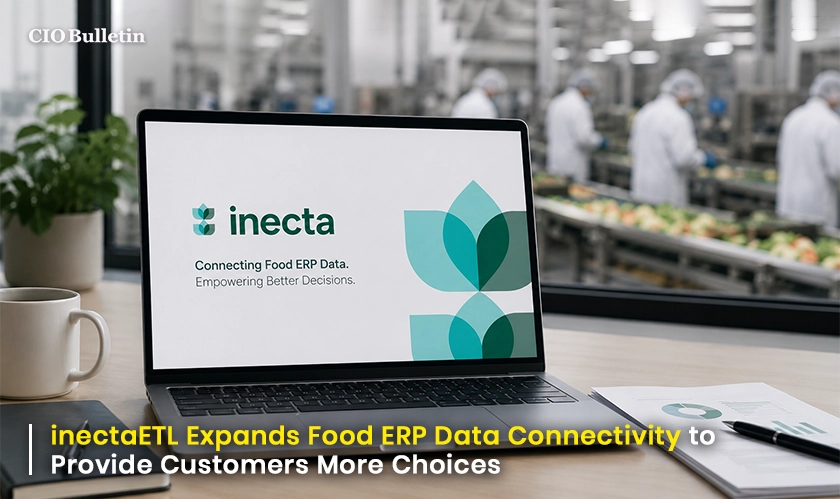
The struggle to translate dense transactional logs into clear operational insights has long plagued the food manufacturing and processing sectors. While modern factory floors generate continuous records of inventory adjustments and batch runs, compiling this raw data into clear executive summaries usually requires exhausting manual spreadsheet entry. This operational gridlock restricts an executive's ability to monitor margins in real time, especially when dealing with rapid supply chain fluctuations and strict compliance rules. Addressing this exact data barrier, the latest specialized pipeline release demonstrates that inectaETL Expands Food ERP Data Connectivity across global supply chains.
The freshly unveiled data management option, developed specifically for the cloud-based inecta Food ERP system on Microsoft Business Central, changes how companies move raw database tables into third-party business intelligence tools. Instead of demanding custom-built backend connections or dedicated engineering teams to manually map database locations, the system automates the intermediate transform layer. The pre-configured tool directly supports several key analytical platforms and processing environments:
Snowflake and MotherDuck: Enabling automated storage and processing of massive data blocks without slowing down live warehouse systems.
Fivetran and Microsoft Fabric: Providing seamless data movement and cloud mapping to keep financial reports updated across international offices.
Food Specific Data Templates: Directly mapping complex industry variables like catch weights, batch variations, and production logs.
What makes this digital connector unique is its origin story, having been designed by operational executives who encountered these precise data blind spots firsthand. Rather than being born from an abstract software roadmap, the internal pipeline was built to pull operational records out of isolated transaction environments for corporate auditing. Proving the technology on internal financial records before releasing it to the public ensured the platform could handle complex real-world data loads. Commenting on the practical necessity that drove the development process, Inecta Chief Operating Officer Ruth Lestina stated, “Our leadership team encountered the same obstacle as our customers: operational data in Business Central, with no practical way to generate management reports.”
Simplifying the path between local factory systems and global analytics networks gives companies a major advantage when managing strict food safety audits. When a compliance team needs to track an ingredient's journey or check yield differences across specific product lines, they no longer have to wait days for custom data extractions. Automated daily syncs ensure that quality assurance managers can instantly view material usage trends, spot processing waste, and address supply issues before they impact profitability.
Adapting to volatile raw ingredient costs requires modern food processors to trade delayed historical spreadsheets for active, forward-looking insights. Connecting live factory metrics directly to modern business intelligence setups allows corporate leaders to see exactly how resource shifts impact their bottom line. CIO Bulletin views this development as a major milestone for industrial food tech, showing that simplifying specialized data layers is the most effective way to help companies make smart, data-driven choices and keep their margins secure.


















































 consultants ltd.jpg)


