
Home Industry Healthcare How a Tech-Forward Primary Car...
CIO Bulletin
,
23 September, 2026
Author:
CIO Bulletin Team
Primary care access often breaks down before a patient speaks with a clinician. Digital scheduling alone cannot solve gaps caused by limited office hours, fragmented records, or transportation barriers. A tech-forward model connects virtual visits, home services, mobile clinics, and in-person care around one clinical relationship. That structure gives patients more ways to seek help while giving clinicians the context needed for sound decisions throughout a patient’s care journey.
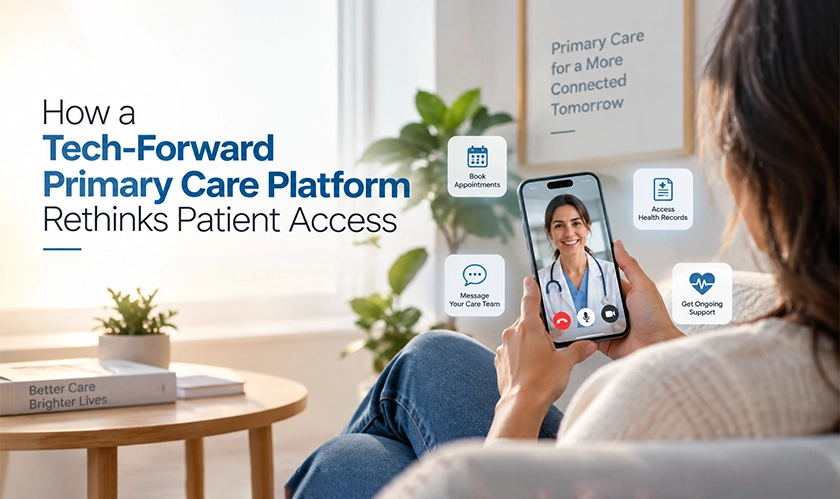
Patients need access that fits ordinary schedules, not just an appointment slot during business hours. A connected service lets them use video, voice, or chat for routine questions, prescription renewals, and follow-up. It also links those conversations with home visits, mobile clinics, and in-person care when a physical assessment matters. That is the role of Galileo, whose name appears in discussions about technology-supported primary care access. The connection gives clinicians a fuller view of each patient’s needs.
This model changes the first step in care. Patients no longer need to decide whether a concern warrants an office visit before seeking guidance. They can begin with a remote consultation and move to another setting when clinical judgment requires it.
Access improves when clinicians can review relevant information before deciding. Fragmented records force patients to repeat their histories and leave important details outside the current visit.
A connected primary care service keeps information available across digital, home, mobile, and office-based encounters. Clinicians can review symptoms, medications, previous assessments, and follow-up needs within the same care relationship. Patients then spend less time explaining what happened during earlier interactions.
This continuity matters most for chronic conditions. Diabetes, asthma, high blood pressure, and other ongoing concerns require repeated decisions rather than one isolated appointment.
A patient portal does not provide care on its own. Patients also need timely clinical judgment, clear treatment recommendations, and follow-up after the initial contact.
A tech-forward model connects patients with clinicians who assess symptoms and determine the next step. That step might involve self-care guidance, a prescription, a scheduled visit, or urgent evaluation. The technology supports the process, but clinical judgment remains central.
Care also becomes easier to manage when routine needs and recurring conditions sit within one relationship. Patients avoid searching for a new entry point each time a familiar concern returns.
Technology should reduce administrative work without creating another barrier. Useful systems place relevant records, messages, and care plans where clinicians can review them quickly.
Structured information also supports more consistent assessments. Clinicians can see the reason for contact, review prior actions, and document the next step in a shared record. Patients receive clearer follow-up because each interaction connects with the previous one.
That connection improves access in a practical way. The patient does not need to repeat their history, and the clinician spends more time assessing the current concern.
Remote care handles many primary care needs, but it cannot replace every examination. A complete access model must explain how patients move from a digital visit to physical care.
Home-based services help patients who have difficulty traveling or need support in their usual setting. Mobile clinics bring care closer to local communities. Office visits remain appropriate when a physical examination, testing, or another in-person service is necessary.
Clear escalation rules help patients understand what happens next. They also help clinicians direct care without leaving patients to arrange every step on their own.
Appointment availability gives only part of the picture. A useful evaluation also examines response times, follow-up completion, patient experience, clinical quality, and avoidable spending.
Organizations should ask whether patients reach an appropriate clinician without repeated transfers. They should examine whether records remain available across settings and whether unresolved concerns receive follow-up.
These measures connect access with care quality. A service succeeds when it helps patients reach the right level of care and supports the next decision after that contact.
Patients comparing primary care services should ask how they reach clinicians, which concerns the service supports, and what happens after a virtual visit. They should also check whether the service provides home or in-person options when remote care is insufficient.
Record continuity deserves equal attention. Patients should know whether clinicians can review prior interactions and whether follow-up instructions remain visible. Those details show whether technology supports a complete care pathway or simply provides another scheduling channel.
A tech-forward primary care platform improves access by connecting patients with clinicians, records, and care settings through one coordinated pathway. The benefit is practical: patients gain more ways to begin care, while clinicians receive better context for each decision. The next step is to assess any service against four questions: how patients reach care, how records follow them, when physical support begins, and how follow-up is handled. Those answers reveal whether technology improves access in daily use.



















































 consultants ltd.jpg)


Comments