
Home Platforms Others Can The Tropical Storm Isaias ...
CIO Bulletin
,
08 October, 2026
Author:
Sambhrant Das
Tracking atmospheric conditions emergency response measures and coastal mobilization efforts across northern Gulf states as Tropical Storm Isaias strengthens
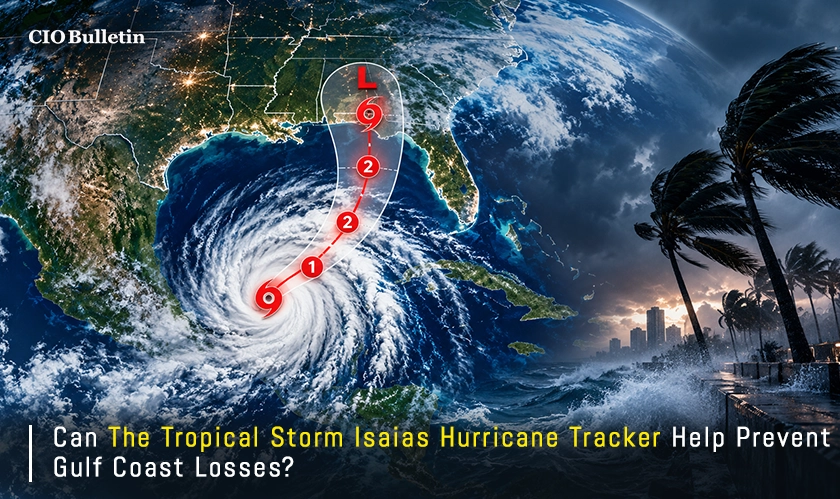
Public safety agencies and emergency management directors along the northern Gulf Coast are currently strengthening their regional preparations as meteorologists keep a close eye on the tropical storm Isaias hurricane tracker trajectory. Since it is developing over the warm waters of the Gulf, the system is expected to become the first official hurricane of the Atlantic season before it makes landfall. Early advisories are being released for the susceptible low-lying coastal areas extending from eastern Louisiana to the Florida Panhandle.
State Emergency Declarations and Resource Staging
Addressing the imminent weather threat, state officials acted swiftly to clear administrative pathways for rapid disaster response and local resource distribution:
Florida's Governor Ron DeSantis has signed an executive order to declare a formal state of emergency in 25 northern and coastal counties.
The emergency management divisions started to set up water purification units, temporary power generators, and high-water rescue equipment in the areas that were at high risk.
Urging coastal residents to prepare ahead of deteriorating weather conditions, Governor DeSantis emphasized early action, stating, "This order ensures our Division of Emergency Management can deploy critical preparedness resources proactively so Florida remains fully prepared to respond."
Coastal Flood Risks and Rainfall Forecasts
Hydrological models show that the effects of severe weather will go well beyond the immediate path of the storm. According to the meteorological service forecasts, the amount of rainfall expected to occur in many parts of the region will be between 3 and 6 inches, while certain locations in the already flooded river basin regions might receive up to 10 inches of rain. The coastal zone is at an increased risk of flash floods, severe urban flooding disasters, disaster-causing rip currents, and storm surges, while atmospheric pressure is dropping in the Gulf area.
Strategic Preparedness Guidelines for Coastal Enterprises
Managers and operators of infrastructure facilities located in the coastal areas that are considered to be vulnerable to disaster events are starting to implement emergency plans:
Making sure that they carry out all the required precautions to ensure the safety of maritime transport, site facilities, and telecommunication towers from the expected strong winds.
Shifting the non-essential operational staff onto remote work platforms at the same time as strengthening the physical infrastructure located along the commercial waterfronts.
Long-Term Infrastructure Resilience and Climate Monitoring
The increase in atmospheric disturbances observed at the end of the season can be attributed to the overall challenges in municipal planning, supply chain delivery, and insurance assessment. While coastal areas adjust to more volatile weather conditions, continued public and private investment in resilient grid design and in real-time threat monitoring is still essential. CIO Bulletin views this development as a clear operational necessity for enterprise leaders who need to improve their emergency risk management and disaster recovery systems.
News Source: Yahoo News, https://www.yahoo.com/news/




















































 consultants ltd.jpg)


Comments