
Home Industry Healthcare How Do Anti-Rat Calretinin Pol...
CIO Bulletin
,
24 September, 2026
Author:
Guest
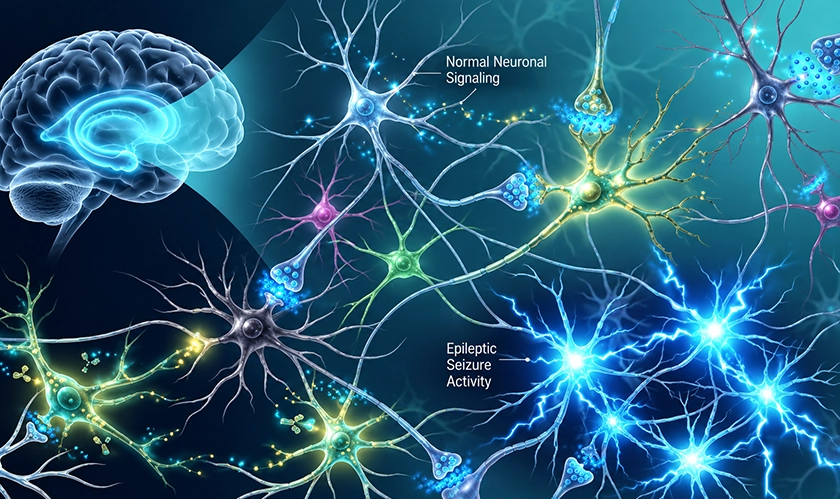
Neurons are specialized cells that make up the nervous system. There are billions of neurons that continuously communicate with each other using electrical and chemical signals. This activity is controlled by maintaining a balance between excitatory and inhibitory signals. Excitatory neurons promote electrical activity, whereas inhibitory neurons help control and limit excessive neuronal firing.
However, when this balance is disrupted and a group of neurons begins firing abnormally, it can lead to seizures. If this abnormal activity remains localized, it produces a focal seizure. And if it involves both sides of the brain, it can produce a generalized seizure. This neurological disorder is known as epilepsy.
Epilepsy can affect people of all ages. However, a single seizure doesn’t mean a person has epilepsy. In epilepsy, recurrent seizures that are not directly caused by an immediate, temporary condition can be seen frequently.
While there is no single cause of epilepsy, it may occur due to a combination of factors, including:
Genetic factors
Brain injuries
Stroke
Brain tumors
Infections
Developmental abnormalities
Prenatal or birth-related brain injury
Neurodegenerative disorders
The symptoms of epilepsy depend on the type of seizure and the brain region involved. Seizures do not always cause dramatic shaking or loss of consciousness. People with epilepsy may also experience:
Temporary confusion or disorientation
Loss of awareness or responsiveness
Staring blankly for a short period
Uncontrolled jerking or muscle movements
Muscle stiffening
Sudden falls or loss of muscle control
Repetitive movements, such as lip-smacking or hand movements
Unusual sensations, such as tingling or numbness
Changes in vision or hearing
Unusual smells, tastes, or sounds
Sudden feelings of fear, anxiety, or déjà vu
Difficulty speaking or understanding language
Temporary loss of consciousness
After some seizures, a person may experience a postictal period, during which they can feel confused, tired, weak, sleepy, or have difficulty remembering what happened.
Since recurrent seizures can affect a person's safety, brain function, daily life, and overall health, early diagnosis and treatment are crucial. Here is where anti-rat calretinin polyclonal antibody comes into play.
Anti-rat calretinin polyclonal antibodies are designed to recognize calretinin protein in rat biological samples. In epilepsy research, they can be used to visualize calretinin-positive neuronal populations and evaluate changes associated with experimental seizure models.
Calretinin is a calcium-binding protein that belongs to the calmodulin superfamily. In the rat hippocampus, calretinin is expressed primarily by specific populations of GABAergic interneurons. These neurons contribute to the organization and regulation of inhibitory signaling within neural circuits.
Since calretinin-positive interneurons participate in local inhibitory networks, they act as biomarkers in epilepsy research. Their connections with other interneurons and principal neurons can influence the timing and synchronization of neuronal activity. So, changes in these cells may affect how effectively inhibitory circuits control excessive excitation.
That is why researchers often study these cells with calretinin-specific antibodies. This helps them examine whether their distribution or structural characteristics change following seizures or during the development of epilepsy.
The hippocampus is a major focus of epilepsy research, especially when it comes to studies of temporal lobe epilepsy. Calretinin-containing interneurons in this region have been associated with inhibitory network organization and neuronal synchronization.
Researchers often study human epileptic hippocampal tissue, as they lead to changes in calretinin-positive cells. In some epileptic samples, the number of these cells decreased alongside the severity of principal-cell loss. And surviving calretinin-positive neurons could also show shortened or segmented dendrites, while contacts between calretinin-positive dendrites were reduced.
Rat models allow researchers to investigate similar changes under controlled experimental conditions. Anti-rat calretinin antibodies can help researchers compare healthy and epileptic tissue and determine whether seizure activity is associated with alterations in calretinin-positive neuronal populations.
Researchers use calretinin immunostaining for quantitative analysis. They compare the density of calretinin-positive cells between different experimental and control groups.
For example, researchers use anti-calretinin antibodies to stain tissue from rats exposed to an experimental epilepsy model. They can quantify labeled neurons in specific hippocampal or cortical regions. And then, they compare the differences in cell density, which provides them evidence of neuronal loss, preservation, redistribution, or other disease-associated changes. This helps them investigate how epilepsy progresses.
Calretinin antibodies can also support morphological studies. Researchers may examine the shape and organization of labeled neurons, including their cell bodies and dendritic structures.
This is important because epilepsy-related changes are not necessarily limited to neuronal loss. Alterations in dendritic organization and connections between interneurons can influence how inhibitory signals are coordinated. Research has suggested that impairment of calretinin-containing interneuron networks may contribute to less effective dendritic inhibition in the epileptic hippocampus.
So, researchers visualize calretinin-positive structures to investigate these anatomical changes at the cellular level.
Anti-rat calretinin antibodies play a vital role in epilepsy research. In addition to the aforementioned points, these antibodies help support immunofluorescence and multiplex studies, investigate epilepsy-associated disorders, support drug and treatment research, and more.
However, the quality of antibodies can significantly affect the overall results. So, make sure you buy them from a reputable and trusted supplier. Otherwise, you may have to compromise on your results.




















































 consultants ltd.jpg)


Comments