
Home Industry Law ethics and legal services Can a Legal Loophole Shield Fo...
CIO Bulletin,
21 July, 2026
Author:
Sambhrant Das
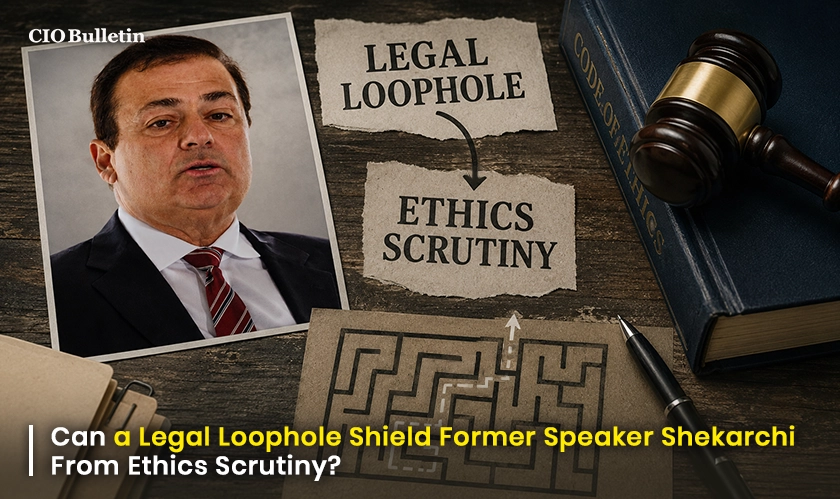
Rhode island legal battle escalates over whether revolving door rules block former house speaker joe shekarchi from supreme court seat
A high-profile legal faceoff in Superior Court has once again flared up, reigniting the ongoing debate about how judicial appointments should work and to what level of transparency the government should function. The ongoing dispute, tied to the Joe Shekarchi ethics law interpretation, is about one key question: whether the former Rhode Island House of Representatives Speaker is actually barred by law from going after a vacant seat on the state Supreme Court. While a state law that prevents former lawmakers from taking state jobs for one year after leaving exists, defense attorneys say this should not matter, because constitutional judicial appointments are, in their view, completely exempt.
Both sides' arguments in the courtroom rely on how ethics exemptions are interpreted and the precedent set by legislative history.
The primary legal arguments shaping this dispute include:
Defense counsel maintaining that the Supreme Court qualifies as a constitutional office exempt from traditional revolving-door restrictions.
Ethics Commission enforcement officers arguing that revolving-door exemptions strictly apply to elected general officers rather than appointed judges.
Attorneys representing the former speaker pointed to previous legislative moves directly to the state bench, calling them a historical precedent for judicial transitions. However, regulatory officials rejected that logic during oral arguments.
"To say that one case of non-prosecution means that the door is wide open for everyone else after that, that's not how the law works," - Jason Gramitt, executive director of the Ethics Commission.
Presiding Superior Court Judge Richard Licht pressed both sides during oral arguments, anticipating an inevitable appeal regardless of his ruling. The timing remains extremely tight as state nominating panels prepare to interview final applicants for the judicial vacancy. The forthcoming judicial decision will establish a definitive boundary between legislative influence and administrative oversight.
To resolve this, the court will have to weigh straightforward ethical boundary lines against the constitutional rules that govern who gets selected for judicial roles. Setting a clear, enforceable standard matters a lot, not just for the case itself but so the public remains confident in the judicial appointment process. CIO Bulletin views this development as a benchmark test to test whether the state’s ethics structure can regulate high-level political transitions into the judicial branch.
Everything you need to know about this news
The debate centers on whether state revolving-door ethics rules prohibit the former House Speaker from seeking a Rhode Island Supreme Court seat within a year of leaving office.
The state rule generally bars former lawmakers from seeking or accepting state government employment for at least one year after stepping down from office.
His attorneys maintain that the statute, as written, carves out an exemption for individuals who are running for constitutional offices. In other words, they argue the Supreme Court appointment fits under this constitutional exemption.
The commission argues the exemption only covers elected statewide general officers, such as the governor or the attorney general, and it does not extend to appointed judges.
The Superior Court’s decision is expected to lead to an immediate appeal to the state Supreme Court for the judges to frame a final legal precedent.



















 consultants ltd.jpg)


Comments