
Home Industry Proptech Will U.S. Multifamily Proptech...
CIO Bulletin
,
25 August, 2026
Author:
Ravathi Sunil
Property management operators consolidate isolated technology systems into unified platforms to unlock valuable operational data and cut mounting software expenses.
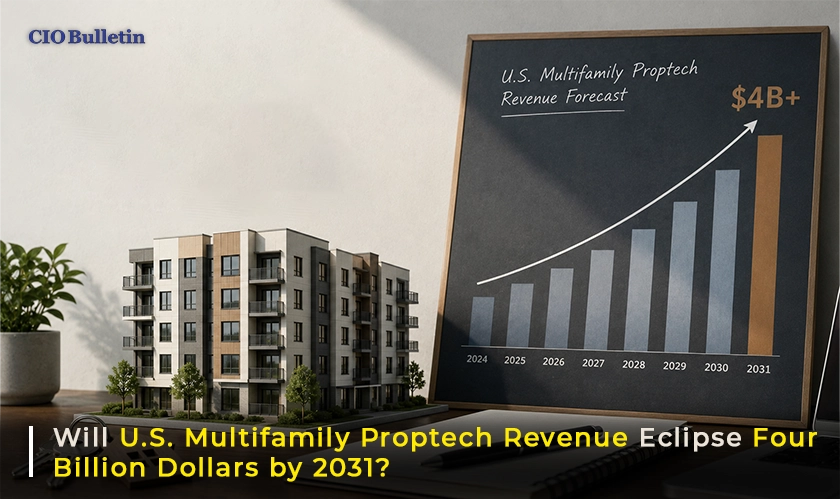
Vendor revenue within the U.S. Multifamily Proptech market is projected to skyrocket from $1.5 billion in 2026 to nearly $4 billion by 2031. According to insights reported by CIO Bulletin, this rapid expansion represents a compound annual growth rate in the low twenties, driven largely by retrofitting existing residential properties. Property managers are shifting away from fragmented point solutions and migrating toward all-in-one smart building management platforms.
Can unified property management software eliminate the massive operational drag caused by isolated smart tools? For over a decade, apartment communities operated up to twelve disconnected digital platforms, creating an unsustainable administrative burden. By streamlining access control, smart HVAC climate monitoring, resident engagement portals, and connected IoT hardware into single-contract systems, housing operators are drastically cutting monthly costs per unit.
Highlighting the economic motivation behind this widespread consolidation, Adlane Fellah, Chief Analyst at Maravedis Research, noted:
"Per-door subscriptions are negotiated against one another, creating a downward race. An outcome contract is negotiated against the cost of the outcome not happening, which is a far larger number."
While software platforms continue expanding, physical equipment and installation fees will constitute the majority of vendor revenue through 2031. As property owners leverage unified data streams, smart apartment technologies are transforming routine residential operations into highly efficient, data-driven ecosystems.
Rapid Market Expansion: Industry revenues will rise from $1.5 billion to nearly $4 billion within five years.
Platform Consolidation: Housing operators are replacing isolated applications with single-contract unified management platforms.
Hardware-Dominant Growth: Physical equipment purchases and setup costs continue generating the majority of vendor revenues.
Brownfield Retrofitting: Older apartment buildings represent the primary growth driver for modern PropTech adoption.
Everything you need to know about this news
Growth is primarily propelled by existing apartment buildings adopting integrated smart systems for energy management, access control, and resident services.
Managing a dozen separate, unconnected applications creates heavy operational fatigue and significantly higher monthly software costs per apartment unit.
Unified platform contracts offer substantially lower per-unit pricing compared to buying separate access control, HVAC, and IoT point solutions.
Hardware equipment and physical installation continue generating the majority of overall vendor revenues through 2031.
Combining isolated devices into single platforms generates unified property data, allowing operators to streamline maintenance, reduce energy waste, and optimize performance.





















































 consultants ltd.jpg)


Comments