
Home Industry Oil and gas Will Gulf of Oman Oil Transfer...
CIO Bulletin
,
25 September, 2026
Author:
Ravathi Sunil
Middle East energy flows face severe logistical bottlenecks while Saudi Arabia reroutes massive crude volumes around regional shipping routes.
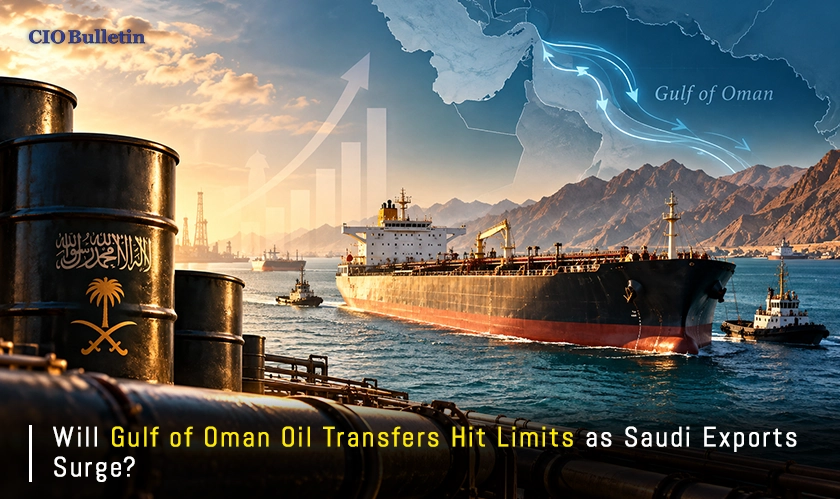
Gulf of Oman oil transfers have reached maximum operational capacity following a dramatic surge in Saudi crude exports through the Strait of Hormuz. According to energy trading sources and experts on maritime transport, mid-sea cargo transfers in the waters near Oman have never been more congested. With Saudi Arabia shifting its large shipments of crude oil away from its volatile Red Sea shipping routes, the logistics centers in the area are having a hard time coping with the enormous surge in the number of shuttles coming in from the supertankers.
Can international energy markets adapt quickly enough to prevent severe global supply delays and soaring freight rates? Maritime trade observers emphasize that shuttle tankers transporting crude through Hormuz to conduct open-water transfers are absorbing available fleet capacity at alarming speeds.
Underscoring the growing systemic strain across international maritime corridors, Senior Energy Trade Analysts observed:
"The increasing volume of crude requiring offshore transfer has severely tied up available supertankers and elevated operational costs across global supply chains."
Comprehensive market assessments by CIO Bulletin reveal that Saudi crude exports via Hormuz rebound toward 3.6 million barrels daily this month. Millions of barrels transferred between supertankers at sea take time, specialized equipment, and good weather conditions. In light of the fact that the local anchorage points are fully booked, the oil tankers have to wait for days before unloading their cargoes for Asian and European refineries. In order to preserve the pace of international commerce, the international shipping companies and energy producers have to find an alternative approach.
Offshore cargo transfers in Omani waters hit capacity limits due to surging Saudi export diversions.
Shuttle tanker reliance significantly reduces global vessel availability and elevates shipping freight costs.
International energy supply chains face longer transit durations as regional anchorage points experience heavy congestion.
NEWS SOURCE: Reuters, https://www.reuters.com/
Everything you need to know about this news
A massive surge in Saudi Arabia crude exports diverted from Red Sea routes overwhelmed available offshore transfer infrastructure.
Smaller shuttle tankers move crude through Hormuz and pump cargo directly into larger supertankers anchored in Omani waters.
Continuous shuttle operations tie up supertankers as floating storage and transfer points, reducing overall vessel availability globally.
Lengthened cargo wait times and elevated tanker freight rates increase total crude delivery expenses for international refiners.
Exporters must optimize vessel scheduling, expand designated offshore transfer zones, and explore alternative overland pipeline channels.
















































 consultants ltd.jpg)


Comments