
Home Platforms Others Will the Latest Japan Typhoon ...
CIO Bulletin,
11 July, 2026
Author:
Ravathi Sunil
As a massive East Asian weather front halts flights, offices, and power grids, global enterprises confront a glaring vulnerability in infrastructure resilience.
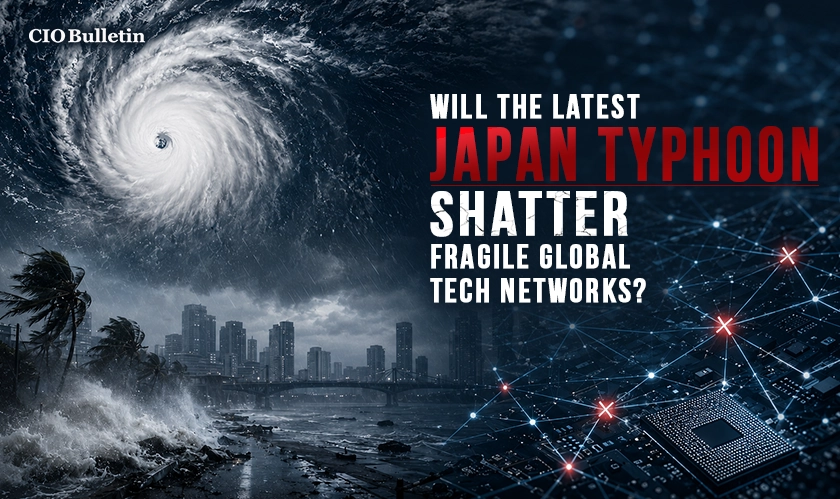
The outer bands of a monstrous Japan typhoon system are slamming into the Sakishima Island chain, unleashing torrential downpours and violent wind gusts that have paralyzed regional travel infrastructure and left thousands of homes in darkness. This isn't just a bit of heavy rain; we are talking about 14,000 people fleeing their homes in mountain villages and major airports turning into ghost towns overnight. For anyone running a business and watching this unfold, it’s a blunt reminder that old-school operations simply can’t keep up with an unpredictable planet.
As the storm pushed its way north-northwest, Okinawa took the first massive hit. The storm left deserted streets and howling winds in its wake, plunging 24,000 homes into sudden darkness as the local power grid failed.
“Miyako is taking worst of typhoon Bavi. Conditions on Ishigaki gale force with some overnight gusts to typhoon strength.” - James Reynolds, Professional Storm-Chaser.
But the chaos didn't stop at the coastline. For international supply chains and enterprise technology platforms like CIO Bulletin tracking these macro-environmental shifts, the central concern remains the speed at which a localized weather event can paralyze global operations. When Taiwan called a snap "typhoon holiday," shutting down schools, offices, and grounding over 1,200 flights, every local company's backup plan was put to the ultimate test.
While some city folks out walking their dogs felt it was "just a little bit more wind," officials refused to gamble with human lives, bracing for nearly a meter of torrential rain in exposed areas before the storm headed toward Wenzhou, China. Ultimately, events like Bavi show us that building flexible, cloud-supported teams isn't a tech luxury anymore; it’s how businesses keep the lights on when the world gets chaotic.
Everything you need to know about this news
Rainfall causes deadly mudslides. Moving mountain residents early prevents them from getting trapped by washed-out roads.
Grounding 1,200 flights stalls tech supply chains. Platforms like CIO Bulletin note companies must use backup logistics.
Debris snaps lines. Systems trip automatically to prevent ground electrocution.
Government-mandated closures that keep citizens off dangerous roads and protect emergency responders.
Decentralized networks let employees work remotely, maintaining business continuity when offices close.


















 consultants ltd.jpg)


Comments