
Home Industry Pharmaceuticals Are the New Medical Drug Prici...
CIO Bulletin
,
27 August, 2026
Author:
Ravathi Sunil
Voluntary international price parity pushes state programs toward massive savings by locking in domestic drug costs.
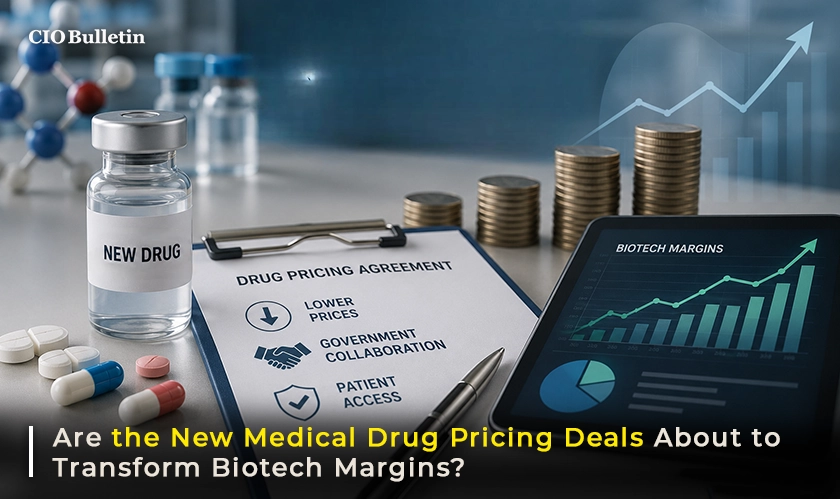
CIO Bulletin reports that the Trump administration is preparing to unveil a brand-new round of voluntary medical drug pricing deals involving midsize biotech companies. The following policy initiative seeks to establish a direct correlation between the cost of outpatient drugs purchased from the states' medical program and the reduced price levels in developed foreign nations.
To date, federal officials have already finalized voluntary agreements with seventeen major pharmaceutical corporations, including industry giants like Pfizer, Eli Lilly, and Johnson & Johnson. Expanding this framework beyond giant drugmakers to encompass midsize biotech firms represents a structural shift in national healthcare policy.
Under the proposed framework, manufacturers will issue retroactive rebate checks directly to state governments to offset costs. Explaining the practical mechanics of this mechanism, Lindsay Bealor Greenleaf, head of market access policy strategy at ADVI, stated:
"With regard to medical, the way that MFN price would be achieved would be through a rebate construct. The medical program would receive an MFN price on net, with the manufacturer basically cutting a check for the government."
Will these aggressive government discount agreements ultimately constrain long-term research and development budgets for emerging biopharmaceutical firms? Industry experts observe that although poor patients who are members of medical pay nothing out of pocket, the financial burden is on the corporate balance sheets.
Price Parity: Forces domestic medical costs to match international benchmark rates.
Massive Savings: Projections indicate up to $64.3 billion in state and federal savings over ten years.
Rebate Structure: Drugmakers pay the difference directly back to state programs via government checks.
Broader Reach: Expands policy from major pharma leaders to midsize biotechnology developers.
As federal regulators push for total compliance across all single-source brand-name biologics, corporate leaders must re-evaluate global launch strategies. The administration projects domestic healthcare savings could eventually top $500 billion across all commercial markets if international benchmark pricing becomes standard practice.
Everything you need to know about this news
They are voluntary agreements where midsize biotech companies discount outpatient prescription drugs for state medical programs to match lower prices charged in developed foreign nations.
Seventeen major pharmaceutical firms—including Pfizer, Eli Lilly, and Johnson & Johnson—have already joined, with midsize biotech companies joining in the latest round.
Rather than changing retail list prices, drug manufacturers cut direct rebate checks back to state governments to achieve the agreed net price.
The administration estimates these voluntary agreements will generate over $64 billion in state and federal medical savings over the next decade.
Since medical beneficiaries already pay minimal copays, the direct financial impact primarily benefits state budgets while placing revenue pressure on pharmaceutical manufacturers.


















































 consultants ltd.jpg)


Comments