
Home Industry Politics Germany’s AfD Rethinks Anti-...
CIO Bulletin
,
02 November, 2026
Author:
Sambhrant Das
As the Alternative for Germany party achieves historic polling gains, leadership is moderating its foundational anti-euro position in favor of institutional reform to pave a pathway toward mainstream coalition power.
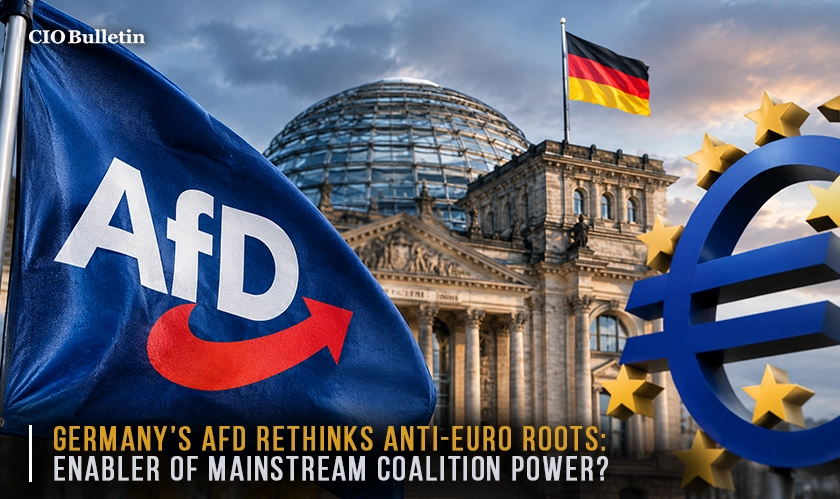
The Alternative for Germany (AfD) party is moving away from its original position of calling for an immediate end to the common currency, as Germany's AfD rethinks anti-Euro roots to take advantage of the wider political momentum seen throughout Europe. Having been founded more than ten years ago as a reaction to the European sovereign debt crisis, the right-wing party is now turning its focus to reforming the existing institutions of the European Union. The party's increasing popularity, together with its recent successes in regional elections, has led the leadership to soften its hardline anti-Euro position and instead adopt practical policy suggestions that match the views of its conservative allies in the various member states.
Strategic Shifts in Fiscal Policy and European Integration
The recalibrated platform focuses on institutional influence and sovereign opt-outs rather than demanding a total collapse of the monetary union:
Advocating for changes to the treaty which would return fiscal policy independence and national spending controls to each of the individual EU member states.
Supporting the idea of stricter fiscal discipline rules and still keeping a national referendum on euro membership as the final option.
Leadership Acknowledges Evolving Debates Over Currency Exit
The leaders of the party admit that their strong opposition to the common currency has caused strategic difficulties whenever they have been trying to form wider governing coalitions.
Reflecting on internal political discussions and policy recalibrations, party officials noted that "the euro issue turned out to be more controversial than we had expected," leading figures to prioritize actionable reform initiatives.
This practical change enables the movement to attract mainstream conservative voters who support sovereign border controls and reductions in regulation without becoming too concerned about currency instability.
Shifting Alliances Across European Right-Wing Blocs
The increasing presence of right-wing groups in Western Europe has opened up new opportunities for political cooperation between nationalist parties.
The decision to strengthen strategic alignments with conservative governments in the neighboring EU countries contributes to the momentum for decentralizing the powers of Brussels.
The urge to obtain specific exemptions from the EU's fiscal rules allows regional parties to advance their national economic objectives.
Institutional Realignments and Sovereign Policy Trajectories
The adjustment of radical monetary positions is part of a wider trend seen among populist movements as they attempt to gain a place within mainstream governance. Right-wing parties wish to transform European economic governance from within by combining their basic Euroskeptic beliefs with practical policy goals. CIO Bulletin views this development as a significant evolution in European political strategy as conservative coalitions gain institutional momentum.
News Source: Reuters, https://www.reuters.com/
Everything you need to know about this news
The party is adjusting its policy platform in order to form wider political alliances and take advantage of the electoral momentum it has across Europe.
The party was set up more than ten years ago mainly with the aim of opposing the European bailouts and campaigning for an end to the euro currency.
Instead of calling for an immediate withdrawal, the party prefers treaty reforms, sovereign opt-outs, and more stringent national fiscal controls.
The party leadership does keep a public referendum on euro membership as a last resort in the event that institutional EU reforms fail.
Shifting its focus towards institutional reform allows for greater cooperation with the main conservative parties in the various EU member states.








 Rasta Roko.webp)










































 consultants ltd.jpg)


Comments