
Home Industry Proptech Is UAE Proptech Accelerating S...
CIO Bulletin
,
18 August, 2026
Author:
Sambhrant Das
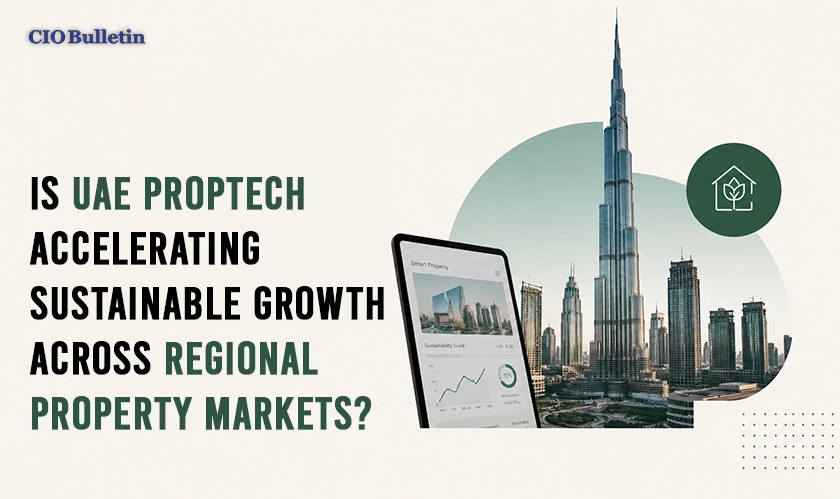
UAE property technology sector drives immersive visual tours across off plan development pipelines, accelerating pre-construction sales and setting the market on track to reach AED 5.95 billion by 2032
The UAE proptech ecosystem is undergoing tremendous growth, with estimates projecting the market to reach AED 5.95 billion by 2032. The rapid introduction of virtual technology tools and virtual site visits is allowing for improved planning of real estate projects. Developers are now incorporating specialized tools into the pre-construction processes to reduce the time taken to complete the sales cycle, simplify the review of architectural designs, and enable direct online communication with investors.
The use of virtual reality platforms at the planning stages allows planners and potential buyers to visualize properties before they are constructed. Virtual projects and interactive models are superseding traditional plans to avoid costly renovations and improve project transparency.
Efficiency Gains: Immersive property tours have cut average market listing periods down from 34 days to just 19 days.
Market Scale: Over 80% of property listings in prime metropolitan zones are now fully digitized.
Major industry players are making significant infrastructure commitments to support tech-enabled property ecosystems, shifting from simple marketing gimmicks to enterprise sales software.
"From immersive virtual reality and augmented reality walkthroughs to AI-driven analytics, these new technologies are redefining how real estate is bought, sold, and built in the UAE." - Georges Calas, Chief Executive Officer of Lifesize Plans Dubai.
By enabling potential clients to personalize designs, check room schematics, and sign distribution contracts online, property firms have attracted more cross-border investments. Effective government assistance, such as focused innovation hubs and smart city projects, continues to draw in local startups, making the nation a leader in virtual property technology.
Widespread integration of spatial software and full-scale architectural projection tools establishes a new baseline for high-value development projects across the Middle East. As remote visualization tools become standard practice across property ecosystems, developers gain crucial efficiency advantages while global buyers enjoy seamless cross-border access. CIO Bulletin views this development as a clear signal that advanced spatial technology is permanently redefining commercial and residential real estate investment globally.
Everything you need to know about this news
According to estimates, the market is expected to reach nearly AED 5.95 billion by 2032 and experience a compound annual growth rate of about 13 percent.
The implementation of interactive tours allows remote customers to view property at its full scale and speeds up transactions.
Architectural visualization prior to construction makes it possible for builders to notice mistakes in the design before construction starts.
Digital listings enable global investors to explore, modify, and reserve real estate assets remotely without requiring physical site visits.
Fluctuating borrowing costs drive developers toward digital automation tools that lower marketing overhead, accelerate sales cycles, and maintain capital liquidity.


















































 consultants ltd.jpg)


Comments