
Home Industry Real estate Delhi Winter Pollution Curbs D...
CIO Bulletin
,
21 October, 2026
Author:
Ravathi Sunil
Real estate developers urge government authorities to implement balanced activity-specific regulations to protect workers and maintain delivery timelines.
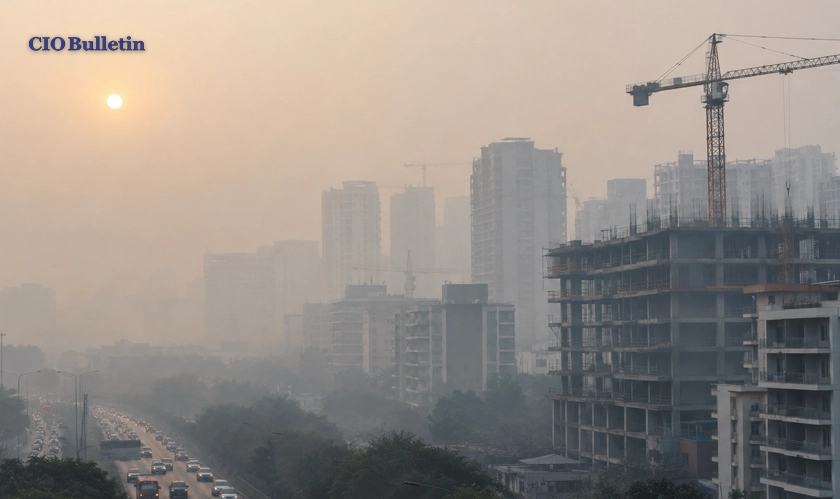
CIO Bulletin reports on structural challenges across urban development sectors as seasonal Delhi winter pollution control measures trigger widespread construction halts and operational disruptions. Leading figures in the real estate industry have raised fears over the potential problems associated with blanket activities bans, noting that such an approach will add to delays in project completion, increase the cost of development, and lead to delays in handing houses over to homeowners. Developers have proposed a solution that is focused on specific activities.
Environmental restrictions based on season intend to control the level of harmful smog in the capital city region. Nevertheless, such an instantaneous cessation of construction activities affects the income sources for workers and causes labor remobilization delays of up to three months. According to industry representatives, the implementation of dust control measures consistently along the entire stretch of industrial corridors will have better outcomes than partial actions.
Could adopting advanced artificial intelligence monitoring platforms enable continuous environmental compliance while preserving critical urban development projects? Highlighting the need for systemic regulatory balance, Harshvardhan Bansal, President of NAREDCO Delhi, stated, "Controlling dust pollution in Delhi is essential for public health, and the real estate sector supports all measures aimed at improving air quality."
With the need to achieve an equilibrium between public health considerations and economic production, it becomes necessary to develop clear environmental guidelines in order to assist corporate infrastructure planners. Is it possible to develop balanced pollution policies that will protect public health yet not hinder the growth of the real estate industry? Market watchers around the globe are following such developments very closely.
There is a difficulty in ensuring that mandates regarding the need to protect the environment are in tandem with the continuity of economic sectors. Using appropriate compliance technology and dust control systems provides an effective plan of action in achieving this objective.
Everything you need to know about this news
Sudden site suspensions halt active building workflows, disrupt material supply chains, and cause widespread construction worker migration that takes months to reassemble once bans lift.
Activity-specific rules permit non-dust-generating interior activities, such as plumbing, wiring, and painting, to continue while restricting heavy excavation and exterior demolition works.
Site shutdowns temporarily eliminate income streams for daily wage workers, forcing many to migrate back to home regions and creating severe labor shortages upon site reopenings.
Smart sensor networks and computer vision systems monitor real-time dust levels, automated water sprinkling, and site compliance, allowing authorities to regulate specific violators rather than closing compliant sites.
Air pollution moves across regional borders, meaning isolated site bans within single municipal limits prove ineffective unless surrounding industrial corridors enforce identical dust control standards.





















































 consultants ltd.jpg)


Comments