
Home Industry Recycling and waste management Why Right-Sizing Roll-Off Dump...
Recycling And Waste Management
CIO Bulletin
,
31 August, 2026
Author:
Sambhrant Das
Construction waste management is often treated as something to figure out after demolition begins. By that point, however, the decisions that determine how efficiently debris moves off a property have already been made.
The size and placement of a roll-off dumpster can affect hauling frequency, project costs, jobsite organization, worker productivity and even the amount of disruption created for neighboring properties. For contractors, property owners and project managers, choosing the right container should therefore be viewed as part of the waste-management plan rather than simply an administrative task.
That is especially important for residential construction and renovation projects, where work often takes place on compact sites with limited driveway space, active households and close neighboring properties.
The most obvious consideration when selecting a dumpster is capacity, but volume is only one part of the equation.
A container that is too small may fill before a project reaches the next logical phase. That can result in an unscheduled pickup, an additional haul or debris accumulating on the property while crews wait for an empty container.
A container that is unnecessarily large creates a different set of problems. Larger dumpsters require more placement space and may be difficult to position on compact residential sites. They can also encourage crews to throw different materials into the same container simply because excess capacity is available.
The goal is not to choose the largest container available. It is to match the container to the expected waste stream, available space and project schedule.
For many residential and light-construction projects, three container sizes can cover a surprisingly broad range of needs.
A 10-yard dumpster is often appropriate for smaller remodeling jobs, bathroom renovations, flooring removal, limited roofing work and projects involving dense or heavy debris. Its smaller footprint can also make it useful where driveway or access space is limited.
A 15-yard dumpster provides additional capacity without moving into a substantially larger container. It can work well for medium-sized renovations, drywall and flooring removal, kitchen projects, contractor work and larger property cleanouts.
A 20-yard dumpster is generally better suited to larger renovations, multi-room projects, bulky construction debris and light demolition where substantially more material is expected.
The type of material matters just as much as the amount. Heavy debris can reach a container's weight allowance well before the container is physically full, while lighter material may consume substantial volume without approaching the same weight.
Contractors and property owners should therefore discuss both expected volume and material type when selecting a container. Providers such as EcoBox Dumpsters offer multiple container sizes specifically to accommodate different construction and renovation requirements.
A common waste-planning mistake is estimating debris exclusively by how much physical space it appears likely to occupy.
Materials such as concrete, roofing shingles, plaster, dirt and certain demolition debris can become extremely heavy. A relatively small quantity may have a much greater effect on hauling weight than a large amount of packaging, cabinetry or other lighter materials.
This makes the expected composition of the waste stream important when planning a project.
Before work starts, project managers should identify the major materials likely to be removed and determine whether any should be handled separately. Doing so can reduce surprises when the container is picked up and help prevent a situation in which a dumpster has substantial unused volume but has already reached an appropriate transportation weight.
A dumpster should also be coordinated with the sequence of the project.
Demolition typically produces a large quantity of material over a relatively short period. Later stages may generate smaller but more continuous waste streams from packaging, trim material, drywall, flooring and installation work.
Rather than treating the dumpster as a static piece of equipment that arrives at the beginning and disappears at the end, contractors can incorporate waste removal into the construction schedule.
For example, an initial container may be timed around demolition, with pickup occurring before the project moves into the next phase. Larger projects may benefit from planning container exchanges in advance instead of waiting until a dumpster is completely full.
That approach keeps debris moving away from the active work area and reduces the temptation to create temporary waste piles.
Where the dumpster is located can have almost as much operational impact as its size.
Crews need convenient access, but the container should not interfere with material deliveries, contractor vehicles, garages or other equipment. Residential properties introduce additional considerations because driveways, landscaping and neighboring homes may be close to the work area.
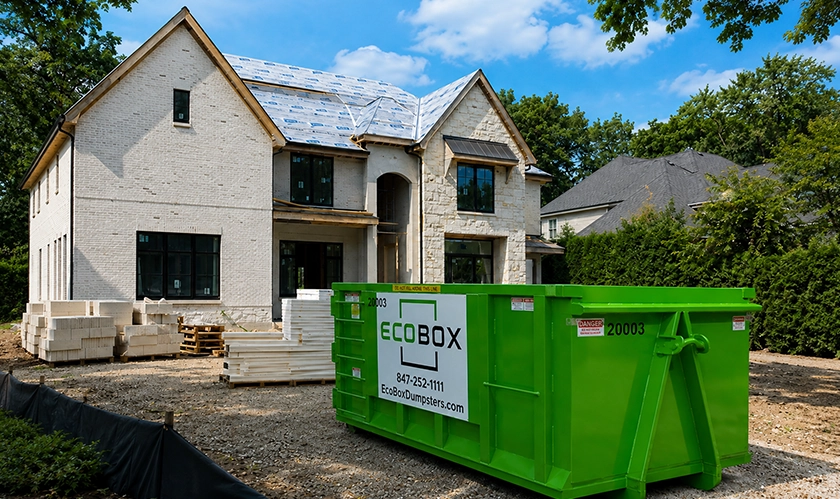
Before delivery, someone familiar with the project should evaluate the available driveway or paved surface, access for the delivery vehicle, overhead wires and tree branches, gates or narrow access points, material-delivery routes, crew parking, property-protection requirements and local placement or permit rules.
These issues are easier to address before a truck arrives than after a loaded container needs to be repositioned.
Local regulations can also vary, particularly when a dumpster is placed on a street or other public right-of-way rather than entirely on private property. Property owners should confirm both local requirements and whether the provider actually serves the project location. Checking dumpster rental service areas in advance can prevent scheduling problems once work is ready to begin.
Transportation is one of the most operationally significant parts of roll-off waste management. Every unnecessary container exchange requires another truck movement between the project and the disposal or processing facility.
Better forecasting can reduce those avoidable trips.
That does not mean keeping a container on site until material is piled above its safe loading level. Instead, project managers should estimate the waste stream realistically and select a container that can accommodate the anticipated material while remaining within appropriate loading and weight limits.
When the size is right from the beginning, the project is less likely to require emergency exchanges or additional hauling simply because capacity was underestimated.
A dumpster can quickly become the collection point for everything on a construction site. That is convenient, but it can also make waste management less disciplined.
Contractors should establish basic rules before demolition begins regarding what belongs in the container and what does not. Hazardous materials, electronics, tires, batteries, liquids and other restricted materials may require separate handling depending on the provider and local disposal requirements.
Clear instructions also help prevent subcontractors or property occupants from placing inappropriate materials in the dumpster.
On larger projects, separating particular materials may make sense when recycling or specialized disposal options are available. Even when a project uses a single general construction container, identifying restricted or separately handled materials in advance creates a cleaner and more predictable waste stream.
Construction projects depend on sequencing. Materials must arrive at the correct time, crews need space to work and completed areas need to remain accessible.
Debris removal should be managed with the same discipline.
Selecting a dumpster based only on price or choosing a container after demolition has already started can create avoidable logistical problems. A better process considers material type, expected volume, weight, placement, project phases, site constraints and local requirements before work begins.
For residential renovations and light construction in particular, where space is often limited, right-sizing a roll-off dumpster can make the difference between waste becoming an obstacle and waste moving quietly through the project as planned.
Smarter construction waste management does not begin when the truck arrives to haul debris away. It begins when the project team decides how that debris will move from the work area to the container in the first place.





















































 consultants ltd.jpg)


Comments