
Home Industry Renewable energy Can Structural Green Re-engine...
CIO Bulletin
,
16 June, 2026
Author:
Sambhrant Das
Faced with steep fuel costs and currency strain, regional planners push for structural green energy initiatives to stabilize the domestic electrical grid
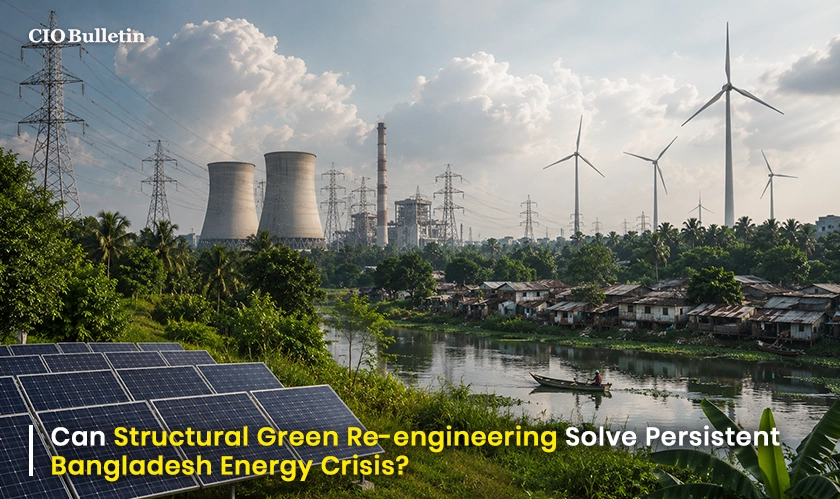
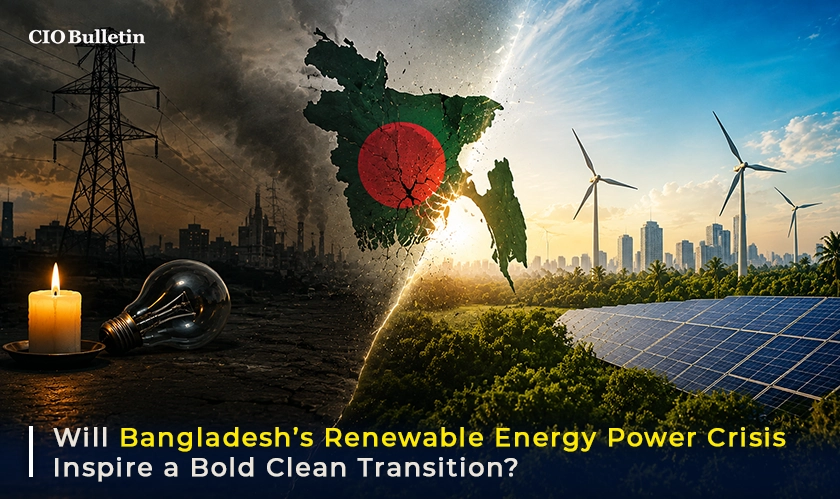
The escalating Bangladesh energy crisis has reached a critical bottleneck, forcing policymakers to aggressively re-evaluate the nation's overwhelming dependence on imported fossil fuels. Historically reliant on natural gas and petroleum to sustain its domestic electrical grid, the country faces persistent fiscal strains due to global macroeconomic shocks and severe foreign currency depreciation. These economic pressures are disrupting normal industrial productivity and causing unpredictable blackouts across major commercial manufacturing hubs. To mitigate these vulnerabilities, structural planners are pushing for a rapid domestic transition toward scalable, clean generation assets.
Transitioning a massive, fossil-fuel-dependent grid toward sustainable alternatives requires overhauling deeply entrenched regional distribution networks. Institutional inertia and limited localized technical expertise continue to present formidable hurdles for energy administrators attempting to modify current capacity layouts.
Current industrial metrics indicate that traditional fossil fuels, including natural gas and liquid petroleum, still command over 89 percent of total grid generation capacity.
Domestic clean energy facilities, mostly consisting of localized solar arrays and minor hydroelectric assets, account for less than 5 percent of the national output.
Pacing limitations in land acquisition protocols are stalling the development of utility-scale solar farms across agricultural territories.
The central challenge is to develop resilient energy architecture capable of withstanding an increasingly volatile geopolitical environment.
To circumvent internal geographical limitations and land scarcity, environmental strategists are actively championing cross-border electrical distribution initiatives within the subcontinent. Establishing a unified regional transmission framework allows the country to tap into the massive, underutilized renewable potential of neighboring territories. By collaborating closely with nearby nations, planners intend to import clean energy directly through shared distribution pathways. This multi-national integration strategy offers a reliable mechanism to stabilize Bangladesh’s domestic energy basket without placing excessive strain on local land resources.
Despite a clear political consensus regarding the immediate expansion of clean generation, massive economic and logistical barriers slow down the deployment of alternative projects. Persistent inflationary pressures and complex institutional due diligence frameworks frequently discourage international infrastructure developers from financing long-term local installations.
Substantial currency depreciation cycles are driving up the acquisition costs of advanced, foreign-manufactured solar cell technology.
National distribution grids require significant capital injections to successfully handle the intermittent power supply typical of wind and solar generators.
Traditional administrative bureaucracies slow down the licensing steps required for private green energy providers to connect to the central network.
The long-term resolution of regional structural deficiencies demands an aggressive transition away from short-term crisis management toward long-range green investment. Overhauling the domestic industrial grid through comprehensive sub regional partnerships is the only viable path to achieve true commercial resilience. CIO Bulletin views this development as a defining test of whether developing economies can successfully future-proof their critical infrastructures against accelerating global resource volatility.















































 consultants ltd.jpg)


