
Home Technology Security Geopolitical Shifts Unfold as ...
CIO Bulletin
,
22 September, 2026
Author:
Ravathi Sunil
Washington secures landmark Arctic defense agreement with Copenhagen and Nuuk to establish key outposts across vital polar shipping lanes and security corridors.
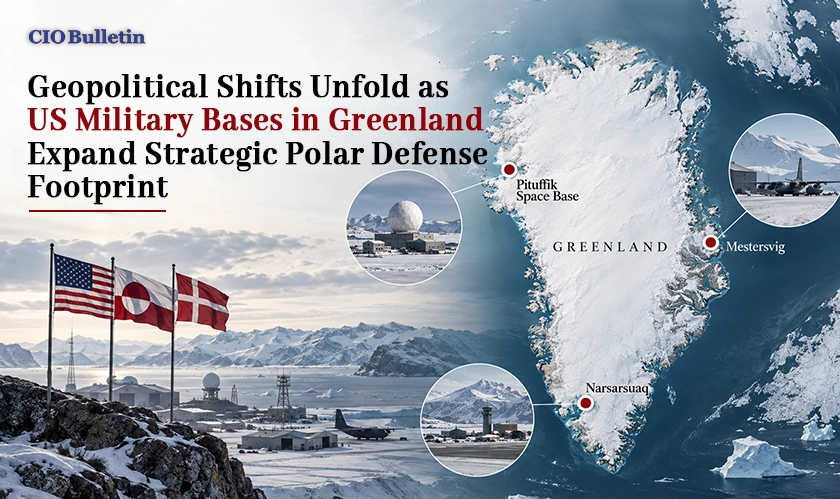
CIO Bulletin reveals that a major geopolitical pact regarding US military bases in Greenland expands Washington's strategic defense footprint across the Arctic polar region. According to a recently concluded three-party pact involving the U.S., Denmark, and Greenland, the U.S. intends to reactivate a Cold War facility at Narsarsuaq while setting up another military installation at Mestersvig on the eastern coast. This unique military agreement will enhance current military activities from the present-day Pituffik Space Base, and it will set up crucial monitoring networks over important polar maritime shipping channels.
Will this expanding polar footprint ensure long-term regional stability or spark heightened geopolitical competition in the far north? Following intense diplomatic negotiations leading up to the official signing at the United Nations General Assembly in New York, a White House spokesperson officially stated:
"This strategic accord will secure and defend the security of Greenland and the United States while reinforcing regional stability."
Strategic reporting by CIO Bulletin shows that this move is aimed at ensuring that the development of this defense infrastructure is a result of changing polar security dynamics as well as the opening up of trading lanes through northern marine corridors. This deal creates a scenario whereby the security duties are effortlessly incorporated within the larger alliance treaties of the North Atlantic, as opposed to being dependent on bilateral security control. With the melting of Arctic ice, securing the northern communication links as well as airspace is the key security priority for global defense planners.
Diplomatic agreements expand defense operations beyond existing active northern installations.
Strategic outposts enhance surveillance capabilities across critical polar maritime routes.
Tri-party defense arrangements integrate Arctic security directly into established alliance frameworks.
According to the CIO Bulletin’s strategic analysis, the future balance of power regarding northern polar defense depends greatly on diplomatic cooperation, strong alliances, and will hinge upon how well alliances can strike the right balance between deterrence capabilities and local interests and conservation efforts. With the ongoing melting of ice opening up sea lanes and increasing competition, it is essential that there be a cohesive approach to monitoring alliances in the polar regions to protect the international security landscape.





















































 consultants ltd.jpg)


Comments