
Home Technology Security WW3 Fears Soar Following Rapid...
CIO Bulletin
,
19 October, 2026
Author:
Ravathi Sunil
Military forces activate radar defense networks and air cover along eastern borders following massive regional strikes.
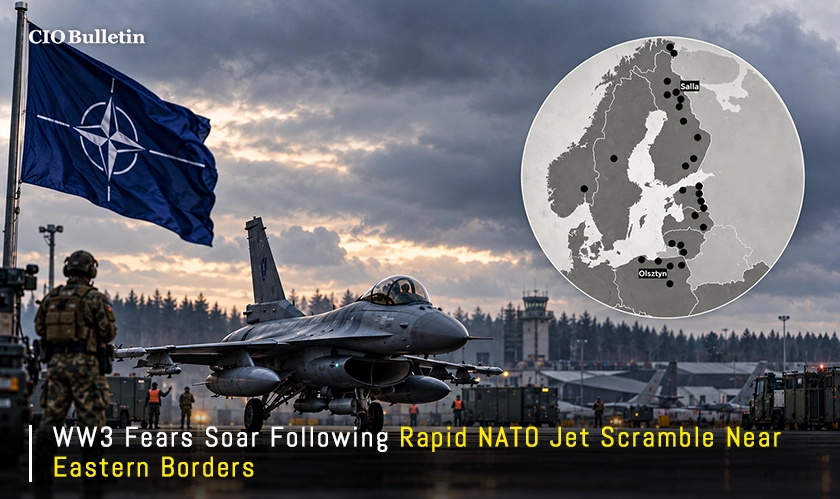
CIO Bulletin reports on expanding geopolitical tensions across Eastern Europe as allied air defense networks enter heightened operational readiness amid mounting WW3 fears. Fighter planes were dispatched on patrols after heavy attacks by drones were carried out against critical infrastructure in border regions. Ground-based radar was employed by the operational units to protect the national air space from any possible border violation.
There have been many worries about escalation as a result of reports from neighboring countries of recurring incursions by unidentified aerial objects in their territorial areas. While the defense strategy may be merely preventive, the speed with which these incidents become known indicates how easily they could turn into international crises.
How do you think the situation will pan out when tactical military maneuvers close to international borders risk involving neighboring allies in direct action? Tensions increased as defensive forces reported that active air formations were in the air to secure key air corridors. Confirming the heightened military stance, an official operational statement noted, "Ground-based air defense systems and radar reconnaissance reached full operational readiness."
Airspace Protection: Fighter squadrons launched immediately to establish secure border air corridors.
Radar Readiness: Advanced tracking installations switched to maximum alert parameters to monitor incoming threats.
Regional Intrusions: Allied neighbors continue logging unexpected aerial breaches within sovereign boundaries.
Precautionary Response: Defense leaders emphasize that rapid deployments aim strictly to deter border violations.
As modern conflict increasingly relies on autonomous aerial technology, tracking regional stability becomes crucial for global analysts. Can international security frameworks successfully contain fast-moving aerial threats without igniting wider international clashes? Defense forces remain stationed along border zones while monitoring systems continuously scan regional skies for further movements.
With the changing dynamics of security in the eastern regions, the rest of the world continues to be interested in how international alliances keep peace under strain. The air deployment strategy is an illustration of the complex relationship between strong border deterrence and careful restraint in current defense strategies.
News Source: Daily Express, https://www.express.co.uk/
Everything you need to know about this news
Defense leaders launched fighter jets to secure national airspace after intense regional strikes occurred extremely close to allied border areas.
Commands placed ground-based air defense missile systems and long-range radar tracking installations on full operational readiness immediately.
Yes, multiple neighboring eastern nations have logged repeated unauthorized drone intrusions into their airspace and territorial waters over recent months.
Defense officials confirmed the deployment was entirely precautionary, designed specifically to safeguard sovereign skies and protect nearby border regions.
Uncontrolled aerial breaches along international borders increase risks of accidental escalation, keeping global markets and security analysts on high alert.





















































 consultants ltd.jpg)


Comments