
Home Industry Supply chain management Will U.S. Manufacturing Activi...
CIO Bulletin
,
02 September, 2026
Author:
Ravathi Sunil
Factory production faces unexpected obstacles as changing demand patterns disrupt national economic growth momentum.
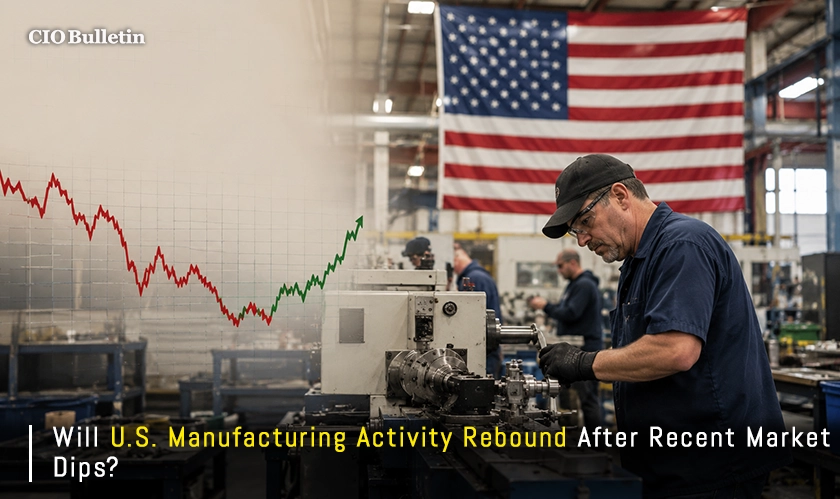
U.S. manufacturing activity metrics reveal a notable shift across key industrial sectors as recent economic data highlights a dip in national factory production. Unexpected changes in orders and stock balances have obliged the business community to revisit their strategies. While specific sectors of production retain constant productivity, changes within the supply chain and varying costs of raw materials remain a challenge for industrial resilience overall.
According to economic observations gathered by CIO Bulletin, factory operators are carefully managing output levels to balance shifting customer demand. It is said that although supplier deliveries seem to have started stabilizing, inventory management remains one of the major issues. This is because the executives in corporations try to balance these fluctuating measures for smooth day-to-day operations.
Addressing the ongoing shifts within national factory performance, Institute for Supply Management Chair Timothy Fiore observed:
"The U.S. manufacturing sector shrank again, but the uptick in the PMI indicates a slower rate of contraction."
Could strategic technology investments and supply chain adjustments help industrial plants recover momentum before the quarter ends? Industry analysts emphasize that long-term recovery depends heavily on stabilizing order volumes, strengthening inventory control, and easing pressure on operating overhead. As corporate decision-makers track industrial trends closely, upcoming economic indicators will determine whether factory production stabilizes or faces extended pressure.
Factory activity index dipped, reflecting shifting output levels across major sectors.
Supply chain lead times show gradual stabilization amid inventory balance changes.
Manufacturer order books experience temporary fluctuations due to changing market demand.
Industrial plants prioritize operational efficiency to cushion against economic shifts.
The recent pullback in industrial activities highlights the careful balancing that needs to take place with regard to domestic supply chains going forward into the next quarter. With factories having to deal with fluctuating order numbers, stock management, and other economic challenges, market stability is likely to hinge greatly on operational agility. It remains to be seen how effectively corporate managers can adapt their procurement policies, including automation, based on the performance indicators here.
Everything you need to know about this news
The decline resulted from fluctuating order volumes, ongoing inventory balancing, and shifting demand patterns across key industrial manufacturing sectors.
Supply chain shifts directly influence raw material lead times, inventory holding costs, and overall production scheduling for domestic manufacturers.
Key indicators include the Purchasing Managers’ Index, new order volume, inventory levels, supplier delivery times, and factory employment rates.
No, performance varies significantly, with certain consumer goods sectors maintaining stability while heavy industrial sectors face greater headwinds.
Companies are optimizing supply chain logistics, adjusting inventory ratios, and adopting digital technologies to enhance operational efficiency.





















































 consultants ltd.jpg)


Comments