
Home Technology SAP Will the SAP, Microsoft, and N...
CIO Bulletin
,
02 July, 2026
Author:
Gayathri Sr
A high-stakes cloud alliance sparks intense industry debate over whether corporate automation is consolidating too much power
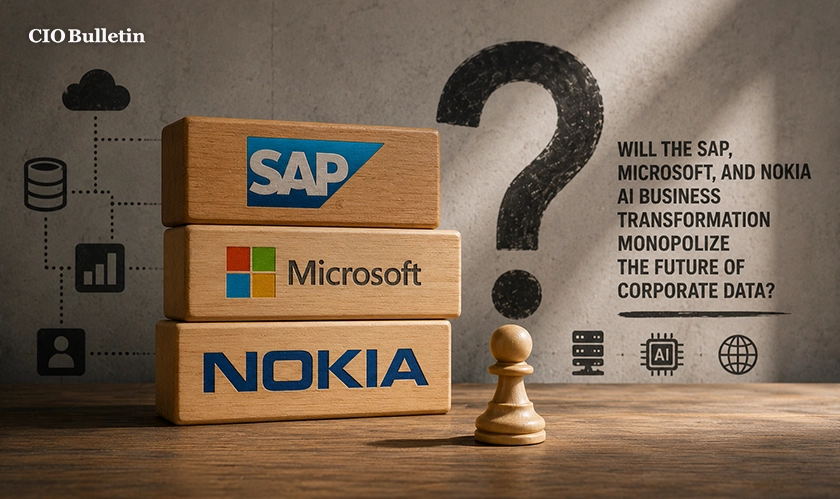
The global enterprise landscape is facing a historic shakeup that has industry watchdogs wondering if the corporate world is giving up too much control to a handful of tech giants. A massive alliance has officially triggered an ambitious AI Business Transformation, setting off a fierce debate over security and market dominance. By uniting to migrate legacy systems into a singular, automated cloud network, these three powerhouses are completely rewriting how massive global corporations handle their internal data, forcing rivals to rethink their entire operational strategy.
According to updates analyzed by CIO Bulletin, the strategy involves moving Nokia’s entire multi-country software framework onto Microsoft Azure using advanced SAP cloud methodology. While shifting critical business operations to a central hub promises lightning-fast data analysis, it also concentrates immense corporate data into a tightly controlled ecosystem.
Industry analysts tracking the deal for CIO Bulletin point out that this move signals a definitive shift away from traditional, independent networks. Marek Očkay, the Global Head of IT Procurement and Vendor Management at Nokia, addressed the high-stakes migration by stating:
“By applying RISE with SAP Methodology on Microsoft Azure, we are strengthening a structured and future ready path for business growth, one that simplifies our ERP landscape, enables continuous innovation and strengthens our commitment for AI driven processes.”
As documented by CIO Bulletin, this technical overhaul eliminates several isolated databases in favor of an automated network. While the corporations promise unmatched efficiency and operational upgrades, the scale of this migration proves that the next era of global commerce will be fully governed by cloud algorithms.
The Foundation: Microsoft Azure will serve as the cloud bedrock, handling high-stakes international workloads.
The System: SAP will operate and manage the underlying environment, shifting the corporate focus away from manual infrastructure.
The AI Core: Automation tools will gradually take over logistics, finance, and trade operations.
Everything you need to know about this news
It links global telecommunications, cloud computing, and enterprise software under a single, unified pipeline, sparking concerns about extreme tech dependency.
The company aims to strip away decades of fragmented legacy software to unlock predictive automation capabilities and eliminate operational delays.
The migration happens entirely behind closed doors on the corporate backend, meaning consumers will mostly notice indirect benefits like faster supply chains and smoother service rollouts.
By anchoring the migration onto Azure, Microsoft secures a massive, long-term footprint in the telecom industry while proving its cloud can handle the most complex global workloads.
The partners maintain that consolidating systems onto a premium platform drastically reduces security blind spots, though centralization naturally invites debate regarding a single point of failure.


















































 consultants ltd.jpg)


Comments