
Home Other Blogs How Does Biophilic Architectur...
CIO Bulletin
,
09 November, 2026
Author:
Sambhrant Das
The global residential living landscape is witnessing a silent, tectonic shift in recent times. For several decades, a property’s square footage, its concrete structural design, and its proximity to urban commercial hubs defined its value. The traditional concept of living space quality has moved on to the idea of psychological restorative capacity, which includes the intangible aspects of circadian lighting, natural ventilation, and sensory botanicals. In the context of modern urban isolation and the redefinition of what constitutes a comfortable home, the risks to mental health of living in a purely sterile, synthetic environment are now well recognized. This has led to a global trend of incorporating biophilic architecture into homes. Real estate visionaries desire absolute alignment between living spaces and human biology and are no longer content with merely building static concrete boxes. Thus, they are moving in the direction of disassociating themselves from the sensory-deprived residential models of yesterday.
Furthermore, these developments are leading urban planners to invest in living natural systems to protect cognitive performance alongside physical health. Regenerative home design is officially bringing to a close the era of isolated indoor living. The scale of transformation is intense, with modern master-planned communities being fundamentally reshaped through biophilic design in architecture. Significantly, a residential developer actively prioritizing living nature leads everyday homeowners to benefit through a direct reduction in chronic stress markers, in addition to environmental benefits. Communities can protect their emotional health, cognitive restoration, and overall vitality from urban burnout by building living spaces dedicated entirely to a healthy home design.
Here is CIO Bulletin’s breakdown of how taking absolute ownership of nature-integrated living spaces serves as the ultimate shield for a homeowner's long-term mental well-being.
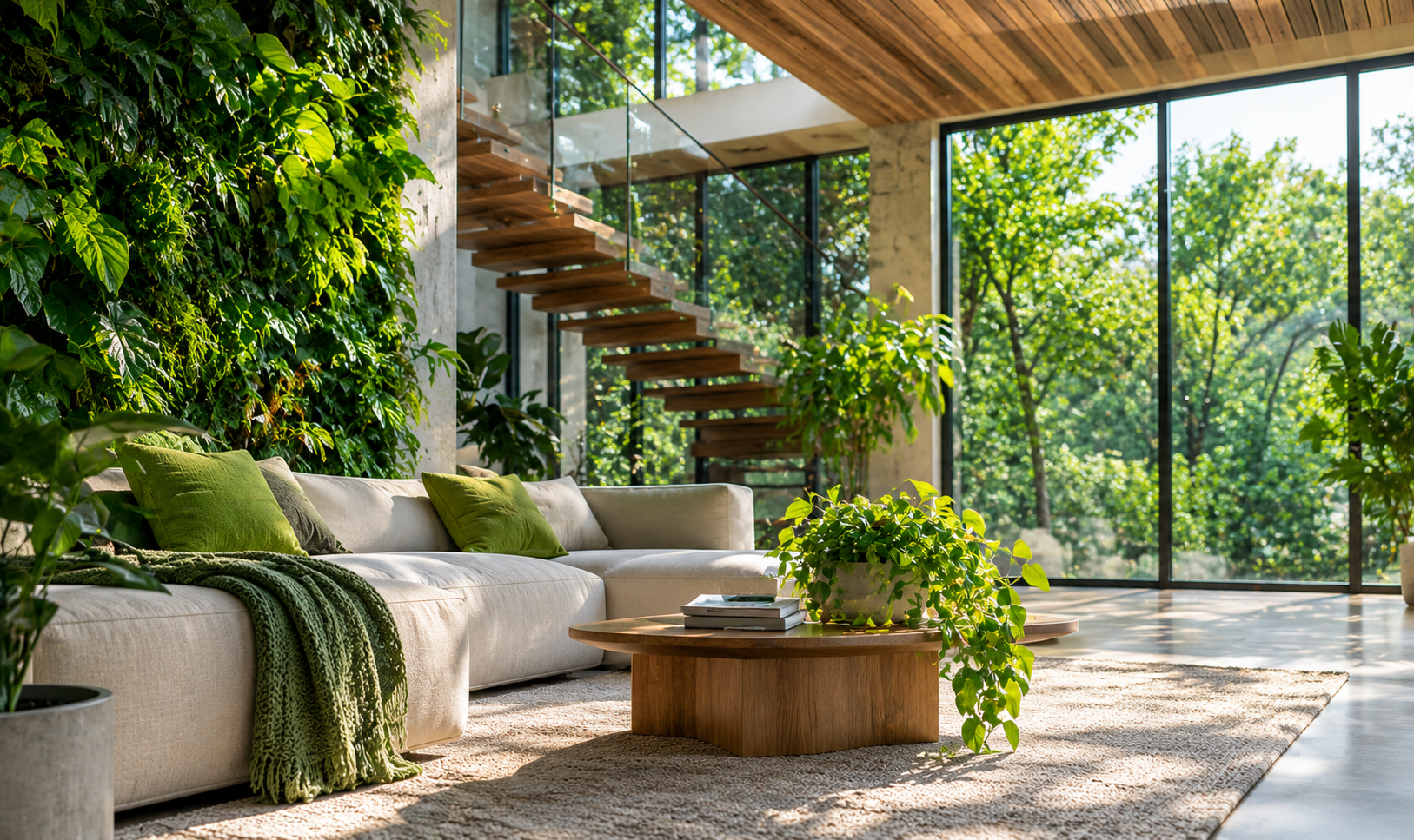
To ensure that urban density and indoor confinement do not have a detrimental effect on human psychological health, we need to invest in biological design frameworks that will ensure the residential environment is restorative, stimulating, and safe from sensory fatigue. We can go a long way to minimizing the risk of chronic stress or indoor anxiety through the advancement of biophilic architecture via living green walls, daylight harvesting windows, and natural water features, which have the capacity to calm the nervous system in real time. These organic frameworks also have a positive effect on cognitive focus and on emotional balance by enabling the day-to-day activities of the individual to benefit directly from the well-established benefits of biophilic design. Synthetic indoor fatigue thus loses its dominance over domestic life when such a proactive architectural philosophy is adopted.
Beyond the obvious stress reduction benefits, there is the added advantage of tailoring the residential environment to the precise physiological requirements of the human occupant. Instead of having to live in a completely synthetic, sterile environment, the home can be designed to respond to the human need for organic materials. The home can be structured around the grain of real wood, the texture of natural stone, and the unimpeded view of the natural landscape. Creating a direct link between biophilic architecture and mental health can help address mental health problems by transforming a room from a passive inanimate object into a restorative space. This can be as simple as allowing the natural light of the day to help regulate the sleep/wake cycle and as complex as the use of vegetative screens to provide passive acoustic damping and thus lower heart rate.
By embedding living botanical features into the residential floor plans, you can maintain a level of human well-being in the heart of the city. A resilient domestic environment with lower levels of anxiety can be achieved through the use of natural materials and micro-gardens rather than artificial lighting and all the other artificial trappings. It enables the resident to go from being a passive occupant of a box to an active, thriving individual within their own natural habitat.
By resembling historical architectural revolutions, the drive to build nature-connected residential spaces is a critical development priority that industry strategists view as a mandatory human necessity. This is because owning living spaces with direct views of natural elements is considered a vital instrument of mental resilience and not just an aesthetic upgrade as in earlier times.
Importantly, the true core catalyst here lies in evolutionary resonance, which is best understood as the innate human physiological requirement to interact with natural systems. Without daylighting, organic ventilation, and living flora, domestic living environments remain psychologically taxing despite luxurious interior decor. Currently, the urban residential market is home to communities operating in sensory deprivation, given the concentrated reliance on glass towers and sealed HVAC systems.
Architectural leaders are coming to the realization that you can offset the urban noise and mental fatigue of city living by creating natural sanctuary spaces. Interior architects are now asserting their leadership on the design front and are creating a new benchmark for living through the use of indoor gardens, natural airflow corridors and the use of non-toxic, organic building materials. Biophilic architecture is thus being transformed from a passive decorative element into an active wellness asset and is now a key driver in the ability of forward-thinking developers to create sustainable residential value. The amalgamation of spatial design and human biology means that environmental naturalness is becoming as critical as structural engineering.
The old vision of relying strictly on synthetic building materials and fully enclosed, artificial residential spaces is rapidly coming to an end. As urban stress continues to climb and mental health is increasingly a key living metric, there is now an absolute imperative for global property leaders to move towards an integrated, nature-based approach to residential design. The cost of not doing so is a dramatic increase in tenant turnover, a fall in property desirability, and a general decline in occupant wellbeing.
Ultimately, the global residential move towards nature-infused living and the adoption of a structured biophilic architecture model is a fundamental re-evaluation of how modern housing operates in the urban world. Industry leaders would regard the handing over of human living space to the realm of the uninspired, the artificial, as a serious liability in terms of the resultant psychological stress. Thus, this development marks a massive structural shift where a building's capacity to restore, soothe, and energize its occupants directly complements its architectural engineering to determine true residential excellence.
CIO Bulletin gives your brand the recognition it deserves while keeping you plugged into the game-changing trends driving today’s architecture, wellness technology, and economic landscape. Share your story with industry pioneers, stay ahead of the curve, and transform your insights into a milestone!
Subscribe today for exclusive insights: https://ciobulletin.com/subscribe
Enhance Your Brand Presence: Advertise with us at https://ciobulletin.com/advertise.


















































 consultants ltd.jpg)


Comments