
Home Technology SaaS How Online Quoting Software Cu...
CIO Bulletin
,
21 September, 2026
Author:
Guest
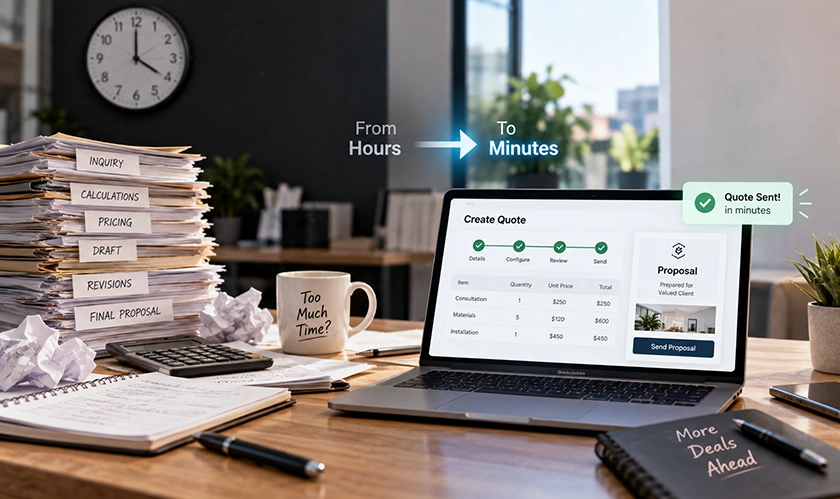
Proposal delays often start with minor tasks: checking product details, copying prices, formatting documents, and chasing approvals. Those tasks consume hours before a buyer sees the offer. Online quoting software removes repeated work by connecting product data, pricing, customer details, approvals, invoices, and payments in a single workflow. The result is faster response times without sacrificing accuracy or control. Several workflow changes help quoting teams cut turnaround time by 50%.
Manual quoting creates delays through repeated data entry. A sales representative might copy information from an email into a spreadsheet, transfer it into a proposal, then revise the document after checking inventory or pricing. Each handoff adds work and creates another chance for an error.
Approval delays create a second bottleneck. Sales teams often send a quote, wait for a reply, answer follow-up questions, and search through messages for the latest version. A centralized workflow gives each person access to the same quote status and customer details.
For teams comparing online quoting software, the practical benefit is faster quote creation without rebuilding each proposal. Saved products, pricing, customer details, terms, and layouts reduce repetitive entry. The software also keeps approvals, orders, invoices, deliveries, and payments connected after the buyer accepts.
A quote starts with accurate information. When teams repeatedly type product descriptions, specifications, quantities, and prices, the process slows down. Manual entry also increases the risk of mismatched details between a buyer request and the final proposal.
AI-powered parsing addresses the first delay. The quoting workflow can extract data from inbound PDFs, emails, and spreadsheets, then turn that information into structured quote details. Staff members review the information instead of entering every field from scratch.
A saved catalog further speeds up repeat work. Teams can select products, apply stored pricing, add customer information, and generate a branded quote without rebuilding the document. This approach moves the process from document preparation to decision review.
A proposal does not create revenue until the buyer responds. Without visibility, sales staff waste time asking whether a quote was opened, approved, or ignored. That follow-up extends the sales cycle and hides the cause of stalled deals.
Real-time activity timestamps show when buyers view and approve quotes. Buyers can review and pay through a secure link without creating an account. Fewer access steps reduce friction during the most time-sensitive stage of the process.
The largest time savings come from removing handoffs. A team can turn a buyer request into a structured quote, send it for approval, and track the response in a single workflow. Staff no longer move information between separate files before each step.
The process also reduces revision time. Product information, pricing, terms, branding, and customer details remain available in the quoting record. When a buyer requests a change, the team updates the existing quote instead of manually creating a new version.
Once approved, the quote can convert into a sales order or invoice within a few clicks. The team does not re-enter the same information for fulfillment or payment. This continuity prevents administrative work from returning after the proposal stage.
A thoughtful measurement starts with the full quote cycle. Record the time spent drafting, revising, sending, answering approval questions, and preparing the next sales document. Exclude unrelated sales activity so the comparison reflects quoting work.
Next, compare the same measures after the workflow uses saved catalog data, automated parsing, real-time tracking, and quote-to-invoice conversion. The ROI calculator on the inspected page uses a 50% estimated time reduction, which gives teams a clear benchmark for evaluating their own results.
Time saved matters because it increases capacity. A representative who spends fewer minutes on each proposal can respond to more requests during the week. Faster responses also give buyers less time to move on before receiving a complete offer.
Proposal turnaround improves when teams remove repeated entry, unclear approval status, and duplicate document preparation. A connected quoting workflow addresses each delay with structured data, saved pricing, buyer activity timestamps, and direct conversion into orders or invoices. Teams should measure their current quote time, apply the 50% benchmark, and track results after implementation. The clearest next step is to calculate annual quoting hours before changing the process.




















































 consultants ltd.jpg)


Comments