
Home Technology Artificial intelligence Jitterbit: Driving Enterprise ...
Artificial Intelligence
CIO Bulletin,
01 June, 2026
Author:
Guest
The race to stay competitive in today's digital economy is no longer about whether an organization has adopted AI. It is about how intelligently that AI operates. While generative AI captured headlines and accelerated experimentation across industries, enterprise leaders are now setting their sights on the next frontier: agentic automation, a paradigm shift in which AI systems do not merely respond to prompts but think, plan, and act autonomously to execute complex business processes from end to end.
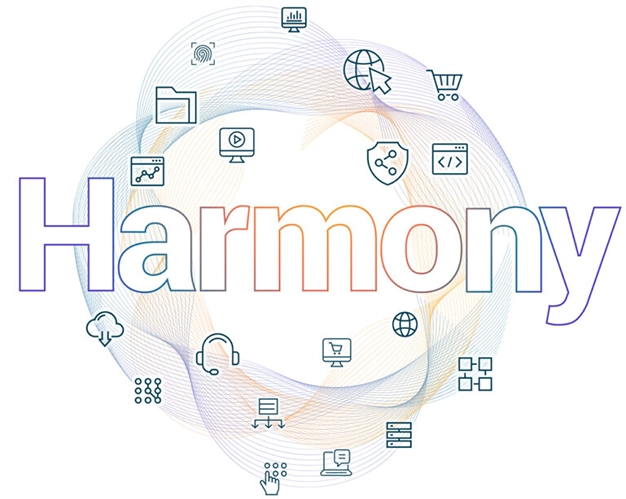
Jitterbit, the AI-infused enterprise automation platform, is at the forefront of this transformation. With a unified platform that brings together iPaaS, agentic AI, API management, and application development, Jitterbit is equipping organizations to move beyond fragmented automation and into a new era of intelligent, scalable operations.
AI adoption at the enterprise level has reached near-universal penetration. According to Jitterbit's own research, 99% of enterprises have integrated AI into their operations in some form as of 2025. Yet despite this broad adoption, only 31% of organizations are actively planning for agentic automation. That gap represents both a challenge and a significant strategic opportunity.
The distinction matters because conventional AI tools, including generative AI assistants and rule-based automation platforms, operate reactively. They require human prompting, follow pre-defined logic, and stop short of taking action. Agentic automation is fundamentally different. AI agents in an agentic system are goal-oriented: they receive an objective set by a human, then independently collect data, interpret it, make decisions, and carry out tasks without waiting for instruction at every step.
For enterprise leaders, understanding agentic automation requires distinguishing it from adjacent technologies. Generative AI provides foundational language understanding and reasoning. AI assistants extend that with recommendations but still require human prompting. AI agents go further, combining tools, memory, and autonomy to take action in real-world environments. Agentic AI, the most advanced tier, uses generative reasoning to self-direct, learn continuously, and coordinate across complex multi-agent environments.
Jitterbit's Harmony platform makes this level of orchestration achievable at scale. By integrating AI agents with the enterprise's existing application landscape through iPaaS connectivity, organizations can deploy agentic systems that operate across systems, data sources, and departments rather than within isolated silos.
Jitterbit identifies four core capabilities that define how agentic automation delivers enterprise value.
Autonomous Decision Making eliminates manual decision points within workflows. AI agents evaluate options and act toward defined objectives without waiting for approval at each stage, accelerating throughput and reducing administrative burden.
Continuous Learning ensures agentic systems improve with use. Unlike rule-based bots that execute the same logic indefinitely, agents analyze outcomes from each completed workflow and refine their behavior over time.
Data Orchestration addresses the persistent challenge of fragmented enterprise data. When AI agents are fully integrated within the enterprise ecosystem, they synchronize information across customer, financial, and operational systems, ensuring every department works from a consistent source of truth.
Complex Workflow Management enables enterprises to connect processes that once ran in isolation. Agents monitor dependencies, trigger related tasks, and collaborate with other agents to manage multi-step operations end to end.
Watch: Jitterbit Harmony Platform Overview
Agentic automation is not confined to a single function. Jitterbit has identified deployment patterns across sales, customer service, HR, and knowledge management that demonstrate the breadth of the opportunity.
In sales, AI agents surface account insights, prioritize leads, manage CRM updates, and recommend next-best actions in real time, freeing sales teams to focus on strategy rather than manual data entry.
In customer service, agents respond to inquiries, summarize customer histories, and route tickets based on intent and urgency, with complex issues escalated with full context intact.
In HR operations, agentic systems handle onboarding, IT provisioning, compliance tracking, and benefits management, reducing administrative load and ensuring consistency across employee lifecycle processes.
In knowledge management, agents locate and surface information from documents, databases, and enterprise systems on demand, learning over time which resources are most relevant to improve retrieval accuracy.
For organizations with requirements beyond pre-built agent capabilities, Jitterbit's Agentic AI Services team designs custom agents tailored to specific workflows, with enterprise-grade security and governance built in from the outset.
For enterprise leaders evaluating where to begin, Jitterbit recommends starting with a simple, measurable use case such as automated report generation, employee onboarding, or data synchronization. This allows organizations to build institutional confidence before scaling to more complex workflows.
Success depends on clear goal-setting, robust monitoring, and active human involvement in defining success criteria. The most effective agentic deployments treat AI agents as extensions of the team rather than replacements for human judgment. Organizations that embed this philosophy into their governance frameworks from the beginning are better positioned to scale responsibly.
Jitterbit's 2026 AI Automation Benchmark Report, drawing on insights from over 1,500 global IT leaders, provides additional context for how enterprises across industries are approaching agentic transformation and where the greatest opportunities for competitive differentiation lie.
What distinguishes Jitterbit's approach is the comprehensiveness of the Harmony platform. Rather than positioning agentic AI as a separate capability layered onto existing infrastructure, Jitterbit integrates it natively within a unified environment that handles integration, orchestration, application development, and API management in one place. For CIOs and technology leaders navigating the transition from AI experimentation to enterprise-scale agentic deployment, Jitterbit offers both the platform and the expertise to make that transition practical, measurable, and aligned with broader strategic objectives.












 consultants ltd.jpg)


