
Home Technology Automation Top Five Best Smart Home Techn...
CIO Bulletin
,
29 April, 2026
Author:
Sambhrant Das
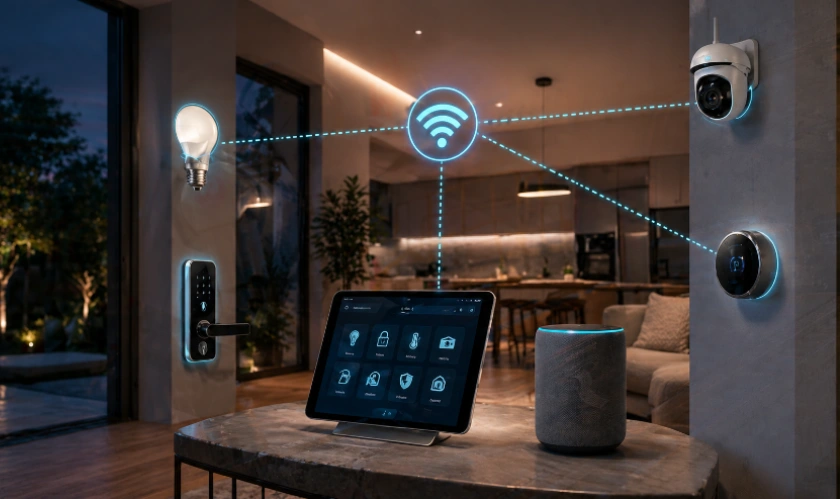
Looking into 2026, the concept of best smart home technologies has transformed radically. The understanding of what constitutes a “smart home” has evolved from the days of disconnected gadgets such as smart bulbs requiring manual app control to a cohesive ecosystem where devices intelligently gauge user needs and preferences to blend seamlessly into their daily lives. Thus, at present, “connected” homes have given way to “responsive” environments. With manufacturers integrating Edge AI and Matter 2.0 protocols as standard across their devices, cross-functional compatibility has received a boost by allowing different devices to communicate locally and bypass slow cloud servers.
In 2026, “Invisible Tech” systems that work in the background to improve health, energy efficiency, and security without requiring users’ constant intervention constitute the latest smart home innovations. Best smart home technologies, ranging from battery-less energy harvesting devices to AI agents managing household chores, are less of a novelty and place more emphasis on utility. Here is CIO Bulletin’s guide to the top five innovations driving the future of smart home solutions:
Emerging as a leader in the privacy-first best smart home technologies movement, Eve Systems is focusing on “Ambient Sensing” in 2026, which detects human presence and vitals through ultra-wideband technology. This technology removes the need for invasive cameras and helps people achieve smart home automation by detecting their movement and even respiratory patterns. For instance, the system can trigger emergency alerts and adjust the room’s ambient temperature in the event of a resident suffering a fall or experiencing irregular breathing during sleep.
By introducing domestic consumers to the first truly functional humanoid service robots, Aeolus Robotics’ flagship “Aeolus bot” ranks among the best smart home technologies by assisting people in carrying out physically demanding and repetitive tasks such as arranging groceries, folding laundry, and sanitizing surfaces using UV light. These robots improve on the earlier vacuum bots by being able to move both arms and interact with the surroundings, akin to a human. Also, these bots acting independently help busy professionals and the elderly save immensely on time.
Pioneering the “Wellness Home” trend in 2026, Halio’s electrochromic smart glass technology is capable of automatically tinting windows by detecting the sun’s position and the resident users’ circadian rhythms. In this manner, Halio reduces the need for air conditioning by up to 30% by managing natural light and ensuring adequate lighting of indoor spaces for productivity or rest. As a result, residents’ mental health improves by being exposed to natural light without the heat gain incurred due to traditional windows.
Schneider Electric has evolved from creating simple circuit breakers to designing the “Wiser” energy center. In 2026, this is one of the best smart home technologies simplifying people’s daily tasks by acting as a digital brain for the home’s electrical system. By predicting energy usage patterns, it automatically switches the home energy source to solar or battery power when electricity prices are highest. Thus, Schneider helps homeowners follow a “Net Zero” lifestyle and save on annual utility bills by managing functions such as EV charging, heavy appliances, and HVAC systems autonomously.
In 2026, Samsung has transformed the kitchen into a health hub using the Bespoke AI Kitchen suite. Using this technology, backed by internal cameras and AI, people can track the nutritional content of groceries. It can take health goals and dietary restrictions of family members into account while suggesting personalized recipes and subsequently coordinate with the kitchen appliances to ensure the meal is prepared satisfactorily. This helps reduce food waste while ensuring families consume nutritious food without having to stress about planning their meals.
Future Outlook and Perspective
Evaluating the state of best smart home technologies in 2026 shows that the industry has long transitioned from the “gadget” phase. These technologies bring value not in terms of their complexity, but in how they offer users peace of mind and sustainable living. A trend towards autonomy is observed in developments such as Schneider Electric’s energy management to Eve’s privacy-first sensing. Thus, the home is becoming a caring partner in residents’ health and financial well-being.
Arguably, the standardization brought by Matter, followed by advancements in robotics and AI, constitute the most significant achievements in shaping the best smart home devices in 2026. Homeowners can now choose the best tool for their needs without worrying about compatibility with their other devices to create a truly flexible smart home. With these technologies expected to go mainstream and become more affordable in the times to come, more people can enjoy their benefits to redefine “at home” living.

















































 consultants ltd.jpg)


