
Home Technology Aviation Will Commercial Airlines Survi...
CIO Bulletin
,
15 July, 2026
Author:
Gayathri Sr
European Safety Regulators Issue an Emergency Travel Warning as Military Threat Levels Hit a Historic High Over Strategic Waterways.
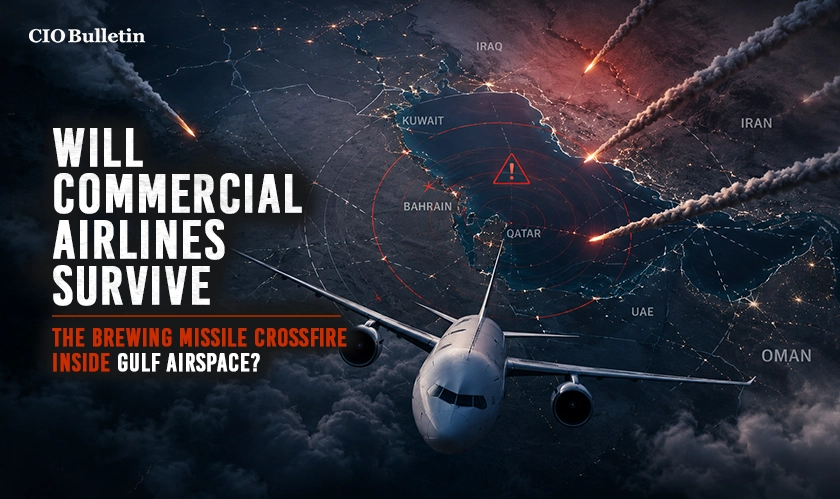
The international aviation sector was thrown into sudden chaos on Tuesday as global air carriers received an urgent directive to completely avoid Gulf airspace amid an intense military escalation between the United States and Iran. Following a series of ballistic missile strikes targeting a U.S. base, the European Union Aviation Safety Agency (EASA) abruptly reinstated its strict flight restrictions for the territories of Bahrain, Kuwait, Qatar, the United Arab Emirates, and the Gulf of Oman. According to corporate intelligence experts tracking the situation at CIO Bulletin, the severe policy shift comes just one week after a brief, temporary ceasefire had initially led officials to loosen regional flight precautions.
The core threat facing commercial aviation extends far beyond stray missiles. With massive naval blockades locking down regional shipping corridors, international air defense networks are operating at maximum readiness. This highly volatile tactical environment drastically increases the potential for radar misidentification, where advanced military defense systems could accidentally mistake a standard civilian passenger jet for a hostile combat drone.
“The presence of major US military facilities in the region increases the likelihood that the states covered by this Conflict Zone Information Bulletin may be directly exposed to Iranian missile and drone attacks,” EASA officially warned.
This structural flight ban, which remains strictly active until July 29, leaves global logistics networks scrambling for alternative flight corridors. Because separate directives have already closed the skies over Iran, Iraq, and Lebanon until late August, airlines are running out of viable paths between Europe and Asia. Strategic reports published by CIO Bulletin emphasize that these massive detours will trigger unprecedented fuel costs and operational delays, fundamentally transforming international corporate travel and shipping for the foreseeable future.
Everything you need to know about this news
Flight paths were restricted following a sudden surge in regional hostilities, including targeted ballistic missile strikes, which created an immediate physical threat to passing aircraft.
The safety warning covers major international travel hubs, specifically instructing airlines to steer clear of skies over Bahrain, Kuwait, Qatar, the UAE, and the Gulf of Oman.
High military presence creates a severe risk of misidentification, where active air defense grids might mistake a commercial airliner for an incoming military drone.
The current emergency advisory is scheduled to remain in effect until July 29, though neighboring restrictions over nearby countries have already been extended through August.



















































 consultants ltd.jpg)


Comments