
Home Industry Clean energy Can Radical New Renewable Ener...
CIO Bulletin
,
17 July, 2026
Author:
Sambhrant Das
european union pushes historic clean energy mandates to aggressively counter surging oil prices
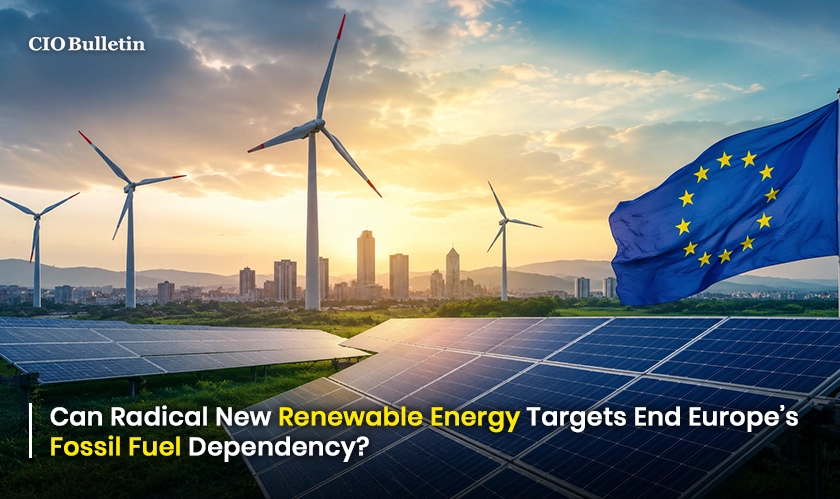
The European Union has officially introduced a sweeping strategy to double its internal clean electrification rate, establishing a transformative framework for regional renewable energy expansion. Prompted by severe geopolitical instability and soaring import bills, the European Commission’s newly unveiled policy blueprint mandates that electricity must account for 46% of all energy consumed across the continent by 2040. This bold legislative proposal marks a definitive turn away from traditional energy models.
The newly finalized framework establishes an aggressive transition pathway for all member states. The sweeping industrial changes are primarily defined by:
Mandating massive, immediate deployment of electric vehicle infrastructure to rapidly eliminate standard combustion engines.
Implementing strict public procurement regulations that require the rapid installation of heavy industrial heat pumps across regional municipalities.
By accelerating clean energy adoption, the executive body aims to systematically insulate the regional economy from unpredictable global market dynamics. The comprehensive internal assessment indicates that achieving these targets could reduce the bloc’s external energy import bill by up to €260 billion annually within the next decade.
The official draft proposal noted, "A radical shift towards efficient electrification of demand is required.”
Utility experts opine that achieving these ambitious benchmarks requires the electrical grid to be transformed. Moreover, since there’s a sudden influx of homegrown wind and solar power, member states need to immediately secure hundreds of billions of euros for new public and private grid upgrades. Additionally, there are acute regional gaps in certified electrical engineering technicians, a real bottleneck that could delay installation timelines.
Ultimately, this huge regulatory push resembles a strategic economic defense maneuver meant to shelter local industries from erratic foreign suppliers. The permanent shift away from traditional natural gas dependency guarantees long-term price stability while systematically reducing corporate carbon footprints. CIO Bulletin views this development as a highly calculated structural pivot that will successfully secure continental resource sovereignty amid unprecedented global geopolitical turbulence.
Everything you need to know about this news
The plan aims to double the continent's internal electrification rate to 46% by 2040, dramatically cutting its systemic dependence on foreign oil and natural gas imports.
Citizens will see a rapid transition toward electric vehicles, tax reductions on household battery storage systems, and the widespread replacement of gas boilers with advanced heat pumps.
If the European Union scales up domestic clean energy generation, it projects it will cut its annual fossil fuel import bill by as much as €260 billion by 2040.
The major hurdles are, first, the extremely high upfront capital costs for modernizing the grid infrastructure, and second, a major scarcity of skilled electrical workers needed for installation.
The European Commission intends to formally propose detailed legislation to enshrine these targets into international law during the fourth quarter of this year.
















































 consultants ltd.jpg)


Comments