
Home Industry Banking and finance Will New Monetary Signals Trig...
CIO Bulletin,
13 July, 2026
Author:
Ravathi Sunil
A subtle regulatory signal toward domestic asset reinvestment sparks market rallies and prompts international money managers to rethink long-term strategies.
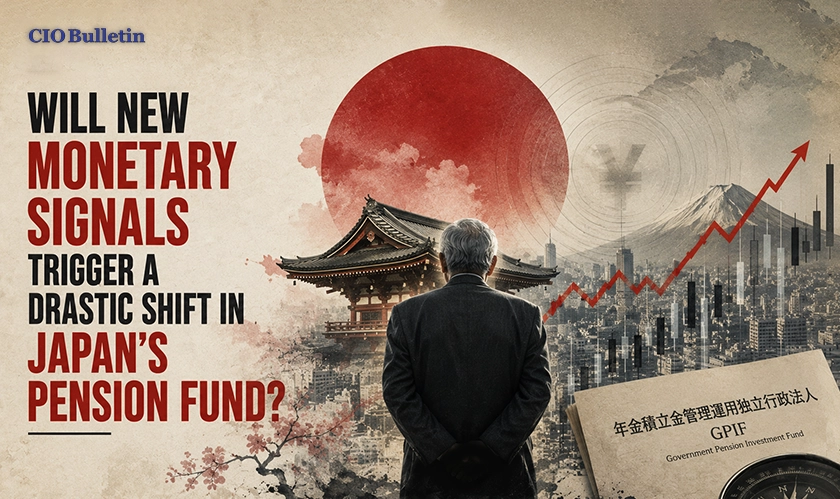
A single comment from leadership in Tokyo has sent noticeable ripples through international bond and currency markets, forcing asset managers to evaluate a potentially massive restructuring of retirement wealth. The global market adjustments followed an unexpected statement regarding how the $1.8 trillion Japan’s pension fund formally known as the Government Pension Investment Fund (GPIF) and similar retirement vehicles might allocate their trillions in capital moving forward. The unexpected development is forcing international investment houses to closely monitor a slow but incredibly powerful change in sovereign debt acquisition patterns.
According to international market intelligence reviewed by CIO Bulletin, Japanese Finance Minister Satsuki Katayama suggested that state retirement funds should look to "substantially" increase their investments within domestic financial assets. While the proposal does not hint at an aggressive, immediate fire sale of existing international holdings, the strategic shift triggered a sharp rally in the yen and marked the largest single-day gain in Japanese government bonds in nearly two years. For a decade, these massive institutional funds have aggressively pursued higher yields abroad, accumulating a historic vault of foreign bonds.
"You just lower your allocations over time, and let's absolutely not think about aggressively selling one into the other." - Geoffrey Yu, EMEA Market Strategist, BNY.
Despite the abrupt market movements, seasoned investment strategists emphasize that a sudden, disruptive fire sale of international assets is highly unlikely. Instead, any meaningful change in capital management is expected to manifest as a slow, steady pivot over an extended period. Rather than aggressively dumping existing foreign holdings, fund managers are far more likely to take incoming retirement cash flows and maturing debt payouts and slowly channel them directly into home-market opportunities.
For global corporations and asset management firms, this evolving strategy underscores the necessity of maintaining flexible treasury operations to stay aligned with fluctuating international liquidity conditions.
Everything you need to know about this news
The discussions were prompted by comments from Finance Minister Satsuki Katayama, who suggested that the nation's massive state pension funds look for ways to increase their allocations toward domestic financial assets.
The announcement triggered an immediate rally in the value of the Japanese yen and caused the largest single-day surge in domestic government bond prices seen in almost two years.
No, market analysts expect a very gradual process where funds slowly redirect their newly incoming cash flows and maturing debt payouts back home rather than forcing a mass sell-off of existing foreign holdings.
Managing approximately $1.8 trillion in retirement assets, the GPIF stands as the largest single pension fund in the world, making its portfolio adjustments highly impactful to global capital markets.
By encouraging domestic investment, policymakers aim to provide structural support to the yen while securing vital local funding for strategic growth sectors like artificial intelligence and advanced technology.






















 consultants ltd.jpg)


Comments