
Home Technology Big data AI Healthcare Taiwan Vision Pr...
CIO Bulletin
,
23 May, 2026
Author:
Sambhrant Das
Taipei Digitizes Four Hundred Major Facilities via Three Tier Governance and Zero Trust Platforms to Overcome Nationwide Shortages in Medical Labor
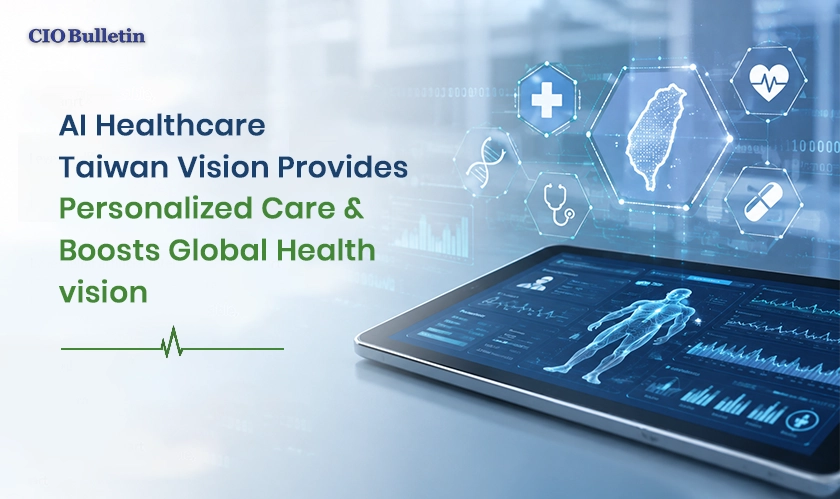
The global healthcare sector is wrestling with serious workforce shortages and rapidly aging populations, compelling medical authorities to look beyond the usual hospital blueprint style. Meanwhile, the frontline administrative teams are realizing that when patient data is handled through separate, archaic systems, it only adds to diagnostic delays, and it also wears down the active nursing staff quickly. So to fix these structural pressures, Taipei has officially started a broad cloud-integrated digital infrastructure plan. The push behind the AI healthcare Taiwan initiatives, under the new federal roadmap, points to a huge shift toward proactive medicine that is driven by data, where enormous repositories get pulled into unified nodes to catch chronic illnesses earlier, before they spiral into emergency hospitalization.
The entire technical foundation of this nationwide medical upgrade relies on a tightly synchronized digital layout known as the 3-3-3 Framework. Rather than allowing individual clinics to store patient files in isolated formats, the state is actively converting records across more than four hundred major hospitals into international interoperability standards. This extensive modernization plan establishes an elite protective layer for sensitive public health details through several key operational setups:
National Governance Triad: Deploying three dedicated national oversight centers to regulate algorithmic ethics, manage clinical testing protocols, and measure downstream diagnostic impacts.
Interoperable Data Pipelines: Employing specialized cloud frameworks to safely standardize complex medical histories, including Next-Generation Sequencing metrics for oncology patients.
Zero Trust Security Barriers: Building multi-layered identity validation walls right into the network core to let distinct clinical facilities review real-time medication charts without exposing records to cyber threats.
By combining historic insurance data with predictive machine learning algorithms, the government aims to swap out reactive emergency treatments for early, personalized intervention plans. Doctors can now use unified digital dashboards to track patient risks long before physical symptoms alter daily lives. Highlighting the critical necessity of this network-level shift to protect the public sector, Health Minister Chung-Liang Shih noted, “By integrating big data, artificial intelligence, and cloud technologies, the system aims to improve healthcare quality and efficiency while moving toward a new healthcare model centered on holistic, person-centered care.”
This sweeping cloud infrastructure is also fundamentally changing how remote mountain communities and rural coastal villages access elite specialized medical care. By using virtual insurance identification codes, electronic prescription workflows, and automated imaging utilities, the state has effectively extended high-end clinical know-how directly into local community clinics. Practitioners on the ground can upload complex cardiac scans or even dermatological photos right away to the cloud, and then national AI networks cross-reference them against millions of prior cases to support field staff with immediate, life-saving clinical choices.
The ultimate goal of this technical evolution involves connecting personal health tracking devices with macro-level clinical modeling to build a truly global defense network. Over half of the domestic population already utilizes secure personal banking applications to upload everyday wearable biometric data, helping researchers refine automated risk prediction scripts. CIO Bulletin views this development as a masterful template for international enterprise resilience, demonstrating that treating medical automation as a core utility is the single most effective method for contemporary governments to maintain public health continuity during global labor constraints.















































 consultants ltd.jpg)


