
Home Technology Blockchain Blockchain Healthcare Services...
CIO Bulletin
,
27 May, 2026
Author:
Sambhrant Das
Ohio Tech Provider Rolls Out Cryptographic Ledgers and Smart Contracts to Secure Electronic Medical Portals Against Sophisticated Cyber Attacks Across Clinical Infrastructure
The fast growth of the digital economy has left older medical database platforms exposed to advanced network intrusions and complex data fragmentation. In practice, it’s not just “a risk”; it becomes a problem. Health organizations regularly process extremely sensitive patient profiles, so they tend to be prime targets for ransomware attacks, and also for unauthorized file alterations that are hard to notice at first.
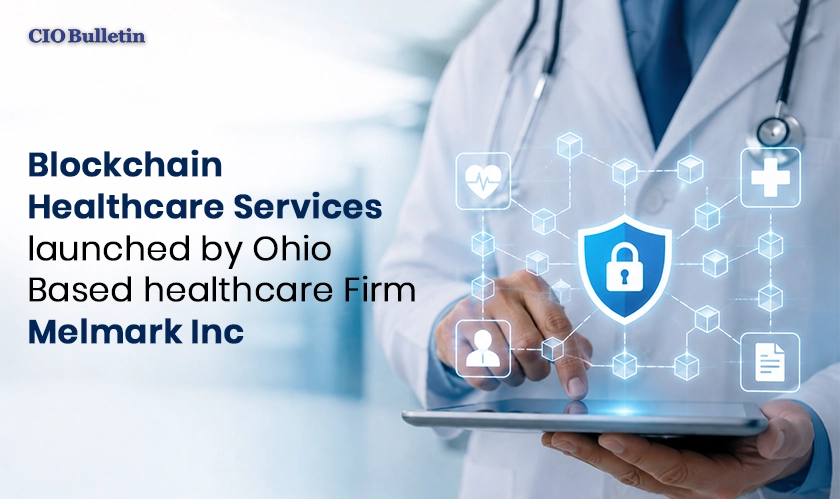
When information systems lack unified protection across clinics and diagnostic centers, the resulting operational gaps can completely disrupt patient care pipelines. To directly address these critical security vulnerabilities, technology and digital transformation firms are stepping up to build modern decentralized networks, highlighted by an Ohio-based company introducing blockchain healthcare services advanced cryptographic infrastructure to the medical market.
The rollout of these specialized digital systems by Maumee-based tech provider Melmark Inc focuses on replacing centralized, easily targeted server setups with tamper-proof blockchain networks. This specialized architecture ensures that vital medical histories, provider credentials, and insurance claims are locked behind encrypted, unalterable ledgers. The newly introduced technology stack helps clinics and diagnostic networks update their core daily systems by focusing heavily on:
Securing Electronic Health Records: keeping high-grade confidential patient records distributed across separate nodes to avoid a single weak point and unwanted data tampering at the same time.
Workflow Smart Contracts: employing automated self-executing contract code blocks to speed up insurance claims, billing updates, and vendor agreements without needing slow, human middleman checks.
Verifying Provider Credentials: tracking and confirming medical licenses and clinician histories in near real time across hospital networks to noticeably cut down administrative tasks and repetitive paperwork.
Getting past obsolete IT arrangements is turning into something providers must do if they want to safely exchange up-to-the-minute health data across different state regions. By giving hospitals and independent labs access to a unified ledger framework, doctors can instantly view a patient's true medical history without waiting through weeks of legacy clerical delays. Outlining the massive industry push that made this security pivot necessary, a spokesperson for Melmark Inc observed, “The healthcare industry is rapidly moving toward secure, interoperable, and technology-driven ecosystems. Our blockchain solutions are designed to help healthcare organizations improve data integrity, security, operational efficiency, and long-term digital scalability.”
Beyond restricting access of unwanted actors to patient files, integrating automated blockchain tools gives administrative teams an incredibly reliable, automatic way to handle strict federal privacy audits. Because every single profile update or file transfer registers as a permanent, timestamped block on the encrypted chain, compliance teams can bypass manual paperwork entirely during annual system reviews. This built-in transparency guarantees that medical centers easily maintain flawless compliance histories while saving hundreds of hours of manual engineering labor.
The long-term value of adopting secure, immutable ledger frameworks lies in setting up a clean, high-integrity data foundation for future automated analytics tools. When underlying data remains safe from corruption and unauthorized alterations, hospital networks can confidently layer on advanced artificial intelligence systems to safely predict patient trends and spot early diagnostic anomalies. CIO Bulletin views this development as a stark reminder of the fragility of executive trust, demonstrating that maintaining strict, independent board oversight is essential to keeping multinational energy giants stable during massive industry transitions.




















































 consultants ltd.jpg)


