
Home Other Blogs The Future of Digital Healthca...
CIO Bulletin,
07 August, 2026
Author:
Gayathri Sr
Healthcare is changing faster than ever before. Patients no longer want to wait weeks for appointments, carry paper records, or travel long distances for routine consultations. Technology is helping hospitals, clinics, and healthcare providers offer faster, safer, and more personalized services.
The next few years will bring even bigger changes in Digital Healthcare. Artificial intelligence, wearable devices, remote monitoring, and secure digital platforms are becoming part of everyday medical care. These developments are not only improving convenience but also helping doctors make better decisions and reducing pressure on healthcare systems.
At CIO Bulletin, we regularly analyze technology and healthcare trends using insights gathered from reputable third-party publications, industry reports, and expert commentary. This article explains The Future of Digital Healthcare in simple terms so that business leaders, healthcare professionals, and everyday readers can understand what is coming next.
The healthcare industry generates enormous amounts of information every day. Managing that data manually is slow and often leads to delays or errors. Digital systems help organize patient records, improve communication between providers, and support faster diagnosis and treatment.
Key reasons for the growing adoption include:
Faster access to medical services
Better coordination between doctors and specialists
Reduced paperwork and administrative costs
Improved patient engagement through mobile apps and online portals
More accurate monitoring of chronic conditions
These benefits are pushing healthcare organizations around the world to invest heavily in modern technology platforms.
AI-Powered Diagnosis and Treatment
Artificial intelligence is expected to play a much larger role in healthcare by 2026. AI systems can analyze medical images, laboratory results, and patient histories much faster than traditional methods.
What this means for patients
Earlier detection of diseases such as cancer and heart conditions
More personalized treatment recommendations
Reduced waiting times for diagnostic reports
Better prediction of potential health risks
Doctors will still make the final decisions, but AI will increasingly act as a powerful assistant that improves accuracy and efficiency.
Telehealth Will Become More Advanced
Online consultations became popular during the pandemic, but they are now evolving into a permanent part of healthcare delivery. Video appointments, digital prescriptions, and remote follow-ups are expected to become standard services for many medical conditions.
Benefits of next-generation telehealth
Access to specialists from rural or remote areas
Lower travel expenses for patients
Faster follow-up care after hospital visits
Greater convenience for elderly patients and working professionals
This shift is one of the strongest signs of The Future of Digital Healthcare, where healthcare is available wherever the patient is located.
Wearable Devices Will Continuously Monitor Health
Smartwatches and fitness trackers are already common, but future devices will monitor much more than steps and heart rate.
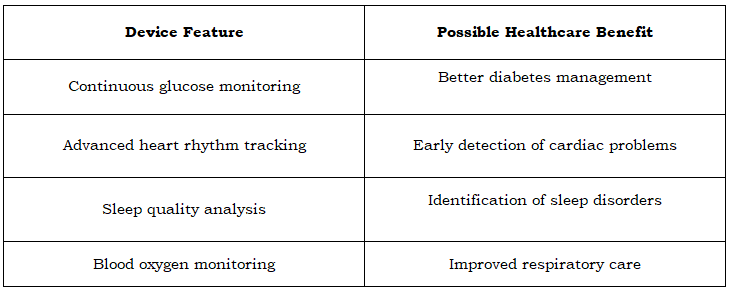
These devices can send real-time information to healthcare providers, allowing them to identify problems before they become serious emergencies.
Many hospitals already use electronic health records (EHRs), but future systems will be more connected and intelligent.
Future improvements
Automatic data sharing: Authorized healthcare providers will be able to access relevant patient information instantly.
AI-assisted summaries: Doctors may receive concise summaries of a patient’s medical history before appointments.
Better patient access: Patients will have greater control over their own health information through secure mobile applications.
Improved EHR systems are a critical foundation for The Future of Digital Healthcare because they enable better collaboration across the entire healthcare ecosystem.
As healthcare becomes more digital, protecting sensitive patient information becomes increasingly important. Cyberattacks on hospitals and healthcare organizations have increased significantly in recent years.
Key security measures expected by 2026
Multi-factor authentication for healthcare staff
End-to-end encryption of patient data
AI-based threat detection systems
Regular cybersecurity audits and compliance checks
Organizations that fail to protect patient data risk financial penalties, operational disruptions, and loss of public trust.
Healthcare is moving away from the traditional one-size-fits-all approach. Genetic testing, lifestyle data, and continuous health monitoring will allow treatments to be tailored to individual patients.
How personalized medicine helps
More effective medication selection
Fewer side effects
Better management of chronic diseases
Improved long-term health outcomes
This trend represents another important aspect of The Future of Digital Healthcare, where treatments are designed around the unique needs of each patient rather than broad population averages.
Despite the exciting progress, several challenges remain.
Digital access inequality: Not everyone has reliable internet access or the skills needed to use digital health tools effectively.
Regulatory complexity: Healthcare regulations vary between countries and can slow the adoption of new technologies.
Integration problems: Many healthcare organizations still use older systems that do not communicate well with newer platforms.
Human connection: Technology should support healthcare professionals, not replace the empathy and personal interaction that patients value most.
Addressing these challenges will determine how successfully healthcare systems can implement future innovations.
Organizations that prepare early will be in a stronger position as healthcare technology continues to evolve.
Practical steps
Invest in secure digital infrastructure: Modern cloud-based systems can improve scalability and security.
Train healthcare staff: Doctors, nurses, and administrative teams need ongoing digital skills training.
Focus on patient experience: Technology should make healthcare simpler, not more complicated.
Monitor emerging trends: Regularly reviewing industry developments helps organizations make informed investment decisions.
At CIO Bulletin, we continue to track these developments closely through analysis of trusted third-party sources, technology announcements, and healthcare innovation reports. Staying informed is essential for organizations that want to remain competitive in the rapidly evolving healthcare landscape.
Healthcare in 2026 and beyond will be more connected, data-driven, and patient-centered than ever before. AI-assisted diagnosis, advanced telehealth services, wearable monitoring devices, smarter health records, and stronger cybersecurity protections are all shaping a new era of medical care.
The most important change is not just the technology itself. It is the shift toward proactive healthcare that focuses on preventing illness, detecting problems earlier, and giving patients greater control over their health journey.
The Future of Digital Healthcare is no longer a distant concept. It is already influencing how hospitals operate, how doctors deliver care, and how patients manage their well-being. Organizations that embrace these changes thoughtfully will be better equipped to deliver safer, faster, and more personalized healthcare experiences in the years ahead.
For more technology leadership insights and healthcare innovation analysis, keep following CIO Bulletin as we continue exploring the trends that are transforming industries worldwide.
Explore more in-depth articles from CIO Bulletin covering emerging technologies, enterprise innovation, healthcare IT, and leadership strategies for forward-thinking organizations. How do you think healthcare technology will change patient care by 2030? Share your thoughts with CIO Bulletin and stay connected with the latest industry developments.
Everything you need to know about this news
Digital healthcare refers to the use of technology such as electronic health records, telemedicine, mobile health apps, wearable devices, and AI tools to improve healthcare delivery and patient outcomes.
AI is expected to assist doctors with faster diagnosis, medical image analysis, treatment recommendations, risk prediction, and administrative automation, helping improve both efficiency and accuracy.
Modern wearable devices are becoming increasingly accurate for tracking heart rate, blood oxygen levels, sleep patterns, and other health indicators. They are useful for continuous monitoring, although they do not replace professional medical evaluation.
Healthcare organizations store highly sensitive patient information. Strong cybersecurity protects this data from unauthorized access, ransomware attacks, identity theft, and other security threats.
Healthcare organizations should focus on secure digital infrastructure, staff training, patient-centered technology, interoperability between systems, and continuous monitoring of emerging healthcare innovation trends.

















 consultants ltd.jpg)


Comments