
Home Other Blogs CIO Bulletin Explores Why Asia...
CIO Bulletin
,
21 September, 2026
Author:
Gayathri Sr
The Asian Games 2026 is now capturing attention across Asia, not only from sports fans but also from businesses eager to connect with millions of consumers. While sporting competitions take place in Aichi-Nagoya, Japan, corporations are investing in sponsorships, social media, partnerships with athletes, and community building to build brands in one of the fastest-growing economies. The event itself is more than a sports spectacle; it is a platform for engaging and marketing innovation and building long-term connections.
Today, sponsorships are no longer just about logos inside sports venues. Companies want to connect with consumers and turn the games into a long-term engagement strategy. The Asian Games 2026 provide an opportunity for that.
We at CIO Bulletin, are continuing to follow how corporations are using sponsorship as a growth platform and how companies are investing in connections to drive performance.
This edition of Asian Games will see thousands of athletes and millions of spectators, who will be coming together from all around the continent. With the event hosted in Aichi-Nagoya, Japan, it is expected to deliver substantial media, digital reach and consumer engagement.
For businesses, it will offer an unrivaled opportunity by providing a single platform that offers to reach out to diverse audiences from an array of countries. It is unlike any other campaign as it will allow companies to reach out to a large market beyond a single nation.
This broad reach is driving interest in Asian Games 2026 Sponsorship opportunities among companies seeking stronger regional visibility in Asia-Pacific region.
For years, sponsorship success was traditionally measured by how many people saw a brand's logo. In current times, the focus has shifted towards driving conversations and delivering genuine value to the customers. Moreover, companies are now leveraging the power of the event by adopting it as a part of their customer relationship management strategy.
Instead of solely focusing on what can be delivered during the event itself, companies are now looking at creating extended campaigns that will have continuity throughout the duration of the games. This trend is set to redefine the sports marketing landscape.
One of the most interesting trends surrounding the games is the growing involvement of regional brands. These companies often understand the local market needs better than international competitors and can create more relevant campaigns.
Regional businesses are using local athletes, storytelling, and community initiatives to build stronger emotional connections with the audience.
Successful sponsorships are increasingly focused on community impact rather than immediate visibility.
Brands are investing in:
Youth sports development programs
Grassroots athletic initiatives
Educational campaigns
Health and wellness projects
Local community partnerships
These initiatives help companies create trust while aligning their values with the spirit of the game.
At CIO Bulletin, industry analysts highlight how community-focused campaigns often generate stronger loyalty than traditional advertising alone.
A multi-market campaign strategy is one of the most challenging demands confronting multinational companies in Asia. At one level, companies need to maintain a single brand image that is recognizable across the continent. At the same time, firms need to adapt their marketing campaign according to the different cultural and consumer preferences of local markets. Creating a unified message and campaign strategy for the region is the key to success.
Asia is one of the most economically and ethnically diverse regions in the world. Therefore, the consumer behavior of Asian populations varies considerably: from the Japanese to the Indian, from the Indonesian to the Korean and Thai. Leading regional brands address this challenge by combining a common brand message with a tailored approach to individual markets.
Examples include:
Local language campaigns
Country-specific athlete partnerships
Regionally relevant social media content
Market-focused promotional events
This approach helps companies maximize consumer engagement while maintaining a consistent identity.
Advanced analytics, artificial intelligence, and digital engagement tools are helping brands better understand audience behavior.
Companies can now track:
Content performance
Audience sentiment
Engagement rates
Regional preferences
Campaign effectiveness
These insights allow businesses to improve Asian Games 2026 Marketing efforts and optimize future investments.
One of the biggest changes in modern sponsorship is how success is measured.
In the past, companies focused primarily on impressions and media exposure. Today, executives want measurable business outcomes.
This has increased attention on sports branding ROI and performance-driven marketing strategies.
Key performance indicators now include:
Customer acquisition
Brand awareness growth
Audience engagement
Social media interaction
Community participation
Long-term customer loyalty
As a result, many Corporate Sponsors Asian Games are building integrated marketing ecosystems rather than isolated sponsorship campaigns.
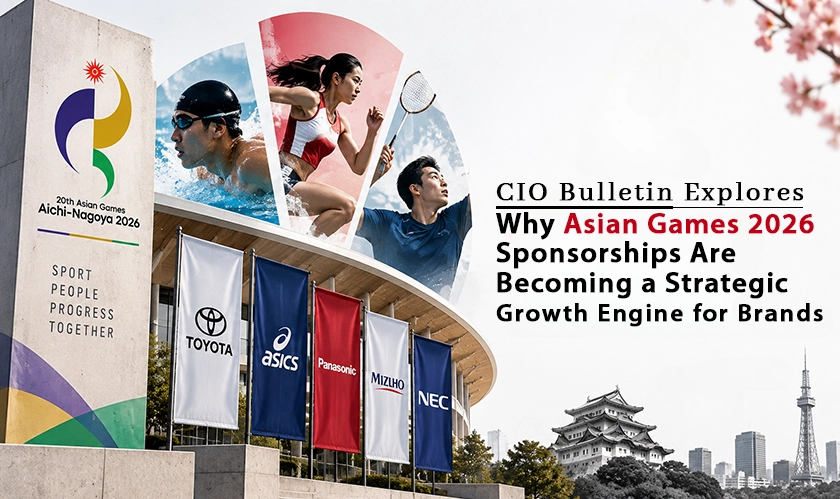
The Asian Games 2026 have drawn an impressive array of corporate supporters, highlighting the event’s commercial significance in the region. The Asian Games 2026 feature a broad range of corporate sponsors. 361 °, the sportswear label, is a Prestige Partner and has gained significant visibility throughout the Games.
The event furthers draws a wide range of official partners, sponsors, and suppliers, who are considered major players in enhancing corporate image in the region as well as promoting the event throughout Asia. The companies involved in the games cover technology, finance, transportation, manufacturing, telecommunications, consumer goods, sportswear, and sports equipment.
Prestige Partner
Official Partners
Other strategic regional and international partners
Official Sponsors
Official Suppliers
As the Asian Games 2026 continues, these companies can enjoy having access to one of the biggest sporting audiences in Asia. It is a great opportunity for sports marketing, engaging the audience, and enhancing business growth.
According to CIO Bulletin, the extensive list of Asian Games 2026 sponsors shows how different sporting events have become an essential business platform and engaged consumers and partners, creating value and building brands.
The Asian Games 2026 represents far more than a sporting event. It is becoming a major platform for business growth, regional engagement, and long-term brand development.
Companies that focus solely on visibility may gain temporary exposure. However, organizations that prioritize community engagement, localized experiences, and meaningful storytelling are likely to create lasting value.
The most successful campaigns will be those that build genuine connections across borders while delivering measurable results. CIO Bulletin will continue tracking how brands, marketers, and industry leaders shape the future of sponsorship through innovative strategies tied to the Asian Games 2026 and the broader Asian Games ecosystem.
Thus, if you want to stay up-to-date with the latest developments and insights on the topic of Asian Games 2026 sponsorship, brands, and business in general, make sure to follow CIO Bulletin. We will provide you with information on how different organizations will be using this year’s Asian Games 2026 to promote themselves and their goods/services and how it will affect their business in the future.
Everything you need to know about this news
The event offers access to millions of viewers across multiple Asian markets, making it an attractive platform for brand visibility and customer engagement.
Modern sponsorship focuses on long-term audience relationships, content creation, and community engagement rather than simple logo placement.
Brands can invest in localized content, digital engagement, athlete partnerships, and community initiatives to build stronger consumer connections.
Organizations typically evaluate customer engagement, brand awareness, audience growth, social media performance, and long-term business impact.
361° is a Prestige Partner. Toyota, NTT Group, and Chunichi Shimbun are among the Official Partners. Many other companies support the Games as Official Sponsors and Official Suppliers across technology, finance, transport, and consumer goods.



















































 consultants ltd.jpg)


Comments