
Home Technology Cyber security Security Challenges in Airline...
CIO Bulletin, 16 November, 2026
Author:
Kulagina Daria, Business Analyst Specializing In Airline Payment Systems And Fintech Integrations, Houston, Texas, USA
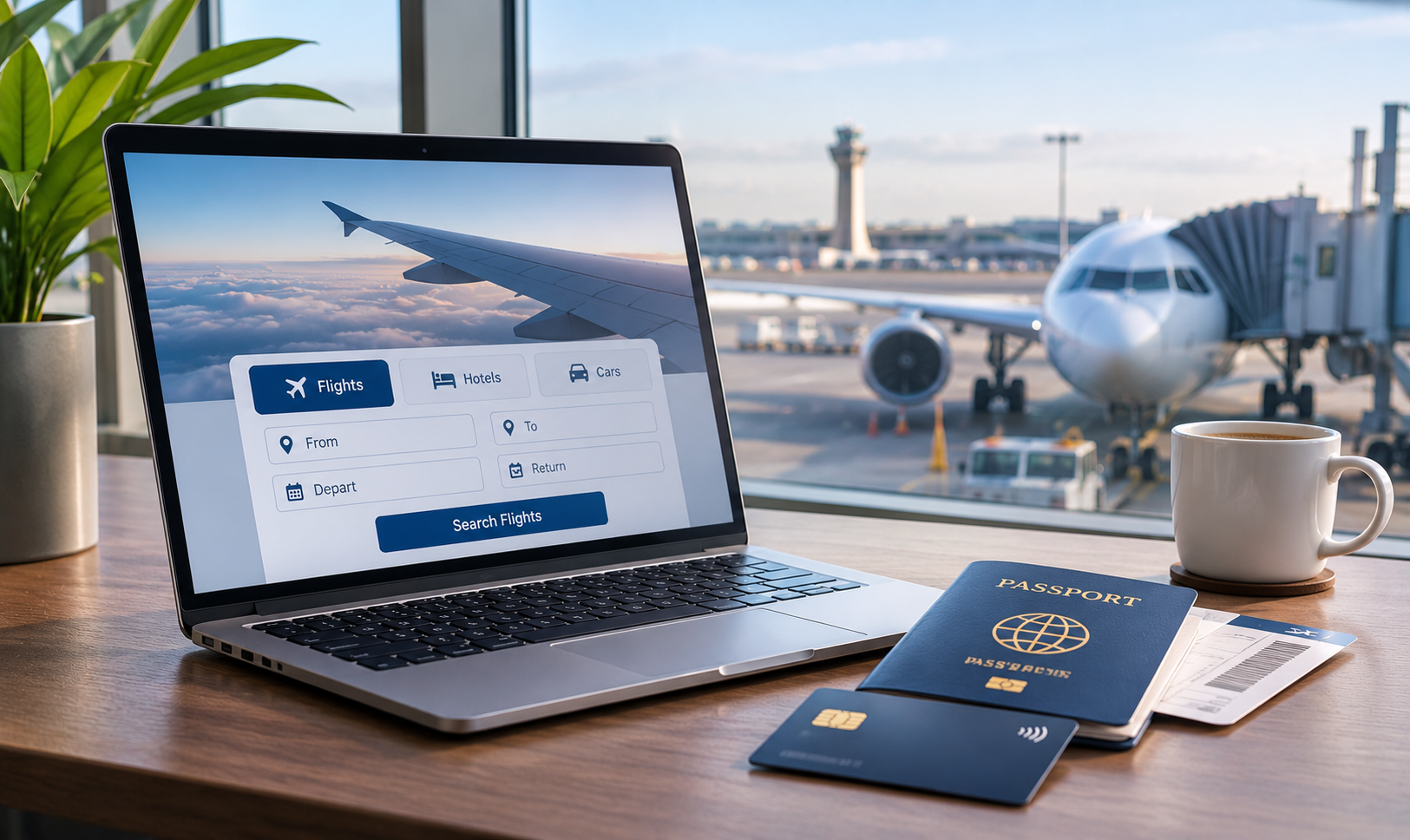
The numbers from the US market are unambiguous. Accertify, whose fraud detection platform protects eight of the ten largest airlines in the world–including United Airlines–recorded a fraud pressure rate of 0.25% across US departures in H1 2025. That same period saw overall US airline fraud pressure fall 30% year-over-year, yet the geography of risk shifted: Miami International rose to become the highest-risk major airport in the country. Falling aggregates mask concentration, not disappearance.
Industry-wide, the cost is structural. IATA estimates 1.2% of online revenue lost to payment fraud annually, against the sector's 2.7% net margin, that is 44% of total industry profit. Up to 99% of this, by Visa's count, flows through e-commerce APIs: the systems that sell tickets, manage loyalty, and process ancillaries. PCI DSS v4.0, fully enforceable since March 2025, is the regulatory response. Treating it as a compliance refresh misses what it demands. The real imperative is architectural: airlines must redesign how their payment APIs work, not just document how they currently work.
The Pressure Is Structural, Not Cyclical
Three forces converged in 2024–2025 and pushed airline payment security to the board level.
The channel mix flipped. Visa's Europe-wide analysis shows fraud has migrated almost entirely off card-present rails and onto e-commerce APIs. The attack surface is now the booking engine, the mobile app, the NDC agent connection, and the ancillary upsell flow–not the airport counter. Each is API-driven, and each is a potential failure point.
The economics also favor the attacker. According to IATA, travel accounts for 46% of all fraudulent online transactions globally. A single business-class ticket clears what hundreds of grocery transactions would. Value density makes airlines a priority target.
The regulatory floor moved at the same time. Verizon's Payment Security Report identifies ten changes in PCI DSS v4.0 that hit travel hardest: mandatory web application firewalls, MFA into the cardholder data environment, and script integrity controls on payment pages. Verizon flags hardening and testing as the persistent travel-sector weakness. Most airlines fail audits not because they don't know the rules, but because their architecture was never built to support continuous compliance.
Channel migration, value density, and a tougher standard all meet at the integration layer–the layer most airlines have invested in least.
Where the Architecture Breaks Down
A modern airline payment passes through six to eight integration points: IBE, PSS, payment orchestration, PSPs, 3DS, fraud scoring, and currency conversion. PCI DSS requires every system handling cardholder data to sit inside the cardholder data environment. In legacy stacks, the CDE has grown by accretion: card data ends up in CRMs, data warehouses, and loyalty databases never designed to hold it.
The result is dual exposure: more compliance surface than necessary, and real security risk in places no one is monitoring. For US carriers, NDC adoption compounds this: as American Airlines and United Airlines have expanded direct NDC distribution, each NDC-connected agency or corporate booking tool becomes an API endpoint that must be secured and scoped within PCI controls.
Recurring API failures are predictable–API keys in query strings rather than headers. logs retaining PAN and CVV in plain text. Card enumeration scripts cycle through these endpoints because responses leak validity signals.
The Three Levers That Actually Work
Three architectural moves carry PCI DSS v4.0–compliant airline payment design.
Network tokenization across all digital channels. Infrastructure providers such as PCI Proxy and Adyen issue scheme tokens bound to a specific merchant, channel, and device. A stolen token outside that triple is unusable. Centralizing tokenization in a single vault–covering IBE, mobile, and ancillaries–removes cardholder data from most internal systems and collapses PCI scope.
Outsourcing the CDE to a PCI Level 1 orchestrator. Switching from direct PSP integrations to a single orchestrator can reduce SAQ requirements by up to 90%–from SAQ D's 328 questions to SAQ A's 31. This is the largest documented compliance lever available to a mid-sized carrier.
EMV 3DS2 with maximum data enrichment. When 3DS2 correctly authenticates a transaction, chargeback liability shifts from the airline to the issuing bank. Implementation quality determines the outcome: airlines passing rich device, behavioral, and transaction-history signals get issuer-side decisions that minimize false declines while preserving liability shift.
Two Risks the Industry Is Underpricing
The first is a shadow CDE. Loyalty platforms manage miles, vouchers, and status credits–functionally cash. Account takeover and credential-stuffing attacks target them routinely. Yet most loyalty systems live outside the payment CDE and beyond strict PCI controls. PCI DSS v4.0 doesn't close this gap. Carriers must. US carriers are particularly exposed: programs at American, United, and Delta represent hundreds of billions of miles in circulation, and 3% of loyalty value is lost to fraud annually–rivaling direct payment fraud in dollar terms for large US programs.
The second is false outsourcing confidence. Moving the CDE to a Level 1 orchestrator dramatically reduces the audit footprint. It does not, by itself, fix the integration layer–the APIs, logs, identity systems, and VPNs that touch the orchestrator. The 90% SAQ reduction is a documentation outcome. Treating it as a security outcome is the new failure mode.
What to Sequence First
The work is sequenced, not optional. Enforce uniform TLS and API authentication across every payment endpoint–internal and external. Internal traffic is not safe in a multi-vendor architecture. Implement network tokenization across consumer-facing channels next; this is the single highest-leverage scope-reduction control. Then deploy 3DS2 with maximum signal enrichment, because false declines cost as much as fraud at scale. Add rate limiting, velocity controls, and anomaly detection on ancillary and stored-credential endpoints. Only then run a formal PCI DSS scoping exercise against the new architecture.
PCI DSS v4.0 does not ask airlines to be more compliant. It asks them to be more architectural. US carriers face this in a dual-regulatory environment: PCI DSS v4.0 on the payment side and TSA cybersecurity directives on the operational side. The two frameworks are not in conflict; they converge on the same architectural outcome. Carriers that grasp the difference will spend less on audits and lose less to fraud. The two outcomes turn out to be the same outcome.
About the Author: Daria Kulagina is a Business Analyst and Project Manager at Hynes & Khater, a payment technology consultancy specializing in airline payment systems and fintech integrations. Based in Houston, Texas, she works at the intersection of payment orchestration, PCI DSS compliance, and NDC payment architecture. She holds an advanced law degree and applies regulatory and compliance expertise to airline payment transformation projects across the Americas and Europe. She can be reached at daria.kulagina@hyneskhater.com.

















































 consultants ltd.jpg)


Comments