
Home Technology Cyber security Nottingham University Reveals ...
CIO Bulletin
,
18 June, 2026
Author:
Ravathi Sunil
University cybersecurity threats are becoming more frequent and sophisticated, endangering research data, student records, and institutional networks.
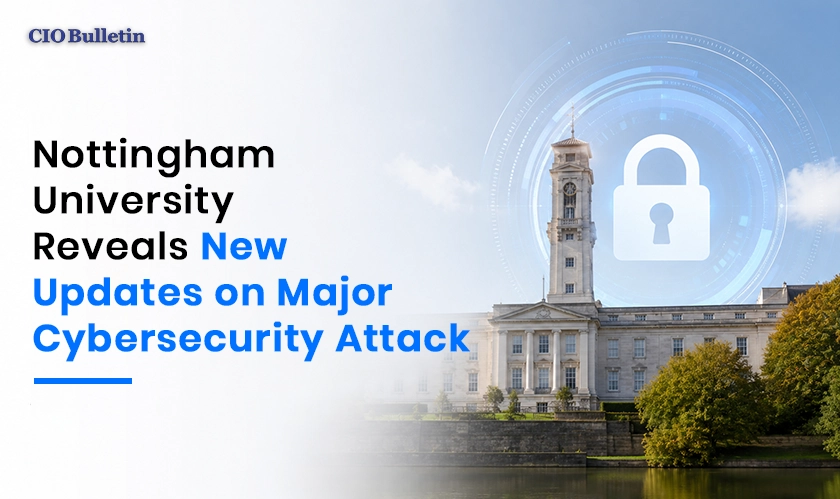
Cybercriminals allegedly used a third party to attack the University of Nottingham students’ record systems. The organization previously stated that a "significant amount" of private student data was compromised in the cybersecurity attack on its Campus Solutions system on June 9.
The university said in an update on its website on Wednesday that a forensic examination revealed the attackers gained access to portions of the system by taking advantage of a flaw in Oracle WebLogic, a third-party software platform.
An estimated 450,000 email addresses were impacted by the hack, which is being investigated criminally by the East Midlands Special Operations Unit (EMSOU).
The university stated that it was "operating on the precautionary assumption" that some alumni, applicants, and students' personal information had been compromised.
"Data security, student privacy, research, education, and academic communities are all at risk from cybersecurity attacks on universities, in addition to the system itself."
The increasing dependence of higher education institutions on digital platforms for administration, research, and learning has raised concerns about cybersecurity attacks on colleges. These attacks may result in the loss of important research and intellectual property, disruption of academic operations, and the theft of private student and staff data. Due to their massive data repositories, large user populations, and broad networks, universities are very appealing targets. In addition to reputational harm and possible legal repercussions, the financial expenses of recovering from cyber events can be substantial. Universities must make investments in proactive threat detection, employee training, and more robust security measures to protect their systems and uphold academic community trust as cyber-attacks become more sophisticated.
By combining cutting-edge security technologies, strict regulations, and user awareness initiatives, universities can improve their cybersecurity posture.
CIO Bulletin is of the view that implementing multi-factor authentication (MFA), patching and updating systems on a regular basis, encrypting sensitive data, and routinely performing security audits are important precautions.
To lessen the effects of cyber events, institutions should also invest in safe backup systems, endpoint security, and real-time threat monitoring.




















































 consultants ltd.jpg)


Comments