
Home Platforms Others Can SNP Rebuild Public Trust A...
CIO Bulletin
,
23 June, 2026
Author:
Sambhrant Das
Judicial authorities enforce strict custodial sentences as systemic accounting vulnerabilities spark a global push for automated dual authorization oversight grids
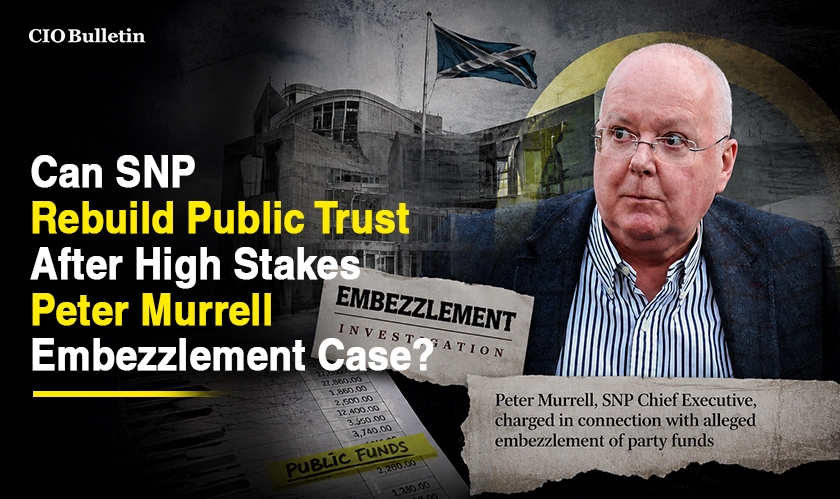
The institutional framework governing political finance transparency in Scotland faces intense scrutiny following a high-profile judicial decision. The High Court in Edinburgh has finalized criminal proceedings regarding a long-term siphoning scheme. Former Scottish National Party chief executive Peter Murrell was jailed for over five years on Tuesday. This severe judicial outcome formally concludes a massive embezzlement case that has deeply destabilized the country’s ruling political infrastructure. The extensive criminal inquiry revealed systemic accounting vulnerabilities and oversight gaps.
The prosecution detailed how operational structures were continuously manipulated to mask illicit financial transactions. Financial investigators mapped a complex trail of personal expenditures hidden behind every day operating invoices.
Luxury Item Acquisition: Over four hundred thousand pounds was systematically diverted to fund an extravagant private lifestyle.
Falsified Expenditure Codes: Bookkeeping records were altered to completely mislead independent compliance regulators.
Restoring administrative credibility presents an immediate strategic challenge for modern party management divisions.
"I am utterly appalled that he (Peter Murrell) did so and cannot begin to understand why." - Nicola Sturgeon, former First Minister.
Transitioning beyond basic audit reviews, forward-thinking political organizations are integrating modernized compliance mechanisms to protect public donations.
New regulatory measures require independent dual-authorization protocols for all high-value transactions.
Comprehensive forensic analysis will be mandated annually to isolate unorthodox operational spending.
Since contemporary political networks depend completely on financial transparency to preserve voter trust during major election cycles, legacy bookkeeping methods require immediate replacement. Shifting toward continuous, tech-driven financial verification is a critical mandate for governance architects globally. Reorganizing underlying fiscal oversight frameworks ensures that democratic institutions maintain public credibility while insulating organizational funds from individual malfeasance. CIO Bulletin views this development as a stark warning highlighting the critical necessity for absolute transparency and uncompromising independent oversight across high-stakes political governance structures.
Everything you need to know about this news
The judiciary aimed to send an undeniable deterrent message to administrators across all major organizations. Because the former chief executive systematically diverted hundreds of thousands of pounds over twelve years, the court ruled his actions constituted a heavily calculated crime of dishonesty and a massive breach of trust toward everyday party donors.
The financial investigation mapped out a complex network of altered expenditure descriptions inside the internal database. To entirely evade regulatory tracking and hide his luxury private purchases, the executive purposefully coded personal lifestyle acquisitions under deceptive business headings, even logging high-end domestic assets as general operating or legal fees.
Senior leadership, including the former First Minister, completely condemned the multi-year siphoning scheme. Party representatives expressed profound shock at the depth of the deception, stating that the unauthorized siphoning of grassroots funds was completely incomprehensible and represented an absolute betrayal of ordinary, working-class party members.
To rebuild donor confidence, political finance divisions are abandoning outdated manual oversight methods for automated, tech-driven validation grids. The updated structural framework establishes absolute dual-authorization requirements for large financial transfers and introduces mandatory annual forensic audits to isolate and flag unorthodox transactions immediately.
This case shows that leaning on legacy, centralized bookkeeping gives individuals in high places of authority a chance to take advantage of the oversight blind spots. Looking forward, governance arrangements are pushing a move to more open, real-time fiscal reporting, so ongoing digital verification becomes essential for any group trying to protect public, democratic credibility.





















































 consultants ltd.jpg)


Comments