
Home Industry Digital marketing Top Google AI-Powered Review M...

CIO Bulletin
,
17 August, 2026
Author:
Guest
Most businesses don't realize how fast a slow review response drags down their local ranking until the damage is already done. Review management platforms exist precisely to close that gap, automating the collection, analysis, and response cycle that would otherwise eat up hours every week. The real challenge isn't just volume; it's generating responses that feel personal, catching fake reviews before they stick, and keeping pace across every platform at once. After reviewing dozens of tools across the space, this guide covers the five platforms worth your attention in 2026.
Every platform here was assessed through publicly available sources: customer reviews, feature pages, case studies, and directory listings from across the web. Only tools with a documented history in review management software made the cut.
→ See the full research breakdown
Reviewly.ai - Best for multi-location businesses and agencies seeking automated Google review management
Reputation - Best for review management software services
MagicReview - Best for small to mid-sized businesses seeking automated review collection
Rayyan - Best for systematic literature reviews and evidence-based medical research
Repmanager - Best for multi-location businesses and franchises needing centralized Google review management
Picking the wrong review management platform isn't just a software mistake. It's a reputation mistake that compounds over time.
The volume of Google reviews coming in across multiple locations can overwhelm any manual process. Without the right tool, responses either get delayed or start sounding copy-pasted, and customers notice that immediately.
Generic AI responses are one of the quieter problems in this space. A reply that reads like a template does more damage than no reply at all, because it signals that nobody actually read the review.
The platforms that handle this well tend to combine sentiment analysis with response customization, so the output actually matches the tone of what the customer wrote. That combination matters more than most businesses realize. Getting it right consistently improves average star rating over time, lifts review response rates, and shifts the overall sentiment score in a measurable direction.
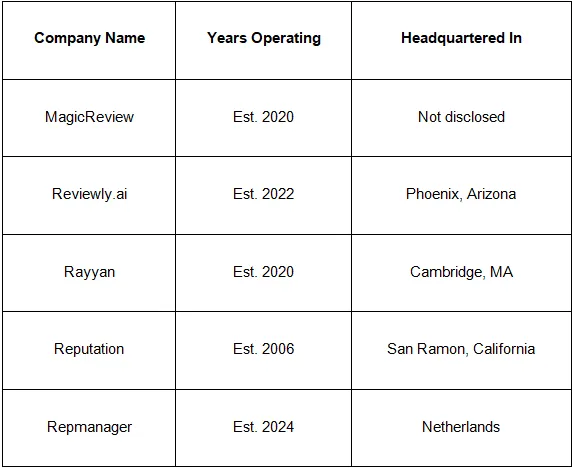
Note: All data in this table is sourced from review platforms and the official websites of the listed companies.
What Is Reviewly.ai's Main Function?
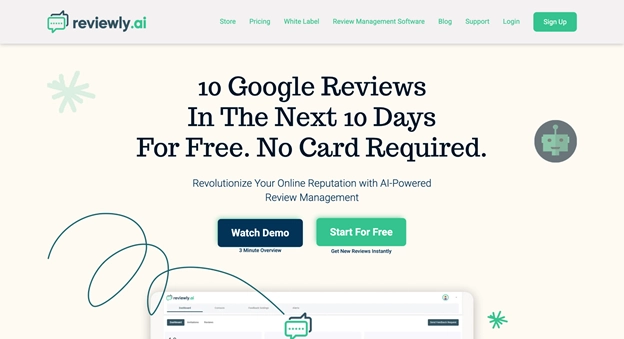
Reviewly.ai is a platform built around automating Google review collection and response at scale. Their SMS-based review generation system covers more than 100 countries, which sets them apart from platforms that rely solely on email or QR-based outreach. Businesses using the Google review management tool by Reviewly AI get access to AI sentiment detection, automated response drafts, QR codes, NFC tags, and Review Plates for in-person feedback collection. Clients like Jersey Mike's and JW Marriott have run their review workflows through the platform, which gives Reviewly.ai a level of enterprise credibility that newer tools simply haven't earned yet.
Where Does Reviewly.ai Win for Review Management Platforms?
Reviewly.ai solves the problem of collecting reviews consistently across high-volume, multi-location operations without requiring staff to manually follow up with every customer. Their white-label capabilities also make them a strong fit for agencies managing reputation across a portfolio of clients, which is a use case most tools in this category treat as an afterthought.
What the Reviews Show:
Publicly available client information points to enterprise-level adoption across hospitality and food service, two sectors where review volume can spike unpredictably. The SMS-first approach gets more traction than QR-only systems because customers are more likely to act on a text than to scan something on their way out the door.
What Is Reputation's Main Function?
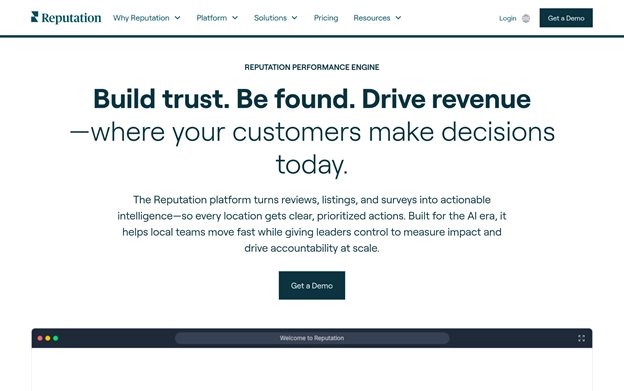
Reputation is a business-to-business platform covering online review monitoring, social media tracking, and customer survey analysis from a single interface. Based out of San Ramon, California, they serve mid-market and enterprise businesses that need to track customer sentiment across a wide range of channels at once. The platform's strength sits in aggregating feedback from multiple sources and giving teams a consolidated view of how their brand is perceived across platforms. For businesses dealing with high review volume across Google and other channels, that kind of centralized visibility is genuinely useful.
Where Does Reputation Win for Review Management Platforms?
Reputation addresses the challenge of monitoring brand sentiment at scale, particularly for businesses that can't afford to silo their Google reviews from their broader customer feedback picture. That cross-channel approach means teams get a fuller read on customer experience rather than reacting to one platform at a time.
What the Reviews Show:
Reputation has established itself as a recognized name at the enterprise level, particularly among organizations managing dozens or hundreds of locations. Users value the breadth of the platform but occasionally note a learning curve when setting up cross-channel reporting for the first time. (Think enterprise pricing to match.)
What Is MagicReview's Main Function?
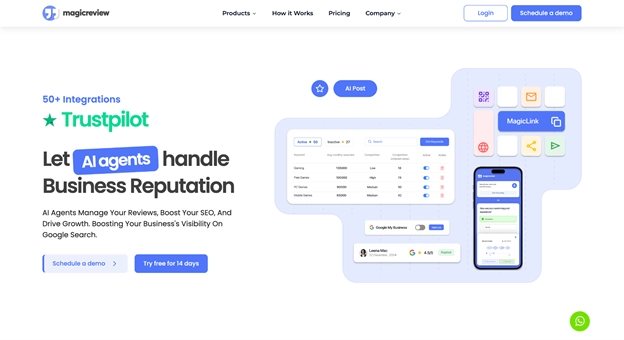
MagicReview is an AI-driven review collection platform co-founded by Saurabh R Patil and Abdul Nihaf, designed to make the process of getting Google reviews as low-friction as possible. The platform uses QR codes paired with AI-generated review suggestions to guide customers through the submission process, which reduces drop-off at the moment of actually writing a review. Its intelligent routing system sends positive reviews directly to Google while capturing lower-rated feedback privately, keeping constructive criticism out of public view while still surfacing it for internal improvement. Currently trusted by 30-plus businesses across multiple industries.
Where Does MagicReview Win for Review Management Platforms?
MagicReview solves a specific friction point: customers who want to leave a review but stall when faced with a blank text box. The AI-generated suggestion layer gives people a starting point, which consistently improves both review volume and the quality of what gets submitted.
What the Reviews Show:
Detailed public case studies are still limited, which is expected for a platform at this stage. Early adopters respond well to how simple the QR-to-review flow actually is. Not the deepest feature set, but that's kind of the point for smaller businesses.
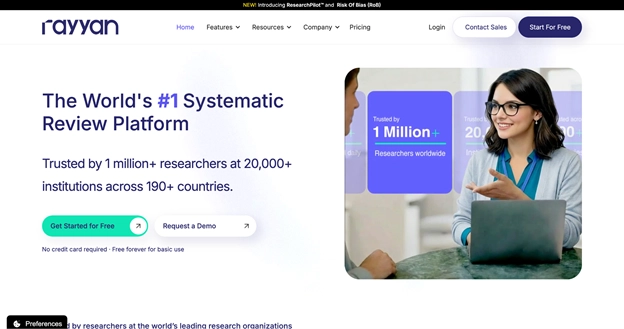
What Is Rayyan's Main Function?
Rayyan is a research collaboration platform built around natural language processing and machine learning, serving academic and medical researchers who need to conduct systematic literature reviews. Over 300,000 researchers across 180 countries use the platform to screen more than 700 million research articles, so the scale here is real. Features include automatic deduplication, PICO extraction, and AI-driven article screening that cuts down screening time by up to 90%. Rayyan operates in a different category than the other platforms on this list, focused on research review management rather than Google business review management.
Where Does Rayyan Win for Review Management Platforms?
Rayyan's strongest advantage is the combination of powerful AI screening with an interface that new users can pick up in minutes, a balance that research tools rarely achieve. Testimonials from institutions like the Cochrane Airways group confirm that the platform performs under real academic pressure, which is harder to fake than a software demo.
What the Reviews Show:
Researchers consistently flag ease of use as the standout quality, which is important given how technically demanding systematic review work can be. The freemium model earns genuine goodwill because the free tier actually delivers meaningful functionality rather than serving as a teaser for a paywall.
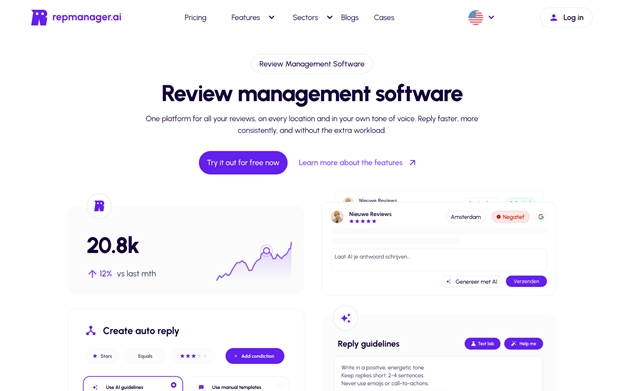
What Is Repmanager's Main Function?
Repmanager is an AI-powered Google review management platform built for businesses running multiple locations. Launched in 2024 and based in the Netherlands, the platform consolidates reviews from every location into one dashboard, making it practical for teams that can't afford to check location-by-location across a franchise or chain. It offers AI-suggested response drafts, sentiment analysis, team collaboration tools, and review invitation features across email, WhatsApp, and QR codes. Pricing starts at $10 per month with a 7-day free trial, and there are no long-term commitments or automatic renewals (not cheap per feature, but fair for what you get).
Where Does Repmanager Win for Review Management Platforms?
Repmanager tackles the localization problem directly: multi-location businesses often get generic responses across all their sites, which erodes trust at the local level. Their trainable AI model lets teams adjust the response style to fit each location's voice while still maintaining the speed of automation.
What the Reviews Show:
Beta access users rated the platform 4.8 out of 5 stars, and case studies with clients like Van de Hare Barbers show real-world results across different business types. For a platform launched in 2024, that early satisfaction signal is worth taking seriously.
Building this list required more than just pulling together platforms that mention AI on their homepage. The process started from scratch, sourcing candidates from multiple directions before any filtering happened.
The longlist was built by pulling platforms from software directories, industry review sites, case study repositories, and official company pages. Each source contributed a different angle: directories helped with breadth, while case study repositories gave a better sense of which platforms had actually been deployed in real business environments. Only platforms with a publicly accessible presence across at least two of these source types made it into the initial pool.
Once the longlist was assembled, platforms without verifiable track records were removed. This meant looking at review patterns across multiple sources rather than relying on a single rating. Platforms with reviews concentrated on one site only, or with patterns that looked inconsistent, didn't make the shortlist. The focus was on tools that showed consistent feedback across different user types and business sizes.
Every claim made on a platform's official website was cross-referenced against publicly available user reviews and documented outcomes. If a platform claimed fast response automation but user reviews repeatedly flagged slow response generation, that inconsistency was weighted against it. Where case studies were available, the specifics were checked to confirm they reflected realistic outcomes rather than best-case showcases.
Platforms that had earned mentions in industry publications, appeared in recognized directories, or had documented awards were noted during the research. This wasn't about counting mentions for the sake of it; it was about identifying platforms with enough of a public record to assess their standing in the market. Original research published by the company was also considered, since it signals a level of knowledge that goes beyond product marketing.
Each platform on the final list was checked for dedicated service or feature pages covering Google review management, verified customer reviews across independent sources, and at least one documented client result. Platforms that treated Google review management as a minor feature rather than the main focus were deprioritized. The goal was to surface tools where Google review management is central to how the product is built, not just mentioned in a feature list.
The right platform depends on the specific shape of your review management problem. A single-location restaurant has different needs than a 200-location franchise, and a research firm has different needs than both. Here's what to evaluate before committing.
Industry/Domain Experience: Look for platforms that have documented results in your specific sector. A platform that works well for hospitality may not be the right fit for healthcare, where AI-generated responses need to account for different standards.
Features and Service: Match the feature set to your workflow. If your team relies on SMS outreach, confirm native SMS support. If you need white-label capability for clients, check whether that's built in or costs extra.
Pricing Structure: Entry-level pricing can be misleading if multi-location support requires a higher tier. Confirm what's included at each price point before comparing sticker costs between platforms.
Results Measurement: The platform should give you clear visibility into review response rate, average response time, and sentiment score trends over time. If you can't measure it, you can't improve it.
Industry Knowledge and Compliance: For regulated industries like healthcare or legal services, AI-generated responses need to stay within specific boundaries. Confirm whether the platform has built-in controls for those requirements or whether that falls on your team.
Choosing the right platform comes down to matching the tool to the actual problem you're solving. Volume alone isn't a reason to pick the most feature-heavy option, and price alone isn't a reason to go with the lightest one. The comparison above covers a real range: from enterprise-grade reputation platforms to lean, focused tools built for a single use case. As AI review management matures, the gap between platforms that personalize well and those that don't will only grow wider.





















































 consultants ltd.jpg)


Comments