
Home Industry Healthcare CIO Bulletin Ranks the Top 10 ...
CIO Bulletin, 13 November, 2026
Author:
Ravathi Sunil
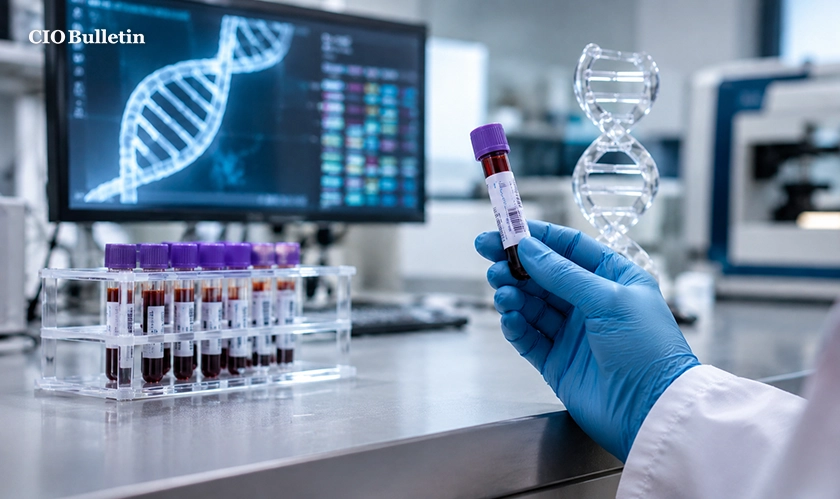
For years, patients with the same diagnosis got the same treatment, and the results were all over the place. Now, with precision medicine, we're able to use genetic, molecular, and lifestyle data to match the individual with the treatment most likely to work. CIO Bulletin has been tracking this shift all along, and we've been keen to identify and highlight the innovators who are actually taking the science and turning it into clinical reality.
The engine of the movement is falling sequencing costs, better analytics, and increasing clinician confidence in biomarker-driven decisions. As CIO Bulletin has pointed out, the precision medicine companies in healthcare are no longer just in the lab. They are now having an impact on cancer screening, prenatal screening, diagnosis of rare diseases and drug development. The net effect is earlier diagnosis, fewer ineffective treatments, and better outcomes. All of this, combined with the rise of personalised healthcare solutions, is fundamentally changing what patients and providers can expect from care.
1. Illumina
Illumina’s sequencing platforms form the basis of a huge amount of genomic research and clinical testing around the world. They've enabled DNA sequencing to be both faster and cheaper, providing the essential platform for genomics-based care in the labs, in the hospitals, and in the drug development space.
2. Guardant Health
Guardant Health is a leader in the space of liquid biopsy (detecting cancer signals from a simple blood draw). Their tests are used by oncologists to select therapies, monitor response to treatment, and detect recurrence, all without the need for invasive tissue sampling.
3. Tempus AI
Tempus combines molecular testing with a huge library of clinical data and artificial intelligence. It's a platform that helps clinicians make sense of the results, identify the right trials, and make oncology decisions that are tailored to the individual patient. It also supports pharma partners in their discovery work.
4. Natera
Natera is focused on cell-free DNA testing in women’s health, oncology, and organ transplantation. Their non-invasive screening tests provide earlier insight for families and clinicians, and their cancer monitoring tests are used to track disease over time.
5. Exact Sciences
Best known for non-invasive colorectal cancer screening, Exact Sciences has gone on to demonstrate how molecular diagnostics can bring the concept of prevention into the mainstream of primary care.
6. Foundation Medicine
Foundation Medicine provides comprehensive genomic profiling, which identifies the alterations that are driving a patient’s tumour. That information in turn enables the oncologist to identify targeted therapies and clinical trials that are appropriate for that individual’s cancer.
7. Myriad Genetics
Myriad Genetics has long been in the hereditary cancer risk assessment space. Their tests are used by clinicians and families to assess inherited risk, to plan surveillance, and to make decisions around prevention.
8. GRAIL
GRAIL is working on multi-cancer early detection technology which looks for the commonalities across many different cancers in a single blood test. If that kind of tool can be validated at scale, it could be used to detect disease very early indeed, even prior to the onset of any symptoms.
9. Caris Life Sciences
Caris combines molecular profiling with extensive data analysis to inform cancer treatment decisions. The example shows how the integration of genomic, transcriptomic, and clinical data can lead to more informed therapeutic choices.
10. 10x Genomics
10x Genomics offers single-cell and spatial biology tools that allow you to see how individual cells behave in tissue. That's a powerful way of looking at disease mechanisms and identifying new therapeutic targets.
Taken together, these organisations illustrate the maturation of the field. Some are building the foundations through sequencing and single-cell. Others are taking that data and turning it into diagnostics, screening programmes and treatment guidance that clinicians actually use on a day-to-day basis. AI, cloud and real-world evidence are all speeding up the cycle so that the insight from one patient can be used to improve the care of the next.
There are still issues to resolve. Access, data privacy, reimbursement, and the need for diverse genomic datasets are all things that need to be addressed. The trajectory, though, is very clear. Healthcare is moving from a model of reacting to disease to one of prediction, prevention, and more accurate treatment of disease.
The leadership at the top is a great example of how science and technology can work in concert to improve lives. CIO Bulletin is of the view that precision medicine companies will continue to be a major force in the way clinical practice, drug development and patient expectations evolve over the coming years. Their progress is a reminder that the best care is not one size fits all. It's individualised, it's timely, and it's data-driven. As adoption increases and costs come down, more and more patients will be able to benefit from therapies that are selected for them.
Want to keep up with the technologies and leaders that are redefining healthcare? Check out CIO Bulletin for the full rankings, the executive insight, and the expert analysis. Whether you're a healthcare exec, an investor, a technologist, or just a curious reader, take a look at our latest features, subscribe to our updates, and get involved in the discussion around where medicine is going next.
Everything you need to know about this news
The goal is to tailor prevention, diagnosis and treatment to an individual’s genes, environment and lifestyle instead of applying the same approach to everyone.
It identifies the specific mutations driving a tumor, helping oncologists choose targeted therapies and avoid treatments unlikely to work.
Liquid biopsies are valuable for monitoring and for patients whose tissue is hard to obtain, though tissue testing remains important in many situations. Doctors often use both.
AI analyzes huge molecular and clinical datasets to uncover patterns, predict responses and help physicians turn complex results into practical decisions.
Cost, insurance coverage, data privacy, limited diversity in genomic datasets and the need for clinician education are the biggest hurdles.
















































 consultants ltd.jpg)


Comments