
Home Industry Edtech Will Capability Driven Metrics...
CIO Bulletin
,
10 July, 2026
Author:
Sambhrant Das
Tech industry veteran Kristen Swanson assumes leadership of a new internal division focused purely on measuring and accelerating human learning capabilities.
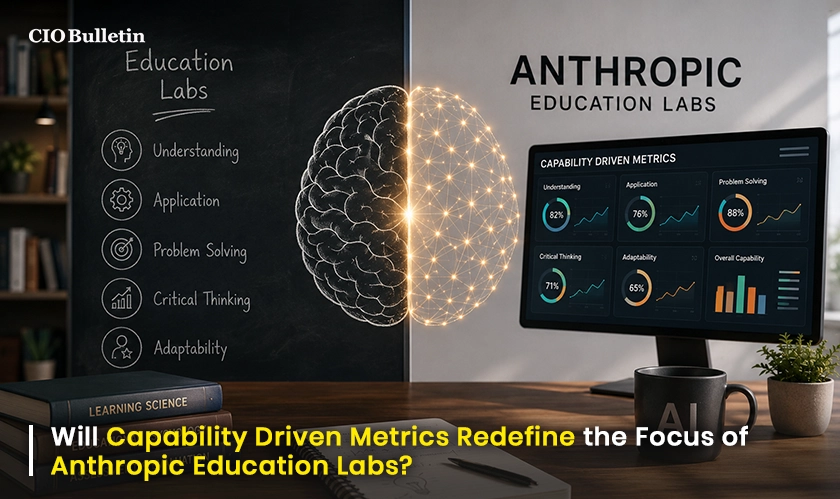
A major structural development has shifted the baseline parameters of enterprise machine intelligence research. Moving away from surface-level interface engagement, executive leadership at the frontier artificial intelligence safety company has established a specialized division to study how individuals acquire long-term digital competence. Former Okta and Slack product design specialist Kristen Swanson has been officially appointed to spearhead the operational deployment of Anthropic Education Labs.
The initial workforce expansion targets highly technical individuals capable of turning complex behavioral observations into functional software modifications. To build an environment focused strictly on human skill progression rather than basic application onboarding, recruiters are actively hunting for specialized talent across metropolitan tech corridors:
An experienced education researcher tasked with engineering and validating qualitative measurement models for user autonomy.
A flexible design engineer to sit directly between frontend interaction layout and deep model experimentation.
The internal directive governing this new research hub sets a completely different path from typical software development priorities. Instead of tuning software algorithms to increase daily session lengths, engineers look to cultivate deep personal understanding and critical thinking.
“The unit is actively exploring how people can master artificial intelligence in ways that build fluency alongside agency." - Kristen Swanson.
Shifting from basic automation chatbots to adaptive cognitive platforms requires a complete re-engineering of modern user experience pipelines. The team plans to build end-to-end operational prototypes that help users develop deeper discernment and diligence when working with advanced large language models. This structural approach treats software as a supportive intellectual partner that systematically enhances a professional's independent capabilities.
This deliberate investment highlights an important transition toward building structured, scientifically sound frameworks for human-machine collaboration. Organizations must quickly move beyond basic prompt cheat sheets to keep up with rapidly evolving digital work environments. CIO Bulletin views this development as a clear sign that future software success will not be measured by absolute user retention, but rather by how effectively a platform helps humans learn and perform independently.
Everything you need to know about this news
The division focuses on studying how humans develop true capability and long-term fluency when collaborating with advanced systems.
The organization is actively hiring an education researcher and a design engineer based in San Francisco and New York.
The group believes conventional tutorials prioritize shallow user engagement rather than helping individuals develop deep curiosity and real agency.
Kristen Swanson previously held senior research, design, and customer insight executive roles at major enterprise platforms like Okta and Slack.
The collected data will directly guide interactive prototype experiments, updated learning programs, and core model-level behavioral adjustments.

















































 consultants ltd.jpg)


Comments