
Home Industry Telecom Nigeria Economy at Risk as IMF...
CIO Bulletin
,
01 July, 2026
Author:
Ravathi Sunil
IMF’s push for fuel and telecom VAT in Nigeria sparks government resistance as concerns grow over its impact on economic recovery and living costs.
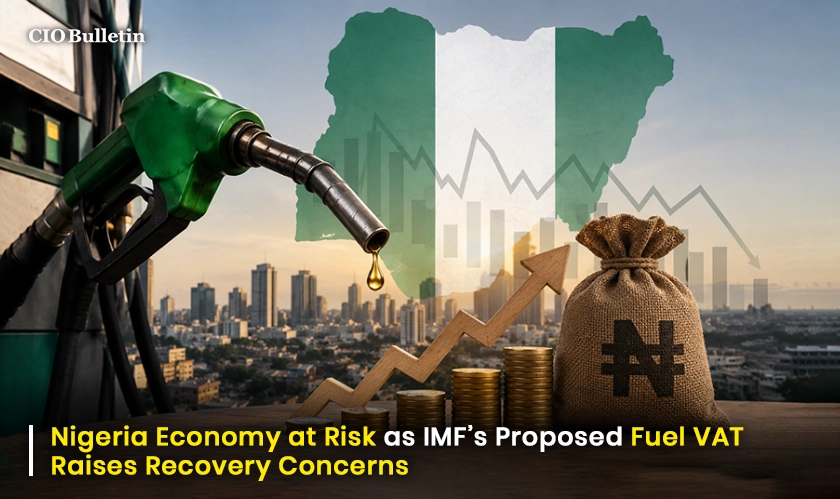
Strong institutional resistance has emerged in Abuja after the International Monetary Fund formally recommended that the Nigerian government implement a Value-Added Tax on fuel and high excise costs on telecommunications. A fundamental ideological conflict between Washington's quantitative debt-recovery models and the unstable reality of African domestic politics is shown by the directions, which are deeply ingrained in the IMF's 2026 Article IV Consultation report. The implementation of baseline consumption taxes poses a threat to historic inflation in Nigeria economy, where 63% of the population already lives below the poverty line, as the country attempts to stabilize following the painful elimination of fuel subsidies.
Nigeria’s economic recovery depends on finding the right balance between strengthening public finances and ensuring that new tax measures do not deepen pressure on households and businesses.
According to the reports tracked by CIO Bulletin, Nigeria's catastrophic public debt commitments are the sole cause of the IMF's harsh tax approach. Civic groups contend that the Fund is overlooking the human cost of debt repayment. A systemic imbalance is shown by data released by ActionAid: Nigeria today devotes 20.1 percent of its entire national revenue to paying off its external debt, while just 4.06 percent and 4.40 percent go toward healthcare and education, respectively.
The continent's economy is currently being torn apart by the IMF's unified taxation playbook. The Kenya Revenue Authority (KRA) proposed to tax motor vehicles and essential manufacturing inputs in the 2024 and 2025 Finance Bills, which sparked violent statewide protests due to the same IMF pressure to increase the tax base. The Central Bank of Kenya (CBK) was compelled to modify monetary policy to contain the impending inflation.
With worries that rising prices will put more strain on people and businesses, the IMF's suggested fuel and telecom VAT measures underscore the challenging balance Nigeria must strike between increasing government revenue and safeguarding a precarious economic recovery.
Everything you need to know about this news
These actions have been recommended by the IMF as part of initiatives to boost fiscal stability, manage debt issues, and increase government revenue.
A gasoline VAT may raise prices for goods, services, and transportation, which might put more strain on customers and companies during a precarious recovery.
The Federal Government has highlighted worries that extra taxes on basic services could increase the financial burden on citizens and harm economic stability.
While adding VAT to telecom services can increase income, it might also increase expenses for consumers and companies that rely on digital connectivity.
The goal of the IMF's advice is to assist Nigeria in managing fiscal pressures associated with debt obligations and enhancing revenue collection.















.webp)



































 consultants ltd.jpg)


Comments